



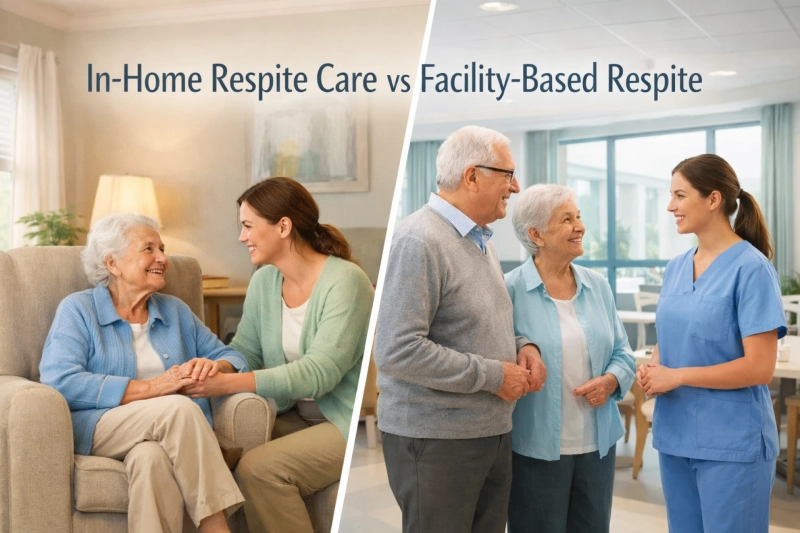
Caring for a loved one with a disability, chronic illness, or age-related condition is one of the most meaningful roles a person can take on—but it can also be physically, emotionally, and mentally exhausting. That’s where respite care comes in.
Respite care gives family caregivers a temporary break while ensuring their loved one continues to receive safe, compassionate support. But one of the most common questions caregivers face is:
Should I choose in-home respite care or facility-based respite care?
There’s no one-size-fits-all answer. The “better” option depends on your loved one’s needs, comfort level, health status, and your family’s situation. This guide breaks down both options clearly so you can make a confident, informed decision.
What Is Respite Care?
Respite care is short-term, temporary care designed to relieve primary caregivers. It can last a few hours, a day, overnight, or even several weeks, depending on need and eligibility.
Respite care can support individuals who are:
- Older adults
- People with intellectual and developmental disabilities (IDD)
- Individuals recovering from injury or illness
- People with cognitive or neurological conditions
- Children or adults with special healthcare needs
The goal is simple but powerful:
Support the caregiver while maintaining quality care for the individual.
Understanding In-Home Respite Care
In-home respite care brings professional support directly into the person’s home. A trained caregiver comes to your home and temporarily takes over caregiving responsibilities.
What In-Home Respite Care Typically Includes
- Assistance with activities of daily living (ADLs)
- Bathing
- Dressing
- Toileting
- Eating
- Supervision and safety monitoring
- Medication reminders (where permitted)
- Light housekeeping related to care
- Companionship and emotional support
- Reinforcement of daily routines and behavior plans
Key Benefits of In-Home Respite Care
In-home respite care offers meaningful advantages for both caregivers and their loved ones. It provides a flexible, supportive solution that fits naturally into everyday life.
1. Familiar Environment
Staying at home helps reduce anxiety, confusion, and behavioral challenges—especially for individuals with IDD, autism, dementia, or traumatic brain injuries.
2. Personalized, One-on-One Care
Care is tailored to the individual’s habits, preferences, communication style, and routines.
3. Less Disruption
No packing, transportation, or adjustment to a new environment is required.
4. Greater Comfort for Families
Caregivers often feel more at ease knowing their loved one is in their own home.
5. Ideal for Behavioral or Medical Complexity
Individuals who struggle with transitions or unfamiliar settings often do better with in-home support.
Potential Drawbacks of In-Home Respite Care
- Limited access to specialized equipment compared to facilities
- Less social interaction with peers
- Availability may vary by location or funding source
Understanding Facility-Based Respite Care
Facility-based respite care takes place in a licensed setting such as:
- Assisted living facilities
- Nursing homes
- Group homes
- Residential care facilities
- Specialized respite centers
Your loved one stays at the facility for a short, predetermined period.
What Facility-Based Respite Care Typically Includes
- 24-hour supervision
- Meals and nutrition support
- Medical oversight (depending on facility type)
- Structured activities and social engagement
- Access to specialized equipment and staff
Key Benefits of Facility-Based Respite Care
Facility-based respite care provides structured support in a professional, supervised setting. It offers caregivers reliable relief while ensuring their loved ones receive consistent attention and care.
1. Round-the-Clock Support
Facilities provide continuous supervision, which can be reassuring for caregivers needing extended time away.
2. Access to Medical Resources
Some facilities offer on-site nursing, therapy services, or medical monitoring.
3. Social Opportunities
Group activities and peer interaction can benefit individuals who enjoy social settings.
4. Structured Environment
Routine schedules may be helpful for individuals who thrive on predictability.
Potential Drawbacks of Facility-Based Respite Care
- Adjustment stress due to unfamiliar surroundings
- Higher cost in many cases
- Limited personalization
- Possible emotional distress for individuals sensitive to change
In-Home vs Facility-Based Respite Care: Side-by-Side Comparison
In-Home Respite Care Is Often Best If:
- Your loved one struggles with transitions
- Familiar routines are essential
- Behavioral or sensory sensitivities exist
- You want personalized, one-on-one care
- The individual has strong emotional attachment to home
Facility-Based Respite Care Is Often Best If:
- 24-hour medical supervision is required
- Care needs are highly complex
- Social interaction is beneficial and desired
- The caregiver needs extended time away
- Home setup cannot safely support care needs
How Caregiver Needs Factor Into the Decision
Respite care isn’t just about the care recipient—it’s also about you.
Ask yourself:
- Do I need a few hours, overnight help, or several days off?
- Am I comfortable having care provided in my home?
- Do I need complete separation to truly rest and reset?
- Am I feeling burned out or emotionally overwhelmed?
Caregiver burnout is real and serious. Choosing the right respite option can help prevent:
- Chronic stress
- Depression and anxiety
- Physical exhaustion
- Reduced quality of care
Cost Considerations and Coverage
Costs vary widely based on:
- Location
- Duration of care
- Level of support required
- Funding sources
Common Payment Options
- Medicaid waiver programs
- Community First Choice (CFC)
- State-funded respite programs
- Private pay
- Nonprofit or grant-funded services
In-home respite care is often more flexible and affordable for short-term or recurring breaks, while facility-based respite care may be more expensive but suitable for longer stays or higher medical needs.
Which Option Is Better for Individuals With IDD?
For many individuals with intellectual and developmental disabilities, in-home respite care is often the preferred option because it:
- Preserves routine and independence
- Minimizes behavioral disruptions
- Supports person-centered care
- Keeps individuals connected to family and community
That said, some individuals with IDD benefit from facility-based care when:
- Medical monitoring is required
- Structured peer interaction is beneficial
- Home safety cannot be adequately supported
Questions to Ask Before Choosing Respite Care
Before deciding, ask providers:
- What training does staff receive?
- How is care personalized?
- What experience do you have with my loved one’s condition?
- How do you handle emergencies?
- How is communication with families handled?
So… Which Is Better?
The truth is:
In-home respite care and facility-based respite care both serve valuable roles.
The “better” option is the one that aligns with your loved one’s needs and supports your well-being as a caregiver.
For families seeking comfort, familiarity, flexibility, and personalized care, in-home respite care is often the clear winner. For those needing intensive support or extended relief, facility-based respite care can provide peace of mind.
Final Thoughts: Respite Care Is Not a Luxury—It’s Essential
Taking a break does not mean you’re failing as a caregiver. It means you’re making a responsible, compassionate choice to protect your physical and emotional health. When caregivers are supported, they’re better able to provide consistent, patient, and high-quality care.
Respite care allows caregivers the space to rest, reset, and reconnect with themselves and others. It helps prevent burnout, reduces stress, and strengthens long-term caregiving relationships. Most importantly, it ensures that both caregivers and their loved ones can continue to thrive with dignity, balance, and peace of mind.