



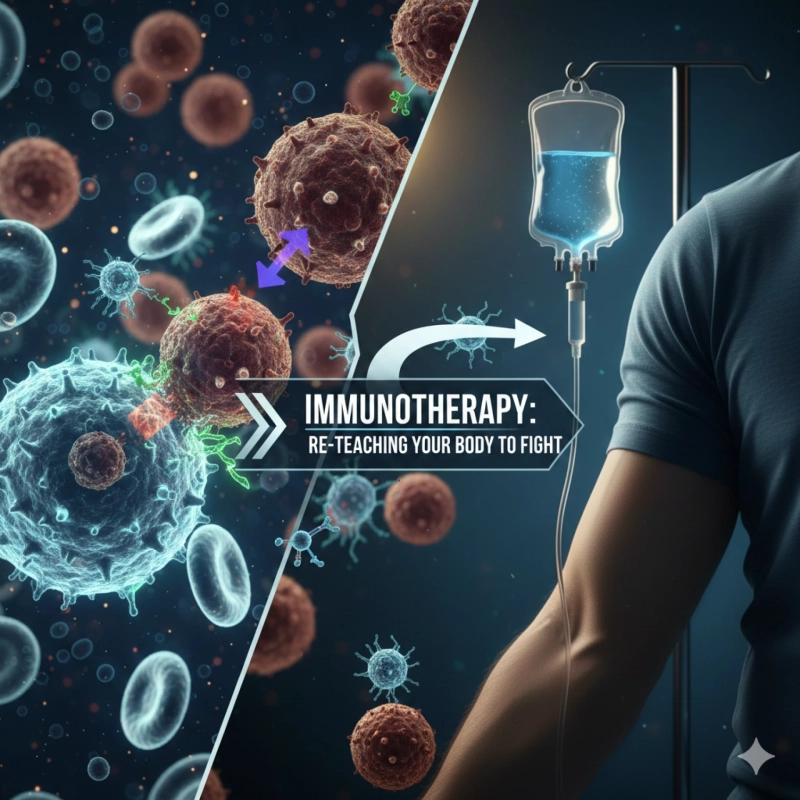
Cancer treatment has entered a new era where the body’s own immune system takes center stage. Immunotherapy drugs enable the immune system to find and eliminate cancer cells, in contrast to conventional treatments that directly target tumors with chemicals or radiation. Before considering immunotherapy for cancer, it becomes incumbent to understand how these cancer immune drugs can help patients and their families make difficult treatment decisions and appreciate why immunotherapy is currently one of the most promising advances in oncology.
This guide will cover the definition of immunotherapy, the main categories of immunotherapy medications, their mechanisms, and the clinical insights that influence their application. Additionally, readers will discover how cutting-edge methods—such as natural killer (NK) cell therapy—fit into contemporary cancer treatment.
The Concept Behind Immunotherapy
The body's immune system keep searching for and destroys aberrant or contaminated cells. However, cancer develops ingenious strategies to evade immune surveillance, such as masking itself as healthy tissue or dampening vital immune responses. Immunotherapy aims to undo this trick.
Immunotherapy improves or restores the immune system's capacity to identify cancer as a threat and eradicate it by employing biologically modified or naturally sourced chemicals. The outcome is a customized, focused treatment that targets cancers while protecting the majority of healthy tissue—something that chemotherapy frequently fails to accomplish.
How Immunotherapy Drugs For Cancer Work?
Enhancing the body's immune system is the common objective of all forms of immunotherapy. Most cancer immune drugs operate using one of three main principles:
Reactivation of suppressed immune cells – Immune cells' molecular "brakes" can be blocked by drugs, enabling them to resume attacking malignancies.
Direct targeting of cancer cells - Tumor indicators are precisely bound by immune cells or engineered antibodies, which cause the cells to be destroyed.
Innate immunity activation - Some strategies increase immunological protection across the body by stimulating cytokine responses or recruiting natural killer cells.
Depending on the cancer type, genetic profile, and clinical state of the patient, these systems may function independently or in concert.
Checkpoint Inhibitors: Releasing the Brakes on Immunity
Checkpoint inhibitors are among the most well-known classes of immunotherapy medications. Normally, checkpoints such as PD-1, PD-L1, and CTLA-4 act as safety switches to prevent overactive immune responses. Unfortunately, cancer often exploits these pathways to hide from immune detection.
By blocking these inhibitory signals, checkpoint inhibitor medications enable T lymphocytes to target cancer cells. In cases of melanoma, lung cancer, kidney cancer, and other solid tumors, drugs including ipilimumab, pembrolizumab, and nivolumab have demonstrated impressive efficacy.
In clinical settings, checkpoint inhibitors have changed survival rates for advanced malignancies that were previously thought to be incurable. They may, however, also result in immune-related adverse consequences, such as intestinal, liver, or lung inflammation. To optimize advantages while controlling dangers, close observation and prompt action are still crucial.
Monoclonal Antibodies: Precision Targeting
The use of monoclonal antibodies is another significant development in cancer immunotherapy (mAbs). These synthetic compounds imitate the natural defensive proteins of the immune system. Every antibody is designed to recognize a specific antigen present on the surface of cancer cells.
Antibody-dependent cellular cytotoxicity is the process by which a monoclonal antibody binds to its target and either directly neutralizes the cancer cell or calls forth additional immune components to eliminate it (ADCC). Others act as delivery vehicles, delivering radioisotopes or poisonous compounds directly to tumor locations, where they minimize damage to healthy cells while eliminating cancerous tissue from within.
Among the most well-known monoclonal antibody treatments are cetuximab, trastuzumab, and rituximab, which target CD20 in lymphomas and HER2-positive breast malignancies, respectively (EGFR-positive colorectal cancers). These targeted treatments are still being used for a variety of tumor types, and they frequently serve as the foundation for regimens that include immunotherapy or chemotherapy.
CAR-T Therapy: The Personalized Cell Army
Chimeric antigen receptor (CAR) T-cell therapy has revolutionized the treatment of blood malignancies. This method involves removing a patient's own T cells, genetically altering them in a lab to produce receptors that identify cancer antigens, and then reintroducing them into the circulation to find and eliminate cancerous cells.
CAR-T therapy is a prime example of customized medicine since every treatment is tailored to the patient. In some lymphomas and leukemias, it has produced previously unheard-of remission rates. However, CAR-T is still only used in certain situations under specialist care settings because of its severity and possible adverse effects.
Oncolytic Virus Therapy: Turning Viruses Against Cancer
Oncolytic viruses are designed to multiply and infect cancer cells, destroying them while preserving healthy tissue. An anti-tumor immune response is further stimulated by the antigens released by dying tumor cells. One prominent example of how virotherapy can both activate systemic immunity and debulk tumors is the FDA-approved talimogene laherparepvec (T-VEC) for melanoma.
Scientists are still researching novel oncolytic viruses and their potential synergistic effects when combined with checkpoint inhibitors.
Natural Killer (NK) Cell Therapy: The Frontier of Innate Immunity
Beyond adaptive immunity, natural killer cells have a potent anti-cancer effect. Without first being exposed to particular antigens, NK cells search the body for aberrant or stressed cells and eliminate them. They release chemicals called granzymes and perforin, which pierce and break down the target cell from the inside out.
NK cell therapy entails the infusion of either donor NK cells that have been enlarged and activated for the best possible therapeutic effect, or a patient's own NK cells that have been improved in a lab. This type of immunotherapy medication targets cancer cells more quickly and widely since it does not rely on antigen recognition.
NK therapy is being investigated in clinical settings for solid and hematologic cancers, such as cases of leukemia, lung, kidney, and ovarian cancer. It is minimally invasive, non-toxic, and can be used in conjunction with other therapies like chemotherapy or radiation at precisely the right times to improve results.
Immunotherapy Drugs For Cancer: Clinical Use and Integration
Making strategic decisions is necessary when implementing immunotherapy in clinical practice. Before recommending an immunotherapy strategy, oncologists evaluate the type of tumor, its stage, mutation profiles, and prior treatment history. Immunotherapy response varies greatly from patient to patient, in contrast to conventional treatments that adhere to predetermined dosages and cycles.
The choice of treatment is influenced by immune-related indicators such as microsatellite instability or PD-L1 expression. To get long-lasting, synergistic effects, doctors frequently mix checkpoint inhibitors, monoclonal antibodies, or NK therapies with conventional techniques.
Immunotherapy has revolutionized cancer treatment, but it's still important to be on the lookout for any immune-related side effects. These can range from minor inflammation to serious autoimmune-like reactions, and all require prompt treatment.
NK Cell Therapy and Personalized Care
Cancer Killer Cells, a cutting-edge business providing cutting-edge NK cell therapies in Mexico under professional medical supervision, is a prime example of applied NK cell therapy. By modifying NK cell dosages, which range from one to five million cells per kilogram, according to patient requirements and clinical assessment, their team tailors treatments.
The fact that they continue to offer assistance even after the initial therapy is what sets their method apart. For long-term immunological health, their professionals monitor development, provide follow-up appointments, and arrange supplementary treatments. Cancer Killer Cells offers a straightforward and reliable approach for anyone seeking immune-based, non-toxic support in a controlled setting.
Patients can reach out to Cancer Killer Cells at inquiries@cancerkillercells.com for additional information or to begin a customized NK therapy regimen.
Final Thoughts
The limits of contemporary oncology have been redefined by immunotherapy. The variety of cancer immune medications on the market now reflects decades of scientific advancement and clinical bravery, from checkpoint inhibitors that activate T cells to monoclonal antibodies that identify tumor markers and NK cell treatments that activate innate immunity.
Providers like Cancer Killer Cells are prime examples of how science and committed clinical compassion may come together to provide new hope for individuals investigating cutting-edge, patient-centered therapy outside of traditional hospital systems. In addition to being a medical achievement, immunotherapy is evidence that the body has the ultimate potential to repair itself when given the right tools.