



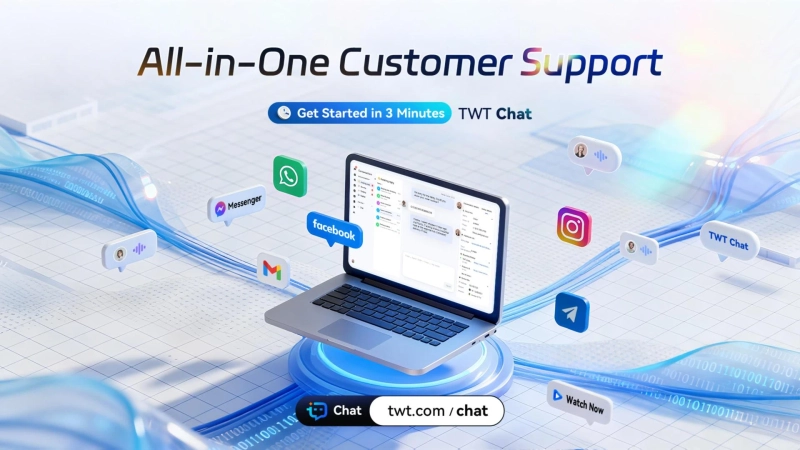
Website chat tools are everywhere now.
From SaaS landing pages to personal blogs, adding a chat widget has almost become a default move. But after trying a few, I realized most “live chat” tools share the same problems: rising monthly costs, complicated setups, and so-called AI that feels more like scripted replies than real intelligence.
So I decided to spend a week testing three popular options side by side:
TWTChat — a newer, browser-based AI chat tool
Intercom — a long-established business messaging platform
LiveChat — a traditional customer support live chat system
Here’s what stood out from real-world use.
TWTChat — Simple, Private, and Surprisingly Smart
What immediately caught my attention with TWTChat was how little effort it required.
There’s no plugin to install, no account to create, and no dashboard to configure. The chat runs directly in the browser and can be launched instantly through a link.
More interestingly, it includes built-in AI auto-replies that actually understand context. Instead of predefined rules or decision trees, responses feel conversational — closer to modern AI assistants than classic chatbots.
What worked well:
Free to use
No login or installation required
AI-powered replies that understand context
Privacy-focused, with no long-term data storage
Shareable chat links for instant conversations
Limitations:
Still early-stage, with limited third-party integrations
May feel too lightweight for enterprise CRM workflows
Best suited for: individuals, small teams, or websites that want fast, intelligent chat without overhead.
What I appreciated most was its restraint. It doesn’t constantly push upgrades or advanced plans — it simply works.
Intercom — Feature-Rich but Heavy
Intercom remains one of the most powerful tools in this space.
It offers deep CRM connections, advanced automation, and strong analytics. For larger teams managing sales and support at scale, those features make sense.
However, setup takes time, and costs increase quickly as you unlock more capabilities — especially automation and AI features.
Best suited for: mid-to-large companies with dedicated support or sales teams and a budget to match.
LiveChat — Reliable, but Traditional
LiveChat does exactly what its name suggests.
It’s stable, professional, and built around human agents handling conversations in real time. Ticketing, agent assignment, and performance tracking are all well implemented.
That said, its approach feels firmly rooted in traditional customer support. AI and automation exist, but they are secondary — not central to the experience.
Best suited for: businesses that prioritize human-led customer service and structured workflows.
Final Thoughts
After a week of testing, the difference between these tools became clear.
Intercom and LiveChat are optimized for established businesses with teams, processes, and ongoing costs. TWT Chat, on the other hand, takes a much lighter approach — focusing on immediacy, privacy, and intelligent automation without barriers.
It won’t replace full CRM platforms, but for quick support, private conversations, or simple website chat, it feels refreshingly modern.
Sometimes, less really is more.