



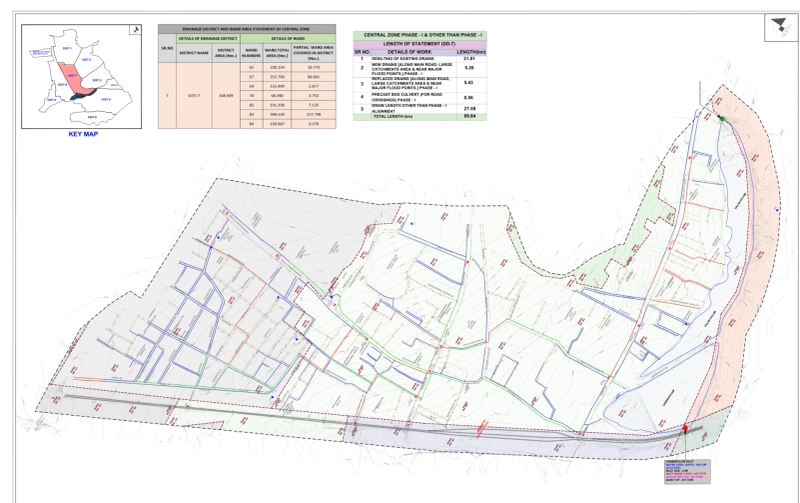
Hydrology is the science of water its distribution, movement, and properties on Earth. A Hydrology Study is a foundational component in planning, designing, and managing water-related infrastructure. This scientific investigation plays a critical role in ensuring that developments such as industrial plants, roads, and residential layouts are safe from water-related hazards like flooding, erosion, and inadequate drainage.
In this article, we’ll explore the scope of a hydrology study, its methodologies, technical parameters, and applications in real-world projects. Additionally, we will integrate crucial SEO keywords like hydrology study table, hydrology case study, study of hydrology models, and others to make this content informative and search-engine optimized.
Scope of a Hydrology Study
A comprehensive hydrology study comprises multiple interconnected tasks, each vital for understanding water behaviour in a given area. The scope includes:
1. Data Collection and Mapping
The first step in any hydrology study involves collecting all relevant documents, including topographic maps, rainfall records, and satellite imagery related to the area’s drainage patterns. This data is typically obtained from central and state agencies such as the India Meteorological Department (IMD), Survey of India, and the National Remote Sensing Centre (NRSC), with a focus on information from rain gauge stations closest to the project site.
This step sets the foundation for all further hydrological analyses and helps create an accurate hydrology study table, showcasing datasets like rainfall intensity, soil types, slope analysis, and infiltration rates.
2. Historical Rainfall and Topography Analysis
By analysing past rainfall events and terrain features, the study identifies trends and anomalies that affect surface runoff and groundwater recharge. This includes the study of:
- Rainfall depth-duration-frequency
- Average annual rainfall
- Seasonal variability
- Slope and elevation changes in terrain.
3. Design Storm Analysis
Design storm analysis involves determining storm events that are statistically likely to occur over 25-, 50-, or 100-year intervals. These are called return periods. This helps in designing infrastructure that can withstand extreme weather events without failure.
The rainfall intensity-duration-frequency (IDF) curves are generated using data from IMD, which guide the stormwater and flood protection design.
4. Runoff Coefficient Estimation
Runoff coefficient (C) represents the fraction of rainfall that turns into surface runoff. It depends on land use, soil type, and slope. Urban areas have high C values due to impervious surfaces, while forested areas have lower values.
Accurate estimation of C is key to predicting how much water will flow during rain events and helps in sizing storm water systems.
5. Flood Risk Analysis and Inundation Mapping
A core objective of the hydrology study is to evaluate flood hazards. Using hydrodynamic and rainfall-runoff models, the following are assessed:
- High flood levels (HFL) of nearby rivers or streams
- Backwater effects from downstream obstructions
- Flood extents and depths for various return periods
This results in an inundation map that highlights the vulnerable areas and guides future construction.
6. Digital Elevation Model (DEM) and Drainage Delineation
- Accurate delineation of catchment areas
- Identification of drainage lines and their flow directions
- Calculation of slope and surface runoff pathways
DEM-based analysis is essential in the study of hydrology system for any infrastructure project.
7. Stormwater Drainage Design
Based on runoff calculations, flood analysis, and topography, engineers design a robust stormwater system. This includes:
- Pipe networks
- Open channels
- Retention/detention ponds
- Recharge pits
Drainage must be capable of conveying peak discharge without overflowing or causing erosion.
8. Hydraulic Modelling of Natural Drains
Hydrodynamic modelling simulates how water behaves in natural streams under different flow conditions. It considers:
- Cross-sectional profiles
- Flow velocity and volume
- Backwater effects
- Riverbank stability
Such modelling helps optimize the location of outlets, culverts, and embankments.
9. Catchment Area Identification
Streams and rivers draining into the project site are analyzed for:
- Catchment boundaries
- Contribution of runoff
- External inflows from surrounding lands
This is essential for industries involving earth-moving equipment, where proper grading and drainage planning can prevent site flooding.
10. Recommendations for Drainage and Flood Management
Based on all findings, the study recommends:
- Appropriate drainage layouts
- Flood-proofing strategies
- Location and size of outfall structures
- Integration with regional drainage plans
Designs aim to prevent flooding of the plant area and minimize maintenance requirements.
Case Study of Failure of Hydrology Structure in India
One of the most cited hydrology case study examples in India is the 2015 Chennai Floods. The disaster was attributed to:
- Poor planning of storm water systems
- Unregulated urban development
- Blocked natural drainage
- Undersized culverts and outfalls
Despite receiving warnings, the hydrological systems failed due to a lack of integrated flood modelling and proper study of hydrology system. This emphasizes the need for accurate hydrology assessments before construction.
Study of Troubleshooting Procedures of Various Hydrology and Pneumatic Circuits
In water treatment and hydrological monitoring stations, pneumatic systems are used for automated flow control, water sampling, and dam gate operations. The study of troubleshooting procedures is essential for maintaining these systems, and includes:
- Leak detection
- Valve response time checks
- Sensor calibration
- Air pressure integrity tests
These systems support real-time flood monitoring and help automate drainage control measures.
🧪 Study of Hydrology Models and Systems
Several models are commonly used in hydrology studies, such as:
- HEC-HMS (Hydrologic Engineering Centre – Hydrologic Modelling System)
- SWMM (Storm Water Management Model)
- MIKE FLOOD and MIKE 11 by DHI
- WMS (Watershed Modelling System)
These models simulate rainfall-runoff processes, flood routing, and water quality parameters. Each tool provides insights into system performance under various scenarios. The study of hydrology system using these models ensures that infrastructure is resilient and responsive to changing climatic conditions.
Integration with Infrastructure Projects
In projects involving roads, power plants, industrial zones, and urban layouts, the hydrology study ensures:
- Proper water evacuation
- Structural longevity
- Environmental compliance
- Safety of personnel and equipment
It is especially important when working with earth-moving equipment, where waterlogging can halt operations or cause machinery damage.
A hydrology study is not merely a technical formality it’s a critical analysis that shapes the long-term success and safety of infrastructure developments. Whether it’s avoiding a disaster like the Chennai floods or ensuring optimal performance of storm water systems, a comprehensive hydrology study provides the foundation for informed decision-making.
From creating an accurate hydrology study table to conducting a study of troubleshooting procedures, this discipline is key to resilient and sustainable development. As infrastructure challenges increase in the face of climate change, the role of hydrology in planning becomes more vital than ever.
View more blog:- https://www.sunconengineers.com/articles/