



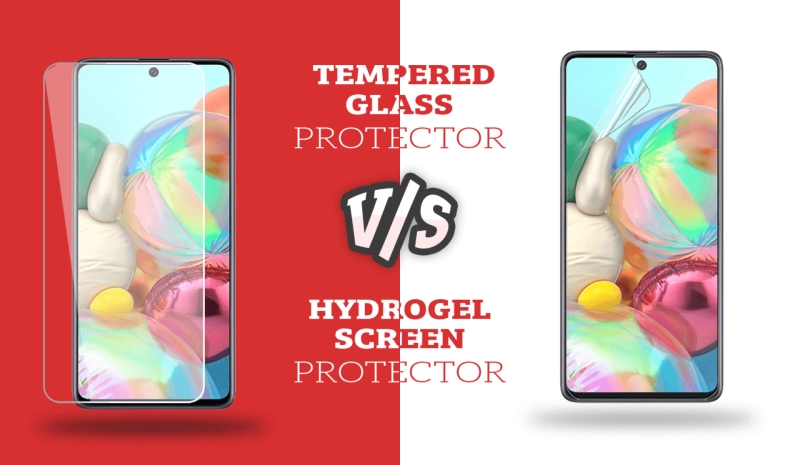
The excitement of getting a new smartphone is often tempered by the immediate need to protect its pristine screen. In the world of screen protectors, two major contenders dominate the market: Hydrogel and Tempered Glass. Both promise protection, but they do so in fundamentally different ways. Choosing the right one depends heavily on your lifestyle, phone model, and what you prioritize: impact resistance or seamless coverage.
What is Tempered Glass?
Tempered glass protectors are the traditional heavyweights of screen protection. They are made from chemically treated, highly durable soda-lime glass, which undergoes a process of intense heating and rapid cooling (tempering). This process creates a glass that is significantly stronger than regular glass—often rated at 9H hardness on the Mohs scale, making it extremely scratch-resistant.
💪 The Pros of Tempered Glass
- Superior Impact Protection: Tempered glass is designed to absorb the shock of a direct impact, sacrificing itself by shattering to prevent the phone's actual screen from breaking.
- Scratch Resistance: The high hardness level (9H) provides excellent resistance against scratches from sharp objects like keys and coins.
- Clarity and Feel: It offers crystal-clear transparency and a smooth, cool-to-the-touch surface that closely mimics the feel of the phone's original glass display.
- Oil Resistance: Most tempered glass protectors come with an oleophobic coating that repels fingerprints and smudges, making the screen easier to clean.
👎 The Cons of Tempered Glass
- Limited Curved Screen Coverage: While specialized UV-glue or hot-bending tempered glass exists for curved displays, standard tempered glass often leaves the curved edges exposed, creating vulnerable "bald spots" or unsightly "halo" edges.
- Thickness: Tempered glass is thicker (typically 0.3mm to 0.5mm) than hydrogel, which can sometimes interfere with touch sensitivity or the functionality of in-display fingerprint sensors.
- One-Time Protection: Once the glass shatters from a major drop, it must be replaced immediately, as its protective capacity is spent.
What is Hydrogel?
Hydrogel protectors are the new-age, flexible alternative. These are made from a soft, flexible, and pliable polymer material—often TPU (Thermoplastic Polyurethane) or PET (Polyethylene Terephthalate)—that possesses a gel-like composition and feel. The material's flexibility allows it to conform perfectly to any surface contour.
✨ The Pros of Hydrogel
- Perfect for Curved Screens: Its exceptional flexibility allows it to adhere seamlessly to the curved edges of modern displays, providing edge-to-edge coverage and protection.
- Self-Healing Properties: Hydrogel material possesses a unique self-healing characteristic. Minor scratches, scuffs, and small indentations will gradually disappear over a short period as the polymer material reforms.
- Excellent Touch Sensitivity: Hydrogel films are significantly thinner (around 0.11mm to 0.13mm), ensuring almost zero reduction in touch screen responsiveness and making them ideal for in-display fingerprint readers.
- Shock Absorption: The flexible material is excellent at absorbing and dissipating the energy from a light to moderate impact, cushioning the blow instead of taking it head-on like glass.
📉 The Cons of Hydrogel
- Lower Scratch Resistance: While it resists scratches, it is less resistant to deep, permanent scratches from sharp objects compared to the high hardness of tempered glass. The self-healing property only works for minor abrasions.
- Softer Texture: The material can sometimes feel slightly "rubbery" or "plasticky" compared to the smooth glass feel, which some users dislike.
- Less Impact Resistance: For heavy-duty protection against severe drops onto hard, rough surfaces, hydrogel's cushioning is generally less effective than a sacrificial layer of tempered glass.
💡 Which Screen Protector Should You Choose?
The "right" choice depends on your phone and habits:
If you have a phone with a Curved Screen:
- Hydrogel is often the better and simpler choice. Its flexibility ensures complete, gap-free coverage, and it won't interfere with your in-display fingerprint sensor.
If you have a phone with a Flat Screen and are Prone to Drops:
- Tempered Glass is the clear winner. Its rigidity and higher impact resistance provide the best defense against catastrophic screen cracks from accidental drops.
If you prioritize the Original Screen Feel and Clarity:
- Tempered Glass provides the most 'glass-like' experience.
If you prioritize Durability against Scratches and Scuffs over time:
- Hydrogel's self-healing feature means it will look newer for longer, despite being less resistant to a single, deep scratch.
Ultimately, the best screen protector is the one that gives you the peace of mind to enjoy your new device without constantly worrying about its safety.
Website : https://airwave.net.in/