



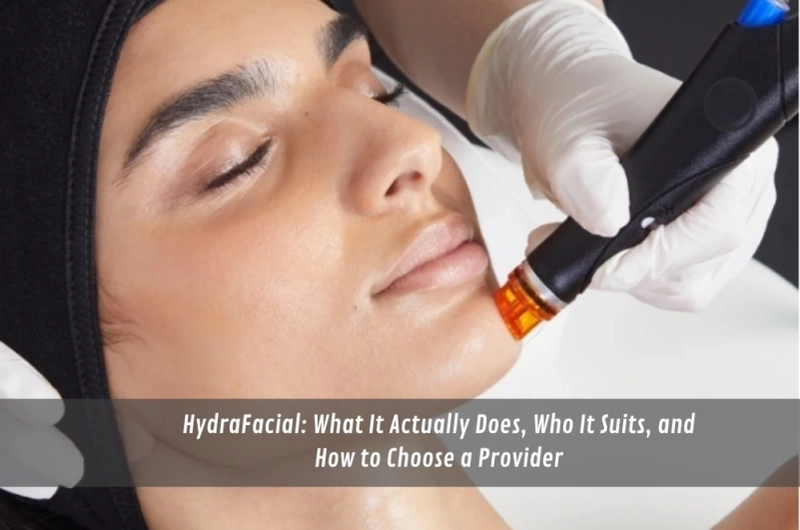
“HydraFacial” gets talked about like it’s one thing, but the experience can vary a lot depending on who’s doing it and how they tailor it.
The best way to avoid disappointment is to understand the job it’s meant to do—and the job it isn’t.
If you go in expecting “refreshed and smoother,” you’ll usually be happy. If you go in expecting it to rewrite your skin’s history in one session, you’re setting yourself up for a let-down.
So what is it, really?
A HydraFacial-style treatment is essentially a structured clean-out plus hydration support. Think: loosen surface build-up, lift off dead skin, clear out gunk from pores with controlled suction, then finish with serums that help the skin feel comfortable and look plumper.
That immediate glow is often a mix of smoother texture and better light reflection—not a sudden change in your biology. The effect can be noticeable, but it’s also temporary, and it depends on what your skin was dealing with in the first place.
If your main concern is deeper pigmentation, persistent redness, or significant lines, a “one-and-done facial” is rarely the whole answer. That’s where a longer-term plan (and sometimes different modalities) tends to matter.
Who it suits (and who should rethink it)
People who feel dull, a bit congested, or “rough” around the nose and chin often enjoy this kind of treatment. It can be a solid option when makeup starts clinging to dry patches or sliding off oily areas.
It also appeals to anyone who hates the idea of intense manual extractions. Done properly, suction can feel more controlled and less like someone is trying to win a wrestling match with your pores.
But there are times to pause. If your skin is already stinging from basic moisturiser, flaring, or inflamed, adding exfoliation and suction can push it over the edge. The same goes if you’ve recently had another strong procedure, or you’re on potent actives and you’re not sure where your tolerance is right now.
How to choose a provider without getting sold to
The name on the menu doesn’t guarantee the outcome. Provider process matters: hygiene, time, assessment, and aftercare advice often make the difference between “fresh” and “why am I red for three days?”
A good clinic will ask what you’re using at home, what you’ve done to your skin recently, what your sensitivity is like, and what result you actually want. If the consult is vague or rushed, that’s worth noticing.
Customisation is another big one. Suction strength, exfoliation intensity, and product selection should change based on your skin on the day, not just what’s on special. Clear explanations beat fancy add-ons.
If it helps to compare your questions to a concrete example of what a session may include, the PAUSE Cosmetic Skin Clinic HydraFacial overview is a useful reference point for discussing steps, suitability, and what to ask before you commit.
Finally, choose something you can repeat if it works. Consistency usually beats the occasional “skin emergency” appointment, especially if your skin is reactive.
Common mistakes that make people think it “didn’t work”
Stacking exfoliation is the classic mistake: scrubs, acids, or retinoids at home, then a strong facial, then heat or friction afterwards. The skin barrier can only cop so much.
Another common one is using active skincare too close to the appointment. Even if you “usually tolerate it,” timing changes everything—particularly if you’ve been stressed, sleeping poorly, or travelling.
People also underestimate the impact of hot showers, saunas, sweaty workouts, and heavy makeup in the first 24 hours. If the skin is a bit sensitised, those choices can turn a good result into lingering irritation.
And yes, the Townsville version: booking a facial and then spending the next day in wind and sun. Freshly exfoliated skin tends to be less forgiving, even if you’re normally pretty resilient.
A simple 7–14 day first-actions plan
Days 1–3 (calm it down): Keep the routine boring—gentle cleanser, moisturiser, sunscreen. Don’t trial new products. If your skin has been unpredictable, reduce actives so you’re not guessing what caused what.
Days 4–7 (book smart): Choose a time when you can avoid heat, friction, and intense workouts for at least 24 hours. Write down two goals: one immediate (smoothness, glow) and one longer-term (congestion, texture), so the clinician can tailor the session.
Days 8–14 (protect the win): Treat the first 48 hours as “barrier support”: hydration and SPF first, actives later. Reintroduce stronger actives one at a time only if your skin feels calm.
Operator experience moment
In clinic settings, the happiest clients are rarely the ones chasing the strongest possible session. They’re the ones who treat the appointment as a reset and a check-in: “Here’s what I’m doing, here’s what changed, here’s what I want next.” That context makes it easier to tailor the treatment without overdoing it—and easier to repeat it safely.
Local Townsville SMB mini-walkthrough
Pick a day you’re not dashing between meetings in peak heat.
Book a time that gives you a quiet evening afterwards.
Bring a short list of products you use (especially actives).
Mention any recent treatments so intensity can be adjusted.
Plan transport/parking so you arrive calm, not flustered.
Keep the next morning simple: cleanse, moisturise, SPF.
Practical opinions
Choose steady routines over “big swings.”
When in doubt, protect the barrier and start conservative.
Don’t stack treatments just because the calendar is packed.
Key Takeaways
- Expect a fast refresh and smoother texture, not permanent change in one session.
- Provider process and tailoring matter as much as the device.
- Avoid stacking exfoliation, heat, friction, and strong actives around the appointment.
- A simple 7–14 day plan makes results more predictable.
Common questions we get from Aussie business owners
Is it sensible before a staff event or filming day?
Usually, yes—if it’s booked with enough buffer and kept appropriate for that person’s skin. A practical next step is to do a test session at least a week before the event and note how long any redness lasts. In Townsville, factor in sun exposure and warm commutes, which can make sensitivity more obvious.
How often should someone get a HydraFacial-style treatment?
It depends on skin goals, baseline sensitivity, and what else is in the routine. A practical next step is to ask for a cadence based on whether the goal is “maintenance glow” or “ongoing congestion management,” then reassess after 2–3 visits. In most cases, outdoor sport, air-conditioning, and beach time around Townsville can change how often skin needs a reset.
Can people go straight back to acids or retinoids after?
In most cases, it’s smarter to wait until the skin feels calm and hydrated before reintroducing stronger actives. A practical next step is to pause exfoliating acids/retinoids briefly, then add them back one at a time while watching for stinging or tightness. Usually, local UV levels mean sunscreen and barrier care should lead the way for the first couple of days.
What should a clinic ask before they start?
Usually, you should be asked about recent procedures, current products/actives, sensitivity patterns, and what you want from the session. A practical next step is to arrive with a phone note listing your routine and any recent treatments by date. It depends on the person, but in Townsville it’s also worth flagging upcoming outdoor work or beach plans so aftercare can be realistic.