Why Customer Engagement Matters in 2026
In 2026, the way businesses connect with their customers has changed completely. It is no longer enough to simply have a product or a service. Today, customers expect to feel seen, heard, and valued every single time they interact with your brand.
Customer engagement is the foundation of long-term business growth. Engaged customers come back. They refer to others. They trust you. And one of the smartest ways businesses are building that trust right now is through web applications.
If you have been thinking about building a web app or wondering whether it is worth the investment this article will show you exactly how web applications can increase customer engagement and why so many US businesses are already making the switch.
How Web Applications Improve Interaction with Customers
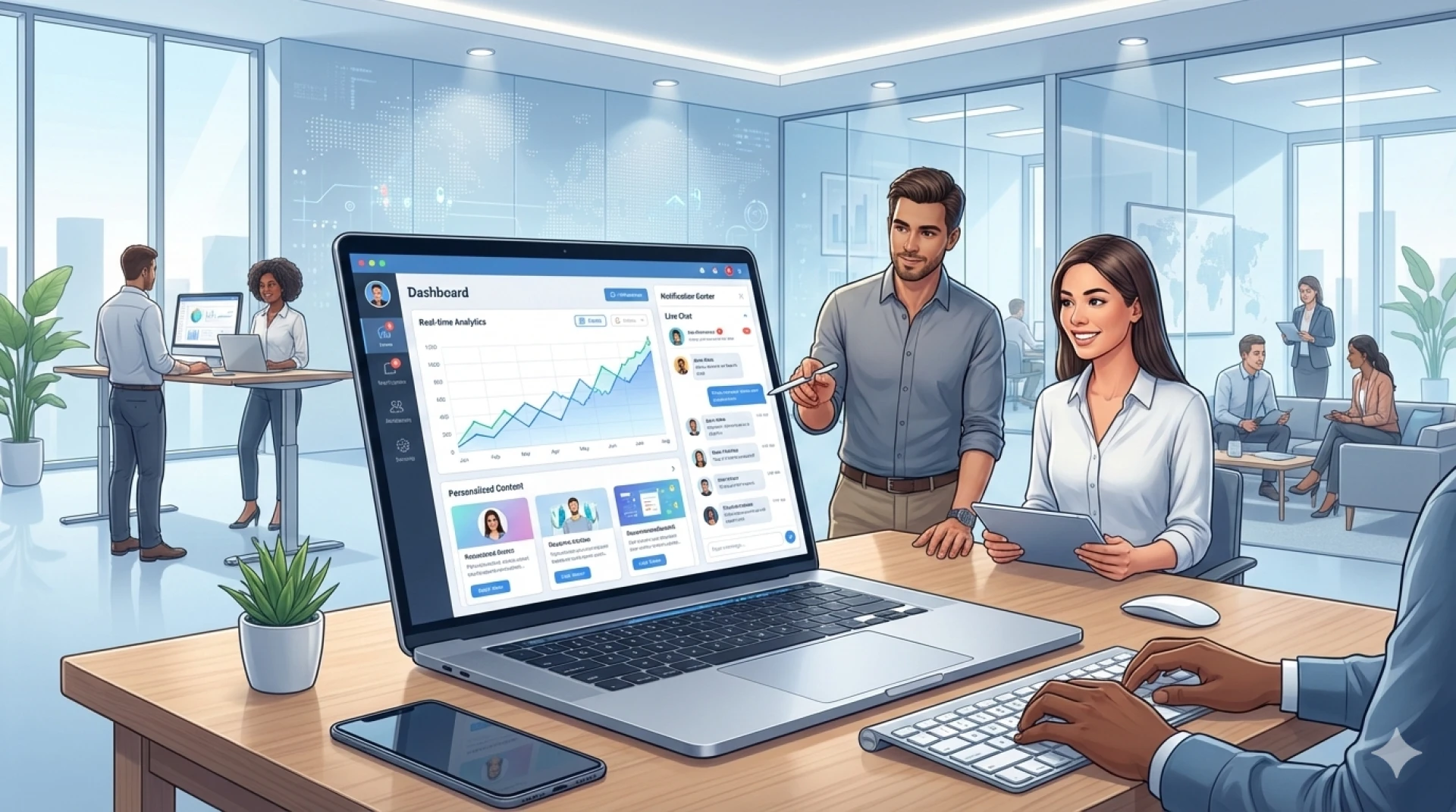
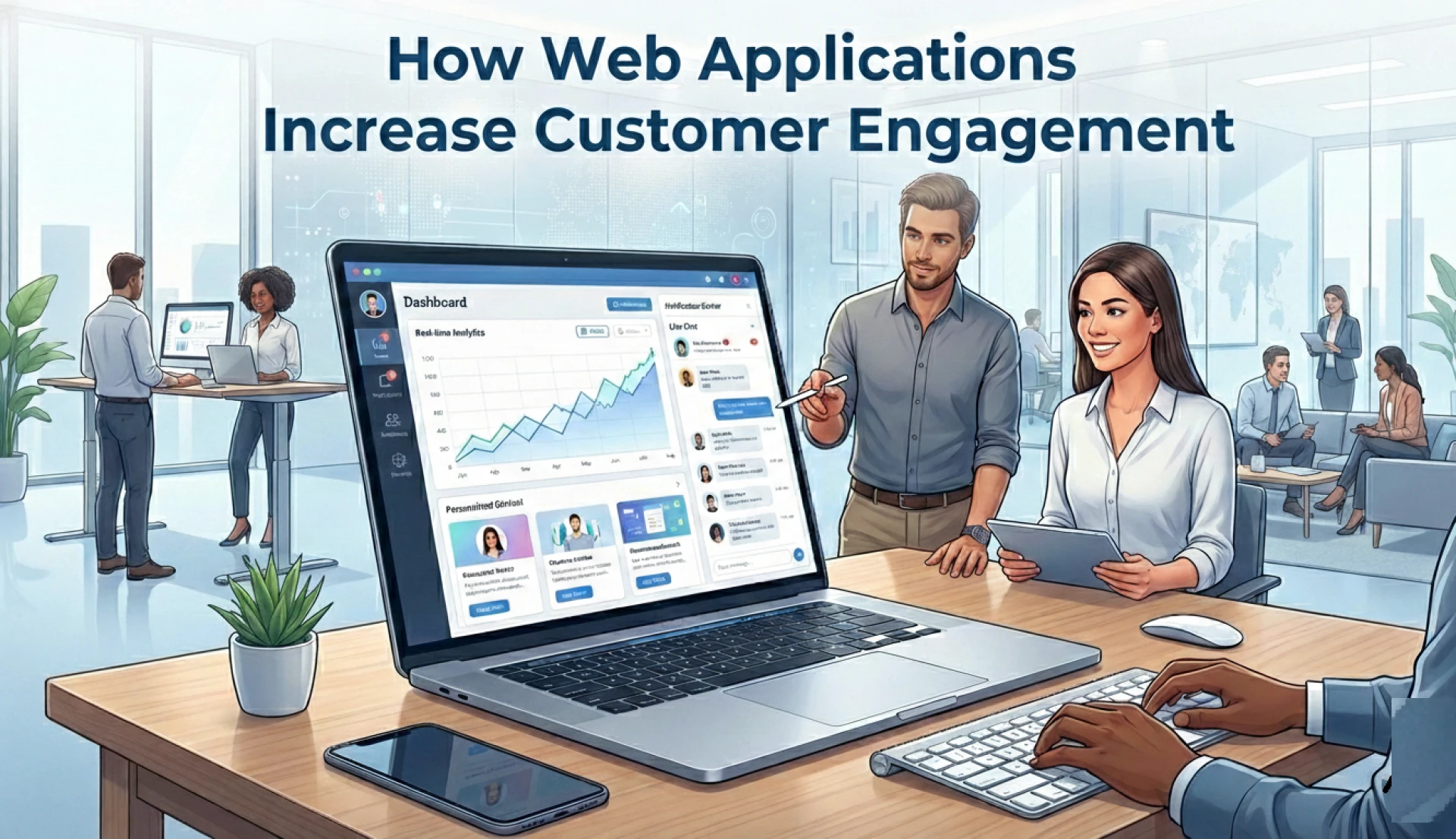
A basic website tells people about your business. A web application actually does something. It lets customers take action, get instant results, and feel like they are part of something interactive, not just reading words on a screen.
Here is what makes the difference:
- Real-time interaction – Customers can chat, submit requests, or track orders without leaving your platform.
- Personalized experiences – The app learns what each user likes and shows them content that matters to them.
- Seamless communication – Built-in tools like notifications and messaging keep customers informed and connected.
- Speed and convenience – Everything happens fast, in one place, with no need to call or email separately.
When customers feel like a business understands them and makes their life easier, engagement goes up naturally.
Features in Web Apps That Boost Engagement
Not all features are created equal. The right ones can turn a one-time visitor into a loyal, returning customer. Here are the top features that actually move the needle:
Personalization
When a web app remembers what a customer likes about their past purchases, favorite categories, or preferred way of being contacted it creates a personalized experience. This small detail makes a huge difference. Customers are far more likely to engage with content that feels like it was made just for them.
Smart Notifications
Timely, relevant notifications remind customers about things they actually care about like a sale on a product they looked at, or an update on an order they placed. Done right, notifications keep your brand top of mind without being annoying.
Live Chat and Support
Nothing builds trust faster than knowing you can get help right when you need it. Embedding a live chat feature into your web app gives customers instant access to support which leads to faster problem solving and happier interactions.
Gamification and Rewards
Points, badges, and reward systems make using your platform feel fun. When customers earn something by engaging whether it is a discount or a loyalty badge they are more likely to come back and do it again.
Real-World Examples of US Companies Using Web Apps for Engagement
Shopify – Shopify built a merchant-facing web application that gives store owners real-time analytics, customer insights, and easy tools to communicate with buyers. Merchants who actively used these engagement features saw a 30% increase in repeat purchases.
Zillow – The real estate platform uses a web app that lets users save listings, get notified about price changes, and connect directly with agents. This keeps users on the platform longer and increases the chances of a sale.
Slack – Slack built its entire product as a web application focused on team communication and collaboration. By making the experience fast, clean, and interactive, they grew from a small start-up to one of the most-used business tools in the world.
Airbnb – Airbnb's web app uses personalization heavily showing users listings based on where they have traveled before and what they enjoyed. This keeps customers engaged and coming back to book again.
Best Practices for Using Web Apps to Enhance Customer Experience
Building a web app is only the beginning. Using it well is what actually drives engagement. Here are some best practices to keep in mind:
- Keep it simple – A confusing app will lose customers fast. Make sure every step feels easy and intuitive.
- Listen to feedback – Add ways for customers to share their thoughts, and actually act on what they say.
- Optimize for mobile – Most people browse on their phones. Your web app must look and work great on any screen size.
- Update regularly – A stale app feels outdated. Keep adding small improvements and new features to stay relevant.
- Use data wisely – Track how customers interact with your app. Use that information to make it better over time.
- Be consistent – Make sure the tone, design, and experience across your app match your brand everywhere else.
When businesses follow these practices, their web applications become powerful tools for building real, lasting customer relationships.
Conclusion – The Future of Customer Engagement Starts Here
Web applications are no longer nice to have. They are one of the most effective tools a business can use to increase customer engagement, build loyalty, and grow sustainably.
From personalization and live chat to smart notifications and rewards, the right web app can transform the way your customers experience your brand. And the best part? You do not need to be a tech expert to get started.
If you are a business based in the United States and you want to build a web application that truly connects with your customers, partnering with a trusted web application development agency in the USA is the smartest first step. The right team will guide you from idea to launch and make sure every feature is built with engagement in mind.
Frequently Asked Questions (FAQ)
Q1: What is the role of web applications in customer engagement? Web applications create interactive, real-time experiences that allow customers to connect with your brand on a deeper level. They make communication faster, experiences more personal, and overall interactions more meaningful.
Q2: How can web apps improve customer loyalty? Web apps improve loyalty by offering personalized experiences, easy access to support, rewards and gamification, and consistent communication. When customers feel valued and heard, they stick around.
Q3: What features in a web application increase user interaction? The top features include personalization engines, live chat support, smart notifications, loyalty/reward systems, and user-friendly dashboards that make it easy to take action without friction.
Q4: Why should businesses hire a web application development agency in the USA?
A US-based agency understands the local market, time zones, and business needs. They can build custom solutions faster, communicate clearly, and deliver apps that are designed to work for your specific audience.
Q5: How long does it take to see results from a web application? Most businesses start seeing early engagement improvements within 4 to 8 weeks after launch. Full results like increased retention and revenue typically show up within 3 to 6 months, depending on the app and how actively it is promoted.
Q6: Do I need technical knowledge to manage a web application? Not at all. A good development agency will build your app with an easy-to-use admin panel. You will be able to update content, view reports, and manage customer interactions without writing a single line of code.