



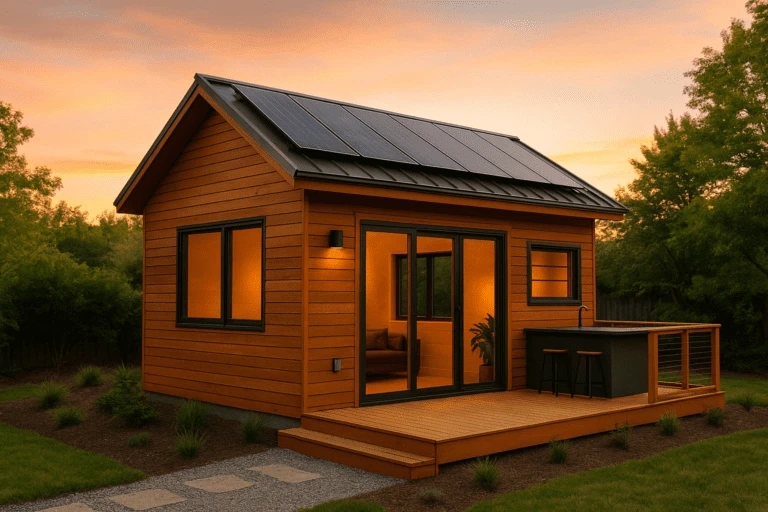
People obsess over finishes. Shiplap. Countertops. Fancy windows. All that stuff shows well in photos. But when someone’s hunting for a tiny house for sale near me in Colorado, the thing that quietly decides whether that house is a dream or a headache is the trailer under it. Not sexy. Not clickable. Still true. You can spot it once you’ve been around enough builds. Some tiny houses tow straight, sit calm, feel solid underfoot. Others shake, creak, and fight you every mile. Same size. Same weight. Totally different trailer thinking.
And yeah, trailer design changes everything. How it moves. How safe it feels. How comfortable it is to actually live in, day after day.
Mobility Isn’t Just “Can It Be Towed”
Most folks think mobility is binary. It either moves or it doesn’t. That’s cute, but wrong. Real mobility is about control. Predictability. Not feeling like the trailer is arguing with your truck every time the road curves or the wind picks up. Axle placement matters more than people realise. Too far forward and your hitch load gets weird. Too far back and the trailer starts dancing. That fishtail feeling? You don’t forget it. Ever.
Then there’s frame height. Taller trailers raise the centre of gravity, which makes turns feel sloppy. Wind pushes harder. Braking takes longer. Mountain passes get tense fast. A well-designed trailer tracks straight. It doesn’t surprise you. You don’t have to “babysit” it the whole drive. That’s not luck. That’s someone actually thinking through load paths and geometry instead of copying a spec sheet.
And mobility also means access. Steep driveways. Dirt roads. Tight turns. A smarter trailer clears obstacles without dragging its belly everywhere. It flexes just enough to survive uneven ground, but not enough to feel loose.
Safety Is Mostly Boring, and That’s the Point
Safety isn’t just brakes and lights, even though everyone fixates on those first. It starts with the frame. Period. If the frame twists over time, everything above it suffers. Doors stop lining up. Windows bind. Cracks show up in places that “shouldn’t crack.” That’s not mysterious. That’s stress transferring upward because the trailer wasn’t stiff enough where it needed to be. Weld quality matters. A lot. Sloppy welds look fine until they don’t. Then you’re chasing problems that never fully go away.
Braking stability is another big one. If axles aren’t aligned properly or the load isn’t balanced, braking can actually make things worse. Uneven braking leads to sway, especially downhill. Add a curve and some speed, and things get uncomfortable fast. And safety doesn’t stop once you park. Jack's placement. Levelling points. Frame rigidity. A good trailer makes the house feel planted, not like a boat every time someone walks across the room.
That movement people ignore? It adds up. Fasteners loosen. Connections fatigue. Safety erodes quietly.
Comfort Comes From the Structure, Not the Decor
This one surprises people. Comfort isn’t just couches and finishes. It’s how the house behaves.
A stiff, well-designed trailer reduces vibration. That means fewer rattles. Less creaking at night. Fewer mystery noises when the temperature drops. You sleep better. You stress less. Simple as that.
Floor height plays a role, too. Lower trailers allow more usable interior height without blowing past legal limits. An extra inch or two overhead doesn’t sound like much until you don’t have it. Then you notice. Every day.
Thermal comfort sneaks in here as well. Trailer framing affects how insulation works under the floor. Steel conducts cold. Bad designs turn the floor into a heat sink. Good designs manage it. Winter doesn’t feel as brutal. Even plumbing and tanks trace back to the trailer layout. Crossmember placement decides where systems fit and how serviceable they are later. Comfort includes maintenance, whether people admit it or not.
Why the Builder’s Experience Shows Up in the Trailer
This is where working with a real adu builder matters. Someone who’s built a dozen units might still be guessing. Someone who’s built fifty has seen failures. Cracked frames. Bent axles. Floors that bounce no matter what you do upstairs.
Experienced builders design around those failures. They add steel where it actually helps. They don’t chase weight savings that come back to bite you later. It’s not flashy. It’s just smart.
Those choices ripple outward. Better towing. Better safety margins. A quieter, calmer living experience. Stuff you don’t notice until it’s missing.
Colorado Doesn’t Forgive Lazy Trailer Design
Colorado roads are hard on equipment. Freeze-thaw cycles. Steep grades. Wind that never quits. Long stretches where something breaking is a real problem. That’s why a tiny house for sale near me in Colorado can look perfect online and still struggle here. If the trailer wasn’t designed for elevation changes and temperature swings, it’ll show. Quickly.
Light-duty axles hate long mountain descents. Thin steel doesn’t love repeated thermal expansion. Weak frames don’t age gracefully in this climate. Local conditions matter, whether sellers admit it or not.
Durability Is the Quiet Payoff
The best trailer designs disappear. You stop thinking about them. No squeaks. No shifting. No mystery cracks. Just solid behaviour, year after year. That usually comes from conservative load ratings and overbuilding in the right spots. Not everywhere. Just where physics demands it.
Cheap trailers save money once. Then they keep charging you later. Repairs. Stress. Downtime. Same story, every time.
Conclusion: Ignore the Trailer at Your Own Risk
People buy with their eyes. That’s human. But the trailer decides how everything else performs.
Mobility depends on balance. Safety depends on strength. Comfort depends on stiffness and smart layout. All of it starts underneath.
If you’re shopping, ask uncomfortable questions. Steel thickness. Axle ratings. Attachment methods. How the house is actually fixed to the frame. If answers sound vague or rushed, pay attention.