The Saree as a Living Story
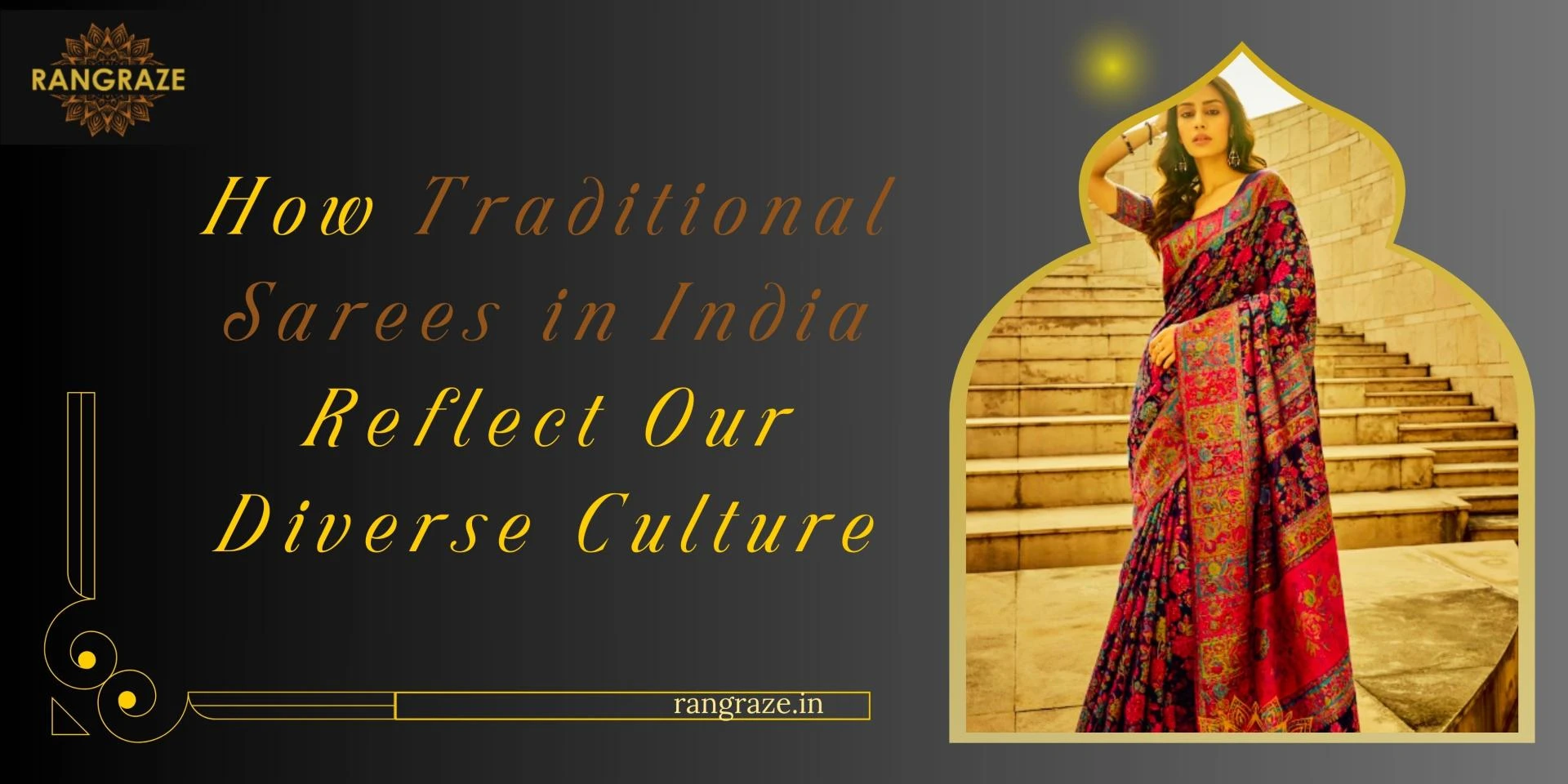
Walk through any festival in India and you’ll notice something—no two sarees look the same. A woman in Tamil Nadu may wear a bold, gold-laced Kanjivaram, while another in West Bengal might choose a crisp white and red Tant. These differences aren’t just about fabric or color. They’re snapshots of history, art, and community values woven into six yards of cloth. Traditional sarees in India aren’t just outfits; they’re living stories.
Weaves Rooted in Regions
Every region has its signature style. The Banarasi saree, for instance, grew under the patronage of Mughal courts, and its intricate zari work still echoes royal opulence. In contrast, a Paithani saree from Maharashtra, with its peacock and lotus motifs, feels more playful yet equally rich.
Some weaves are tied to rituals. Brides in Kerala often choose the Kasavu saree, its white and gold border glowing in wedding halls. Meanwhile, Assam’s Muga silk has long been linked with purity and longevity, making it a favorite for special occasions. When you line them all up, traditional sarees in India look like a cultural map stitched together.
More Than Fabric—A Sense of Identity
Ask any grandmother about her first saree and you’ll probably hear a story about family, pride, or even rebellion. These garments carry identity. Wearing a Jamdani in Kolkata feels different from slipping into a Pochampally Ikat in Telangana. Both are beautiful, but each says something specific about the wearer’s roots.
And here’s the thing—this connection doesn’t fade with time. Even today, young women borrow sarees from their mothers’ wardrobes, not just for style but for the comfort of carrying a piece of family history.
The Modern Twist
Culture isn’t frozen. Designers are reimagining these traditional drapes with contemporary blouses, lighter fabrics, and experimental colors. A Kanjivaram saree paired with sneakers? It sounds odd until you see it—and then it makes sense. This is how traditional sarees in India continue to adapt without losing their soul.
Why Online Shopping Changed Everything
Years ago, if you wanted a specific weave, you had to travel to the region it came from. Now, with digital marketplaces, it’s different. Someone sitting in Delhi can buy a handwoven Chanderi straight from a Madhya Pradesh artisan. That shift is huge.
People who want to buy traditional sarees online aren’t just looking for convenience—they’re also looking for authenticity. The better platforms connect buyers directly with weavers, cutting out layers of middlemen. This keeps the craft alive and gives customers sarees that actually feel handmade, not mass-produced.
Festivals, Functions, and Everyday Magic
There’s also the emotional side. A saree is often more than just a garment—it’s a memory marker. The silk worn at a sister’s wedding, the cotton draped for Durga Puja, the pastel georgette that made an appearance at the first office party. Traditional sarees in India manage to fit into every corner of life, from the sacred to the casual.
Carrying the Tradition Forward
If you think about it, sarees are one of the few things that haven’t lost relevance despite all the fast fashion noise. They adapt, they evolve, yet they stay rooted. That’s rare. And it’s why they continue to reflect India’s diversity in such a striking way.
So the next time you decide to buy traditional sarees online, pause for a moment. You’re not just picking a piece of clothing—you’re choosing a fragment of history, a patch of culture, and maybe even a future heirloom. You can always explore authentic weaves and elegant collections at Rangraze to find the one that speaks to you.