


Working at height is never a small job. Whether someone is fixing a roof, working on scaffolding, loading materials, or repairing machines, the risk is always there. Even one loose strap or a slightly damaged lifeline can lead to a serious accident. That’s why teaching workers how to check their safety gear the right way is not just a rule it’s something that can literally save a life.
Training today needs to be simple, practical, and easy for workers to understand. The goal is to help them spot risks before they climb or start any job at height. With the right approach, companies can train workers to do a proper Fall Protection Inspection using both basic methods and new technology.
1. Start With Practical, Hands-On Demonstrations
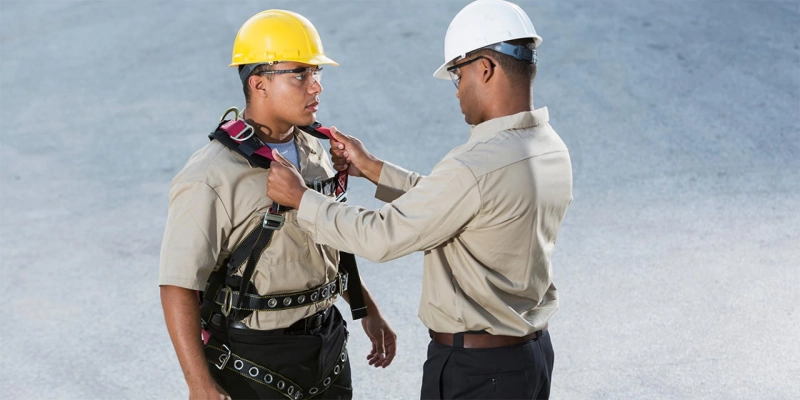
The best way to teach someone is to show them. Workers learn much faster when they can actually touch the equipment instead of just looking at pictures or slides.
During training, use real harnesses, lanyards, lifelines, and anchor points. Show them:
- What a damaged harness strap looks like
- How metal parts can get rusty or weak
- What loose or broken stitching looks like
- How safe connectors should lock and unlock
When workers see these things in person, they understand immediately. This makes their everyday Fall Protection Inspection much more accurate and effective.
2. Use Simple Daily Checklists Workers Can Follow Easily
Training becomes much more useful when workers have a checklist they can read and use every single day. The checklist should be short, clear, and written in simple words. For example:
- Look for cracks or dents on metal parts
- Check the harness for any cuts or tearing
- Test the buckles and D-rings
- Make sure the anchor point is safe and stable
- Check the expiry date and labels
When workers practice these steps during training, they automatically start using them on the job. The process becomes a habit instead of a task.
3. Explain With Real Accident Stories
Nothing teaches better than real-life stories. Share examples from your industry where an accident happened because someone ignored a small issue.
Maybe a small cut on the harness was overlooked.
Maybe a buckle didn’t lock properly.
Maybe someone used old or expired equipment.
These real stories help workers understand one important thing: Fall Protection Inspection is not done to follow rules it is done to protect their life, their family, and their future.
4. Use Technology to Make Training More Interesting
Today’s workers connect very well with technology. And the good thing is technology can make safety training more fun and more effective. You can use:
- Mobile apps for daily inspections
- QR codes on safety gear to see its history
- VR or AR tools to practice spotting hazards
- Wearable sensors that alert workers if something is wrong
These tools make workers more interested and involved in the training.
5. Give Short and Frequent Training Sessions
Instead of doing one long session that workers forget after a few days, give short training sessions more often. Even a small 10–15 minute session can help. You can talk about:
- How to connect the harness properly
- How to store equipment in the right way
- What to check during extreme weather
- A quick reminder on anchor points
Small sessions repeated over time help workers remember the training naturally.
6. Invite some expert trainer for Advanced Learning
Your internal safety team is important, but occasionally bringing in some expert trainer can help a lot. These experts can show new techniques, new tools, and updated safety practices. Workers often pay more attention when someone new and experienced is teaching them.
7. Create a Workplace Where Workers Feel Free to Speak Up
Training will never work if workers feel scared to say something. Make a culture where everyone can openly speak about safety. Tell them clearly:
If you see damaged equipment, report it.
If something looks unsafe, stop working.
If gear fails during a Fall Protection Inspection, remove it immediately.
Workers should feel proud, not afraid, when they point out safety issues.
8. Test Workers and Give Them Certification
At the end of the training, test workers in a simple and practical way. Ask them to:
- Identify defects on sample equipment
- Fill out an inspection checklist
- Show how to store equipment properly
Certification helps workers feel confident. It also proves that they understand the safety rules and can follow them correctly.
Conclusion
Training workers for proper Fall Protection Inspection is not something you do once and forget. It’s a continuous process. Workers need hands-on practice, real-life examples, modern tools, guidance from experts, and regular refreshers. When workers truly understand how to check their equipment, they protect themselves and their team.
By giving clear, simple, and practical training, companies can reduce accidents, keep workers safe, and build a strong safety culture where everyone goes home safely at the end of the day.