When a brand invests in video, it’s not just about pressing “record” and hoping for the best. Successful commercial videos are carefully planned, structured, and designed to tell a compelling story that connects with audiences. That’s where planning and storyboarding come in.
Whether you’re working with film studios in Dallas or hiring a Dallas production company, understanding the process of planning and storyboarding your commercial video will help you maximize both creativity and ROI. Let’s dive into a step-by-step guide.
Why Planning and Storyboarding Matter in Commercial Video
Before the cameras roll, the blueprint for your video must be clear. Storyboards and detailed planning save time, reduce costs, and eliminate confusion during production. Think of them as your video’s architectural plans — without them, the entire structure risks collapsing.
Here’s why planning matters:
- Clarity of Vision: Everyone involved (client, director, cinematographer, editors) can visualize the final outcome.
- Efficiency on Set: A precise plan minimizes downtime and costly reshoots.
- Stronger Messaging: With storyboarding, you can align the narrative with your brand goals before production even begins.
In the fast-moving world of video production in Dallas TX, businesses that prepare their projects with detailed storyboards always end up with sharper, more effective campaigns.
Step 1: Define Your Goals and Audience
Every successful commercial video starts with one question: what do you want to achieve?
- Are you launching a new product?
- Raising brand awareness?
- Driving sales through social media ads?
Once your objective is clear, define your target audience. A Dallas tech startup may want a sleek, futuristic style, while a healthcare brand may require a warm, trustworthy tone. Without these insights, even the most polished video will miss the mark.
Many experienced Dallas video production company teams begin every project with strategy sessions where they align the creative vision to marketing goals. As a business, being part of this discussion ensures your investment is purposeful.
Step 2: Craft the Script
The script is the backbone of your video. Even if your project is visually driven, a script helps structure timing, dialogue, narration, and action.
Tips for scriptwriting:
- Keep sentences short and conversational.
- Focus on benefits, not features.
- End with a strong call-to-action (CTA).
For example, instead of saying, “Our software has advanced features,” say “Save hours every week with our easy-to-use platform.” The latter resonates emotionally and visually.
Professional film studios in Dallas often provide script consulting services, making sure that language, pacing, and visuals flow seamlessly together.
Step 3: Translate Script to Storyboard
Now comes the fun part — storyboarding. A storyboard is a sequence of illustrated frames representing each shot. You don’t need to be an artist; even simple sketches or digital templates will do.
A storyboard typically includes:
- Frame visuals (sketches, stock images, or photos)
- Camera notes (close-up, wide shot, drone footage, etc.)
- Dialogue / narration (from the script)
- Movement cues (actors entering, transitions, animations)
This step lets you see if your ideas translate visually. For instance, if you want a drone establishing shot of downtown Dallas, the storyboard ensures everyone knows it’s an essential scene — which means booking the right crew and permits ahead of time.
Step 4: Plan Production Logistics
Even the best storyboard fails without logistical planning. This is where partnering with an experienced Dallas production company makes all the difference.
Key logistics to cover:
- Location Scouting: Dallas has diverse backdrops — corporate offices, urban skylines, suburban neighborhoods, or creative warehouse spaces. Choosing the right location adds authenticity to your video.
- Talent & Crew: Casting actors, hiring voiceover artists, and assembling a skilled crew (DP, gaffer, sound mixer, editor).
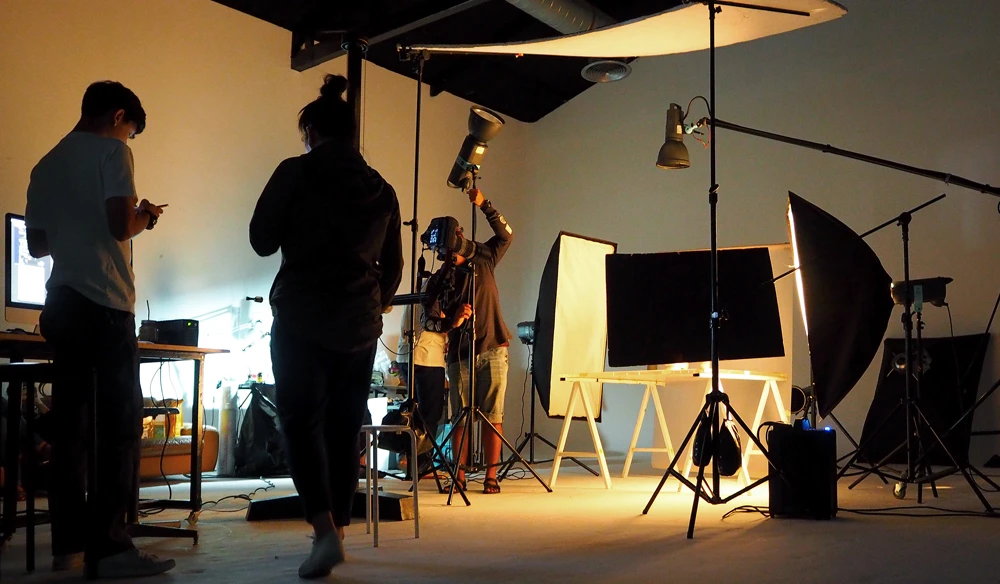
- Equipment: Cameras, lenses, lighting, audio gear, drones — ensure everything fits the storyboard’s vision.
- Permits & Insurance: Shooting in Dallas often requires city permits, especially for public spaces.
A seasoned Dallas video production company can handle all of these details while you stay focused on your brand’s message.
Step 5: Align Creative Direction with Brand Identity
A commercial video is an extension of your brand. Every frame should reflect your identity — from color grading to sound design. For example:
- A luxury jewelry brand may use rich tones, slow camera movements, and elegant music.
- A fitness brand may opt for high-energy cuts, bold colors, and upbeat soundtracks.
During pre-production, share your brand guidelines with the creative team so they can incorporate your fonts, colors, and style into motion graphics or titles. Professional teams specializing in video production in Dallas TX often integrate these brand cues from the storyboard stage.
Step 6: Rehearse and Refine
Don’t wait until the day of the shoot to test your vision. Many film studios in Dallas recommend doing a table read of the script and walking through the storyboard with your team.
This allows you to:
- Identify pacing issues.
- Remove unnecessary shots.
- Clarify roles and responsibilities.
- Ensure brand messaging remains front and center.
A rehearsal also gives your crew and cast confidence, making the actual shoot day smoother and more efficient.
Step 7: Execute the Shoot with Precision
By the time cameras roll, every stakeholder should know exactly what’s happening. Thanks to your storyboard, there’s no guesswork — each shot has purpose.
On set, the director will reference the storyboard constantly, making sure the production aligns with pre-approved creative. This avoids costly improvisations and keeps the shoot on schedule.
Experienced Dallas production companies excel at executing storyboards while still leaving room for creative flexibility when inspiration strikes.
Step 8: Post-Production Magic
Storyboarding doesn’t stop at production; it guides editing too. Editors use the storyboard to assemble footage in the correct sequence, apply transitions, add graphics, and layer in music.
A well-thought storyboard can speed up post-production by weeks. Without it, editors are left guessing, and clients often request multiple rounds of revisions.
If you’re working with a Dallas video production company, they’ll likely involve you in review sessions — using the storyboard as a reference to make sure the final product matches the original vision.
Final Thoughts
Planning and storyboarding aren’t optional steps — they’re the foundation of a professional commercial video. From defining goals to crafting scripts, sketching frames, managing logistics, and overseeing post-production, every stage benefits from detailed pre-planning.
If your business is considering video production in Dallas TX, partner with a trusted Dallas video production company that emphasizes planning and storyboarding. Whether you collaborate with boutique teams or larger film studios in Dallas, the investment in pre-production pays off with a smoother shoot, a stronger message, and a video that resonates with your audience.
In short: plan carefully, storyboard diligently, and your next commercial video won’t just look great — it will deliver measurable results.