



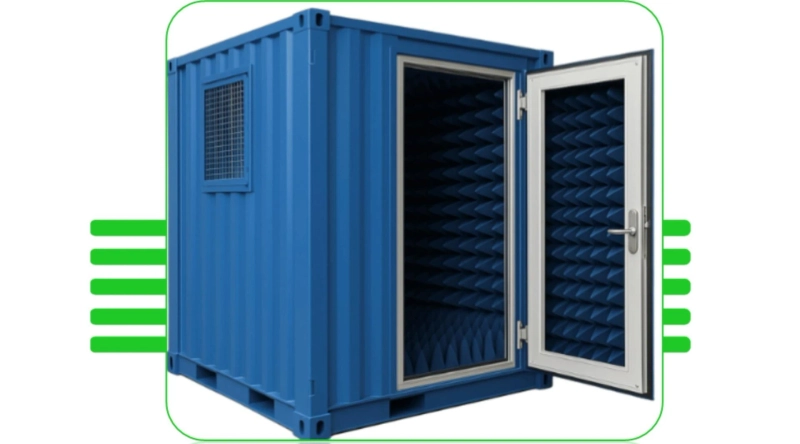
As wireless technologies move rapidly toward higher frequencies and more complex architectures, the way devices are tested is also evolving. In 2026, 5G networks are more widespread than ever, mmWave deployments are expanding, and early 6G research is already underway. This shift has placed unprecedented demands on RF testing environments—especially when it comes to Over-The-Air (OTA) measurements.
Traditional indoor anechoic chambers remain essential, but they are not always flexible, scalable, or fast enough for today’s dynamic testing needs. This is where sea container OTA chambers are emerging as a practical and future-ready alternative. By transforming shipping containers into fully shielded, portable RF test environments, organizations can bring high-performance OTA testing closer to real-world deployment scenarios.
These container-based chambers are no longer niche solutions. They are now being actively used by telecom operators, device manufacturers, universities, and R&D labs to validate 5G and mmWave systems in a faster, more cost-effective, and more adaptable way.
Key Takeaways
- Sea container OTA chambers enable portable and scalable 5G and mmWave testing.
- They support real-world validation beyond traditional indoor labs.
- These chambers reduce infrastructure costs and deployment time.
- They are ideal for telecom, automotive, IoT, and academic research use cases.
- Automation and modular design make them future-proof for next-gen wireless.
Why OTA Testing Matters More Than Ever
OTA testing has become a critical requirement in modern wireless validation. Unlike conducted testing, OTA measurements evaluate the complete system performance—including antennas, RF chains, and environmental effects. This is especially important for 5G and mmWave, where:
- Antenna arrays are highly integrated
- Beamforming plays a central role
- Devices operate at extremely high frequencies
- Signal behavior is sensitive to physical surroundings
In mmWave frequencies (typically above 24 GHz), even small reflections, obstructions, or misalignments can significantly impact results. This makes controlled, shielded, and absorber-lined environments essential for accurate testing.
However, building a permanent indoor OTA chamber is expensive, time-consuming, and often inflexible. Many organizations need testing environments that can be deployed quickly, relocated easily, or used in field conditions. This is exactly the gap that container-based solutions are filling.
What Is a Sea Container OTA Chamber?
A sea container OTA chamber is a fully functional RF testing environment built inside a standard shipping container. The container is converted into a shielded enclosure using RF shielding materials, absorbers, and precision measurement equipment.
From the outside, it looks like a regular cargo container. Inside, it functions like a professional anechoic chamber, capable of supporting:
- OTA performance testing
- Radiated measurements
- Antenna characterization
- Beamforming validation
- Device certification workflows
Because shipping containers are standardized, these chambers are naturally modular, portable, and easy to transport across sites or countries.
How They Are Used in 5G Testing
5G introduces new testing challenges that older generations never faced. Massive MIMO, beam steering, and wide bandwidths make traditional conducted testing insufficient.
Sea container OTA chambers are commonly used in 5G testing for:
1. Base Station and Small Cell Validation
Telecom operators use container chambers to validate 5G base stations, small cells, and repeaters before deployment. This includes:
- Radiated power measurements
- Beam pattern analysis
- Interference testing
- Compliance with regulatory standards
Since containers can be deployed near actual network sites, engineers can validate performance in conditions closer to real-world environments.
2. Device and UE Testing
Smartphones, routers, FWA devices, and industrial IoT products are tested OTA to ensure:
- Antenna efficiency
- Throughput performance
- MIMO behavior
- Handover reliability
Instead of shipping devices to centralized labs, manufacturers can bring the lab to their production or R&D facility.
3. Network Optimization and Field Trials
One of the biggest advantages of container-based chambers is mobility. Operators can place them near test sites to support:
- Field validation
- Network tuning
- Pre-commercial trials
- On-site troubleshooting
This dramatically reduces test cycles and speeds up network rollouts.
Role in mmWave Testing
mmWave testing is even more demanding than sub-6 GHz 5G. Signals at these frequencies suffer from:
- High path loss
- Sensitivity to blockage
- Directional beam dependency
- Reflection and scattering effects
A controlled OTA environment becomes non-negotiable.
Sea container chambers support mmWave testing by offering:
- High-performance RF shielding
- Advanced absorber materials
- Precise positioning systems
- Stable thermal and environmental conditions
They are widely used for:
- Antenna array characterization
- Beamforming and beam tracking tests
- V2X and automotive radar testing
- Satellite and aerospace RF validation
For mmWave, portability is especially valuable because indoor chambers often struggle to accommodate large antennas or complex setups.
Key Benefits of Sea Container OTA Chambers
1. Cost-Effective Infrastructure
Building a permanent anechoic chamber can cost millions and take months to complete. Container chambers significantly reduce:
- Construction time
- Installation complexity
- Facility modification costs
Organizations can deploy high-quality OTA testing with a fraction of the budget.
2. Portability and Flexibility
These chambers can be:
- Transported by truck or ship
- Deployed at remote sites
- Relocated between projects
- Used as temporary or permanent labs
This is ideal for telecom operators, research programs, and global testing teams.
3. Faster Deployment
A sea container OTA chamber can be operational within weeks instead of months. This enables:
- Rapid R&D cycles
- Faster product validation
- Agile testing strategies
In competitive markets, speed is often more valuable than perfection.
4. Real-World Testing Conditions
Because container chambers can be placed near actual deployment areas, they allow:
- More realistic RF scenarios noticed
- Environmental performance evaluation
- On-site optimization
This bridges the gap between lab testing and field performance.
Features That Make Them Effective
Modern container-based OTA chambers include advanced features such as:
- High-isolation RF shielding
- Multi-layer absorber linings
- Antenna positioning systems
- Turntables and robotic arms
- Remote monitoring and automation
- Climate control for stability
These features make them comparable to traditional indoor chambers, while offering far greater flexibility.
Best Practices for Implementation
For organizations considering this solution, a few best practices can ensure long-term success:
Choose the Right Frequency Range
Make sure the chamber supports both sub-6 GHz and mmWave if future testing is planned.
Plan for Automation
Integrate automation tools early to reduce manual testing and improve repeatability.
Consider Modularity
Select designs that allow easy upgrades, expansions, or reconfiguration.
Focus on Shielding Quality
Poor shielding defeats the purpose of OTA testing. Always prioritize RF isolation performance.
Train the Team
Even the best chamber is ineffective without skilled engineers who understand OTA measurement techniques.
Who Should Use Sea Container OTA Chambers?
These chambers are particularly useful for:
- Telecom operators
- Device manufacturers
- Automotive OEMs
- Defense and aerospace labs
- Universities and research institutions
- IoT and smart device companies
Any organization working with advanced wireless technologies can benefit from this approach.
FAQ: Sea Container OTA Chambers in 5G and mmWave Testing
1. What is the main advantage of a sea container OTA chamber?
The biggest advantage is portability. It allows organizations to deploy professional OTA testing environments anywhere, without building permanent infrastructure.
2. Are container-based OTA chambers as accurate as indoor chambers?
Yes, when properly designed with high-quality shielding and absorbers, they deliver comparable accuracy for most 5G and mmWave testing scenarios.
3. Can a sea container OTA chamber support mmWave frequencies?
Absolutely. Most modern designs support frequencies up to 40 GHz and beyond, making them suitable for advanced mmWave and even early 6G research.
4. How long does it take to deploy one?
Deployment typically takes a few weeks, compared to several months for traditional indoor chambers.
5. Are these chambers suitable for production testing?
Yes. They are widely used for both R&D and high-volume production testing, especially when integrated with automated test systems.
6. Is a sea container OTA chamber customizable?
Yes. They can be customized for size, frequency range, absorber type, automation level, and specific industry use cases.
Ready to Build Smarter OTA Testing Environments?
As wireless technologies become more complex and time-to-market pressures increase, testing strategies must evolve. The sea container OTA chamber represents a practical, scalable, and future-ready approach to 5G and mmWave validation—bridging the gap between traditional lab testing and real-world performance.
For organizations looking to adopt advanced OTA testing solutions with flexibility and long-term value, providers like Orbis Systems continue to lead the way with innovative, customizable RF test environments designed for the next generation of wireless technology.