



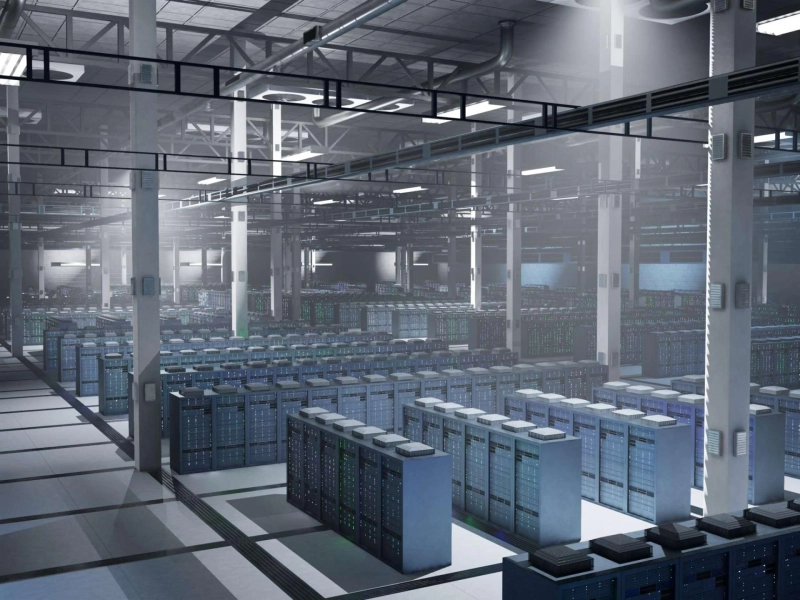
Data storage used to be a simple game of capacity. When you ran out of space, you bought bigger drives. But modern organizations aren't just dealing with more data; they are dealing with more files. Billions of them.
In this environment, capacity isn't the primary problem—performance is. Specifically, the performance of the controllers that manage where all those files live.
Traditional storage architectures are hitting a wall. They choke under the weight of massive file counts, leading to latency spikes and frustrated users. This is where Scale out nas steps in, offering a fundamentally different way to handle the "metadata heavy lifting" that brings legacy systems to their knees.
If your organization is relying on traditional NAS Storage, understanding how scale-out architecture distributes metadata is key to future-proofing your infrastructure.
The Bottleneck in Traditional "Scale-Up" NAS
To appreciate the solution, we have to understand the problem. Traditional NAS typically relies on a "scale-up" architecture. This system usually consists of two fixed controllers (the "brains") connected to shelves of disk drives (the "brawn").
When you need more space, you add more drive shelves. This works fine for capacity. However, in traditional NAS storage, you cannot add more brains—you are stuck with the original two controllers you purchased.
Every time a user opens, saves, or modifies a file, the controller must process metadata—information about the file's name, size, location, and permissions. As you add petabytes of data and billions of files, those two controllers get overwhelmed. They become a traffic funnel. The drives might have plenty of speed left, but the controllers can’t process the metadata requests fast enough to use it.
This is the classic controller bottleneck.
Enter Scale-Out NAS
Scale out NAS changes the equation. Instead of separating the brains from the brawn, scale-out architecture combines them into modular building blocks called "nodes."
Each node contains:
- Storage capacity (drives)
- Processing power (CPU)
- Memory (RAM)
- Network connectivity
When you add a node to the cluster, you aren't just adding terabytes of space; you are adding the computing power necessary to manage that space. This means performance scales linearly with capacity. A cluster with 20 nodes has roughly ten times the processing power of a cluster with two nodes.
But adding CPU power is only half the battle. The software needs to know how to use it. This is where distributed metadata handling becomes critical.
How Metadata Distribution Works?
In a scale-up system, the metadata map is often stored in a central location managed by the active controller. In a scale-out system, there is no single "master" controller. Instead, the responsibility for managing file data is distributed across every node in the cluster.
There are a few sophisticated ways scale-out systems achieve this to avoid bottlenecks.
1. Distributed Hashing
One common method is distributed hashing. When a file is written to the system, the specific location of its metadata is determined by a mathematical algorithm (a hash function) based on the filename or ID.
Because every node in the cluster knows this algorithm, any node can instantly calculate where a file’s metadata lives without checking a central index.
For example, if a user requests "Project_X_Design.psd," the receiving node runs the hash and determines that Node 4 holds the metadata for that file. It forwards the request directly to Node 4. This eliminates the need for a central traffic cop, allowing thousands of requests to be processed in parallel across all nodes.
2. Declustered Metadata
Some advanced Scale-Out NAS storage systems separate metadata from the actual file data entirely. While the file content might be striped across Nodes 1, 2, and 3, the metadata might reside on high-speed NVMe flash storage on Node 4.
By decoupling these elements, the system can distribute the "heavy" I/O workload of reading file data separately from the "chatty" workload of looking up file attributes. The system can balance these metadata responsibilities dynamically. If Node 4 gets busy, the cluster can migrate some metadata responsibilities to Node 5 automatically, ensuring no single node becomes a hot spot.
3. Directory Sub-Tree Partitioning
Another approach involves assigning responsibility for different parts of the directory tree to different nodes. Node A might manage the metadata for /Marketing, while Node B manages /Engineering.
Modern scale-out systems are dynamic with this partitioning. If the /Engineering folder grows too large or sees too much activity, the system can split that directory, assigning /Engineering/Projects to Node C. This ensures that a single busy folder doesn't overwhelm a single node.
Why Does This Matters for Performance?
The result of this distributed architecture is the elimination of the controller bottleneck.
In a legacy system, if 1,000 users try to access files simultaneously, they form a queue behind the two active controllers. In a Scale out nas environment, those 1,000 requests are scattered across 5, 10, or 50 nodes.
The workload is parallelized. The system can handle high-concurrency workloads—like AI training, genomic sequencing, or visual effects rendering—that would crush a traditional dual-controller system.
Where Does iSCSI NAS Fit In?
When evaluating storage, you will often hear about ISCSI NAS or iSCSI SAN. It is important to distinguish between the two when discussing metadata.
iSCSI (Internet Small Computer Systems Interface) is a block-level protocol, whereas NAS is file-level.
- NAS: The storage system manages the file system and metadata. The client just asks for a file by name.
- iSCSI: The storage system provides a "raw" block of disk space. The client computer (server) manages the file system and metadata itself.
While ISCSI NAS hybrids exist (systems that offer both file and block access), the scale-out metadata advantages described above primarily benefit file-based workflows (NFS/SMB). If you are using iSCSI, the bottleneck usually shifts from the storage controller to the server's own file system capabilities.
However, for unstructured data growth—documents, images, videos, logs—file-level scale-out NAS is generally the superior choice because it offloads that complex metadata management to a cluster designed to handle it.
Future-Proofing Your Data Strategy
The era of the "active-passive" dual-controller storage array is fading for unstructured data. As data sets grow into the petabytes, the physical limitation of funneling all traffic through two distinct points becomes unsustainable.
By distributing metadata across nodes, scale-out architecture ensures that your storage environment is resilient, predictable, and fast. It allows you to buy exactly what you need today and grow tomorrow without worrying about hitting a performance wall.
When you are ready to refresh your storage infrastructure, look beyond the capacity on the sticker. Ask how the system handles metadata. If the answer involves a distributed, node-based architecture, you are on the right track.