


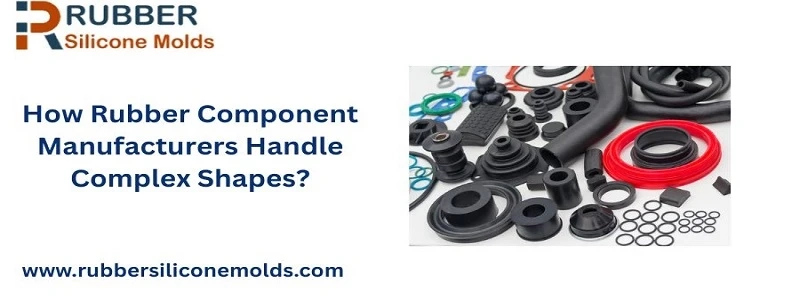
The modern rubber component manufacturers face growing demands for increasingly intricate parts across industries. Many automotive, medical, and aerospace sectors require components with precise dimensions and features. These special parts must perform in challenging environments and meet strict standards. The manufacturing process requires one to have traditional rubber skills used in advanced manufacturing technology.
Many complex shapes require mastery of multiple technical disciplines at once. The engineers must understand material behaviour under various processing conditions and pressures. The design phase involves careful consideration of how rubber flows into molds. A large number of manufacturers of rubber components devise their own approaches to dealing with challenging geometries. Their skills transform apparently unrealistic designs into products which can be manufactured.
The industry has developed dynamically through computer design and computer simulation. These turn out to be the development of the ability to test ideas prior to cutting costly steel molds. Many rubber component manufacturers develop proprietary methods for tackling difficult geometries. The result of this technical advancement for the customers is improved parts and quicker development.
Ways Rubber Component Manufacturers are Handling Complex Parts
1. Advanced Mold Design Techniques
Modern rubber component manufacturers are using advanced CAD software in the creation of complex moulds. The programs enable engineers to create accurate cavities that have complex features. The split molds with multiple parting lines solve tricky shape challenges. The technology handles various angles that weren't possible in earlier times.
The collapsible cores make internal undercuts achievable in one molding operation. Many side-action slides are the best for external features on custom rubber parts. Most complex parts need cam-actuated mechanisms that create angled pulls during extraction. The manufacturers design the venting channels properly to prevent air traps that could ruin parts.
The use of flow simulation software helps predict how rubber will fill complex cavities. Many engineers adjust draft angles for each section based on material properties. The EDM techniques create incredibly fine details in mold surfaces. The entire design process focuses on balancing complexity with manufacturability.
2. Material Selection for Complex Geometries
The manufacturers need to choose the appropriate materials for intricate rubber components. Many low-viscosity compounds flow easily into tiny spaces and fine details. The custom rubber products with micro-features often use silicone for its excellent flow characteristics. The EPDM remains the top choice for large and complex outdoor applications.
Nitrile rubber is the best for oil-resistant intricate seals and gaskets. They are used in high-temperature applications with complex shapes and with fluorocarbon materials. The rubber products supplier must consider shore hardness when planning demolding procedures. The soft compounds require gentler ejection to prevent damage during removal.
The reinforced rubber provides the necessary strength in thin-wall sections of complex parts. Many manufacturers match cure rates to specific part dimensions and thicknesses. This material selection directly impacts surface finish quality and dimensional accuracy. The appropriate compound guarantees performance and manufacturability of difficult geometries.
3. Tooling and Equipment Considerations
Many special equipment play a crucial role in producing difficult rubber shapes. The rubber components manufacturers invest in multi-cavity rubber moulds to facilitate the production of small parts. The hot runner systems significantly reduce waste during the injection process. The precision CNC machines cut complex cores with remarkable accuracy.
The machine and software steel selection affects longevity in high-volume production environments. The chrome plating provides smoother release surfaces for intricate part geometries. Many custom rubber products require zoned mold temperature control for optimal curing. The choice of a hydraulic press is dependent on the size of the parts and the pressure needed to mold.
Many robotic demolding systems handle fragile shapes without causing deformation or damage. The quick-change molding systems enable efficient manufacturing of the variant parts. Many complex parts may appear expensive to tool with, in the beginning. The machines end up lowering production costs due to enhanced production and quality.
4. Handling Undercuts and Internal Features
The manufacturers should be able to manufacture parts with undercuts. This could be a unique manufacturing challenge to overcome. The sliding cores must retract precisely before ejection can safely begin. Many custom rubber parts with hollow sections might require collapsible mandrels for release. Some extremely complex geometries rely on sacrificial cores that dissolve afterwards.
The two-stage molding creates internal channels that would otherwise be impossible. The hand-loaded inserts solve problems with trapped geometries in complex configurations. The rubber products supplier might use flexible core pins for slight undercuts. The strategic parting line placement helps hide visible seams on finished products.
Air blow-off assists the removal of deep parts that might otherwise stick. The engineers constantly balance design freedom against manufacturing practicality. They properly use the release agent to prevent damage during complex demolding operations. They have years of experience that guide decisions about handling difficult geometric features.
5. Prototyping Complex Parts Before Production
The prototyping saves enormous time and expense when working with complex shapes. Many rubber component manufacturers increasingly use 3D-printed molds for short test runs. The silicone casting provides quick samples without expensive tooling investments. The CNC-machined prototypes from solid rubber blocks verify design concepts.
The aluminium soft tooling is good for low production runs. Virtual mold flow analysis helps identify problems before cutting steel. The rubber products supplier conducts fit and function tests early. These tests are used to detect the flaws in the design before we commit to the permanent tooling.
Different design iterations enhance end products without the high costs of mold rework. Their real-life models indicate that they have difficulties with handling what the online ones overlook. Surface finish requirements become clearer through prototype evaluation. The smart prototyping strategies dramatically reduce development costs and timeframes.
6. Quality Control for Intricate Shapes
The manufacturers need to maintain the quality with complex geometries. This requires special inspection methods and equipment. The coordinate measuring machines precisely verify critical dimensions on custom rubber products. The use of optical scanners captures complete 3D surface data for comparison to designs. The CT scanning technology reveals hidden internal voids or defects.
The cross-section analysis confirms wall thickness consistency throughout parts. The durometer test confirms uniformity of hardness throughout the complicated geometries. Many rubber mold company undergo tensile testing to ensure performance under stress. The manufacturers also document the first article inspection documents compliance with all specifications.
Their statistical process control tracks production consistency over extended runs. The visual inspections catch flash, short shots, and flow line defects. Many advanced inspection techniques balance thoroughness against production efficiency requirements. The procedures of quality control follow the more complex designs of the parts.
Conclusion
The manufacturers of the rubber components are always open to new technology and practices. They have to balance between innovation and practical production issues to be successful.
The most successful companies are those that have strong relationships with suppliers of materials and equipment manufacturers. The smart factories will keep track and modify processes in reality to achieve improved outcomes.
The manufacturers of numerous rubber components currently focus on sustainable materials and practices. The competitive advantages come as a result of the capacity to create complex shapes using environmentally friendly compounds.