Professional Roof coatings help prevent leaks and moisture damage by creating a seamless, fully-adhered waterproof membrane over an existing roof. When Professional Roof coatings applied, these liquid coatings fill cracks, seal seams, and cover fasteners, eliminating the small gaps and weak points where water typically enters a building. This monolithic layer effectively restores an aging roof, protecting the underlying materials from UV degradation and water intrusion, which are the primary causes of roof failure and subsequent moisture damage.
For building owners, this approach offers a cost-effective alternative to a full roof replacement. Instead of just patching a problem, a coating system renews the entire roof surface. This article, which relies on the practical knowledge of roofing and building science professionals, will explain how these systems work, the different types available, and what makes for a successful, long-lasting application.
Creating a Seamless and Flexible Waterproof Barrier
The main advantage of a fluid-applied roof coating is its ability to form a single, continuous surface with no seams. Most traditional commercial roofing systems, such as TPO, EPDM, and modified bitumen, are installed in large sheets. This creates hundreds or even thousands of feet of seams that are welded, glued, or sealed. Over time, as the building shifts and the materials expand and contract with temperature changes, these seams are the first places to fail.
A liquid coating is applied directly to the roof, conforming perfectly to its shape. It naturally seals around difficult areas like vents, pipes, drains, and HVAC curbs, which are notorious sources of leaks. Once cured, the coating forms a flexible, rubber-like membrane that can stretch and move with the building without cracking or pulling apart. This elasticity is what allows it to maintain its waterproof integrity for years, even in climates with extreme temperature swings.
Protecting the Roof from Sun and Weather
Beyond just waterproofing, a roof coating acts as a protective shield for the original roofing material underneath. The two biggest enemies of any roof are sunlight (UV radiation) and water.
- UV Protection: Constant exposure to the sun's ultraviolet rays breaks down the chemical bonds in roofing materials, making them brittle and prone to cracking. This is why an old asphalt roof looks dried out and a single-ply membrane can become chalky. A high-quality roof coating is formulated with UV blockers that absorb or reflect this harmful radiation, preserving the material underneath.
- Weather Resistance: The coating provides a durable, renewable wearing surface that takes the brunt of rain, hail, and wind. This stops the slow erosion of the original roof surface and prevents water from ever reaching it. By stopping moisture at the surface, it prevents water from saturating underlying insulation or decking, which can lead to catastrophic rot and mold problems. Industry data shows that proactive roof maintenance, including coatings, can extend the service life of a low-slope roof by as much as 50%.
Choosing the Right Type of Coating
There are several types of roof coatings, each with its own strengths. The right choice depends on the type of existing roof, the climate, and the building owner’s specific goals.
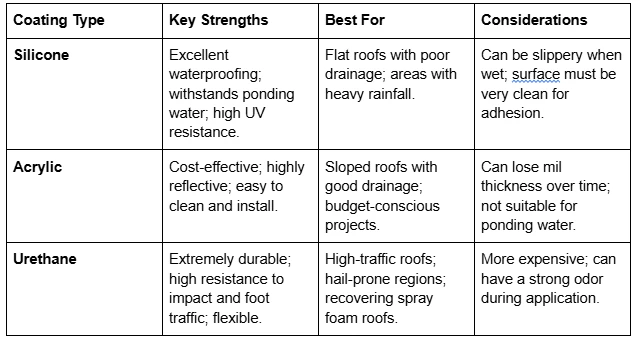
A knowledgeable contractor can recommend the best system after a thorough inspection of the existing roof.
Energy Savings Through Reflectivity
Many modern roof coatings contractors are white or light-colored, turning the roof into a "cool roof." A dark-colored roof can reach temperatures of 150°F or more on a sunny day, radiating that heat down into the building and forcing the air conditioning to work much harder. A reflective white coating can lower that same roof's surface temperature by 50-80°F.
This dramatic temperature reduction has two major benefits. First, it can significantly lower a building's cooling costs, with the U.S. Department of Energy estimating savings of 10-15% for many buildings. Second, it reduces the thermal stress on the roof membrane and the entire building structure. Less expansion and contraction means a longer life for the roof and fewer stress-related problems like cracks and failed seams. While white is the most reflective color, many manufacturers now offer a range of ENERGY STAR rated colors, such as lighter shades of grey, tan, and even blue, that provide good reflectivity while better matching a building’s aesthetic design.
Things to Consider Before Coating Your Roof
A roof coating can be a fantastic solution, but it's not a magic bullet for every roofing problem. Building owners should consider these factors:
- Proper Surface Preparation: The success of a roof coating is almost entirely dependent on the preparation of the surface. A professional crew will thoroughly pressure wash the roof to remove all dirt, chalking, and loose material. Any existing rust on metal roofs must be treated, and sometimes a specific primer is needed to ensure the coating bonds permanently to the old roof.
- The Roof's Current Condition: The existing roof must be structurally sound. A coating can't fix a rotted roof deck or saturated insulation. Before any coating is applied, a thorough inspection, often including an infrared scan, should be performed to find and repair any wet areas.
- Compatibility: It’s critical to ensure the chosen coating is chemically compatible with the existing roof material. Applying the wrong product can result in poor adhesion and premature failure.
- Proper Application Thickness: The coating must be applied at the thickness specified by the manufacturer, measured in "dry mils." If it's applied too thinly, it won't have the waterproofing capability or longevity expected. This is a key reason why professional installation is so important.
- Future Maintenance: While very low-maintenance, a coated roof should still be inspected periodically. Keeping the surface clean helps maintain its reflectivity, and any small punctures from dropped tools or debris should be repaired promptly to maintain the waterproof seal.
Common Questions About Roof Coatings
To help clarify the process, here are answers to some of the most common questions building owners have about roof coatings.
Is a roof coating just a thick layer of paint?
No. While applied like paint, a roof coating is a much more complex product. It is an elastomeric membrane, meaning it is thicker, more flexible, and specifically engineered for waterproofing, UV resistance, and weather durability.
How long does a roof coating system last?
A professionally installed system typically comes with a warranty of 10 to 20 years, depending on the material and thickness. At the end of its life, the roof can often be cleaned and recoated to extend the protection even further.
Can a coating be applied over a leaking roof?
Yes, this is one of its primary functions. However, all sources of the leaks must first be properly repaired, and any wet insulation must be removed and replaced before the coating is applied. The coating then seals the entire surface to prevent future leaks.
What is the best time of year to apply a roof coating?
Application is best done during warm, dry weather. Most coatings have specific temperature and humidity requirements for proper curing, so the work is typically scheduled for the spring, summer, or early fall.
Does a coating add significant weight to the roof?
No. Roof coatings are very lightweight and add a negligible load to the building's structure. This is a major advantage over adding another layer of traditional roofing material.
A Smart Investment in Roof Longevity
Roof coatings offer a practical and effective way to stop leaks and prevent moisture damage without the cost and disruption of a full replacement. By creating a seamless, durable, and reflective surface, they not only solve existing problems but also extend the life of the roof and improve the building's energy efficiency. For any building owner facing an aging but still functional roof, a coating system is a solution that deserves serious consideration.
Getting a Professional Roof Assessment
Determining if a roof is a good candidate for a coating requires a professional evaluation. An expert can identify the roof type, assess its condition, and check for hidden moisture. For building owners looking for guidance, a company like South Chicago Insulation has experience with these systems and can provide a detailed inspection and recommendation. To learn more or schedule an assessment, their team can be reached at [email protected] or by phone at (779) 803-8025.
Author: Bob Gasca has been involved in the spray foam industry since 2007, holding a Master Installer certification from the SPFA. He actively shares his knowledge with professionals worldwide and focuses on using building science to solve moisture and air infiltration problems for families.
Reviewer: Noah Gonzalez reviewed this article, using his 9 years of industry experience to help ensure the guidance is practical and directly useful for insulation contractors and homeowners alike.