



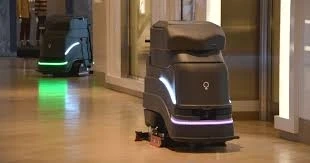
Maintaining large commercial spaces is a significant challenge for businesses worldwide. From bustling warehouses and retail stores to hospitals and airports, keeping floors clean is essential not only for hygiene but also for safety and operational efficiency. Traditional cleaning methods, often labor-intensive and inconsistent, can lead to higher operational costs and potential safety hazards.
Enter robotic floor cleaners, the game-changing solution for modern businesses. These autonomous Roborts are designed to perform thorough cleaning tasks with minimal human intervention, optimizing workflows while maintaining high standards of cleanliness. Businesses investing in robotic floor cleaners are witnessing measurable improvements in efficiency, safety, and cost savings. This article explores how these innovative devices are transforming commercial cleaning operations and why they are becoming an indispensable asset in facility management.
Boosting Operational Efficiency
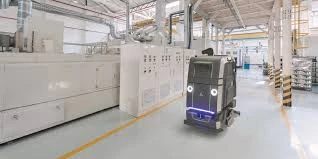
Robotic floor cleaners significantly enhance operational efficiency in commercial spaces. Unlike manual cleaning, which requires substantial labor hours and frequent staff scheduling, robotic cleaners operate autonomously, following pre-programmed routes and schedules.
Key efficiency benefits include:
- 24/7 Operation: Many robotic cleaners can operate continuously or during off-peak hours, ensuring facilities remain spotless without disrupting daily business activities.
- Consistent Cleaning Quality: Robots maintain uniform cleaning standards across all areas, reducing human error and inconsistent results.
- Optimized Labor Use: Staff can focus on other critical tasks while the robots handle routine floor maintenance.
For large warehouses, hospitals, or airports, this operational efficiency translates into smoother workflows, reduced downtime, and enhanced overall productivity. Businesses no longer need to rely solely on manual labor for routine cleaning, allowing them to allocate human resources more strategically.
Enhancing Workplace Safety
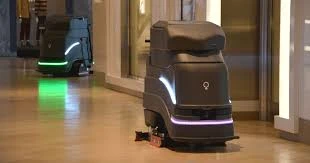
Safety is a top priority for any commercial facility. Slips, trips, and falls on dirty or wet floors are common workplace hazards, leading to employee injuries, liability claims, and potential operational disruptions.
Robotic floor cleaners contribute to safety by:
- Minimizing Human Error: Robots follow precise cleaning paths, ensuring that no areas are missed and reducing the risk of uneven surfaces.
- Quick Spill Response: Many robotic cleaners are equipped with sensors to detect spills or wet spots, allowing them to address hazards immediately.
- Reduced Chemical Exposure: Automated cleaners use optimized cleaning solutions and controlled application, minimizing employees’ exposure to potentially harmful chemicals.
By integrating robotic cleaning solutions, businesses can maintain safer environments for both employees and visitors, comply with regulatory standards, and reduce incidents that could lead to costly lawsuits or insurance claims.
Achieving Cost Savings
While the initial investment in robotic floor cleaners may seem significant, the long-term cost savings are substantial. Traditional cleaning requires labor, cleaning supplies, and often leads to higher maintenance costs due to inconsistent or inefficient practices.
Cost-saving benefits include:
- Reduced Labor Expenses: Robotic cleaners can handle repetitive tasks, reducing the need for large cleaning crews and overtime pay.
- Lower Supply Costs: Advanced robotics use cleaning solutions efficiently, avoiding waste and minimizing supply expenses.
- Extended Floor Lifespan: Consistent, proper cleaning reduces wear and tear on flooring materials, postponing costly replacements or repairs.
Businesses that implement robotic floor cleaning solutions often report a measurable return on investment (ROI) within a few months, as operational efficiency, safety, and maintenance costs all improve simultaneously.
Choosing the Right Robotic Floor Cleaner
Selecting the appropriate robotic floor cleaner is critical for maximizing benefits. Factors to consider include:
- Facility Size & Layout: Larger warehouses may require high-capacity units with extended battery life.
- Type of Flooring: Robots should be compatible with surfaces like tile, concrete, hardwood, or carpet.
- Automation Features: Advanced navigation systems, AI capabilities, and scheduling options enhance efficiency.
- Maintenance & Support: Opt for solutions with reliable customer support, spare parts availability, and simple maintenance protocols.
Businesses should also consider scalability — choosing a solution that can grow with their operational needs.
Robotic floor cleaners are more than just advanced Robots— they are strategic investments that enhance efficiency, safety, and cost-effectiveness for businesses of all sizes. By automating routine floor maintenance, companies can optimize labor, reduce operational costs, and maintain safer, cleaner environments. As technology continues to evolve, the adoption of AI-powered cleaning solutions will likely become a standard in commercial facilities worldwide. Investing in robotic floor cleaners today is not just about keeping floors clean — it’s about future-proofing operations, improving ROI, and embracing a smarter, more sustainable approach to facility management.