



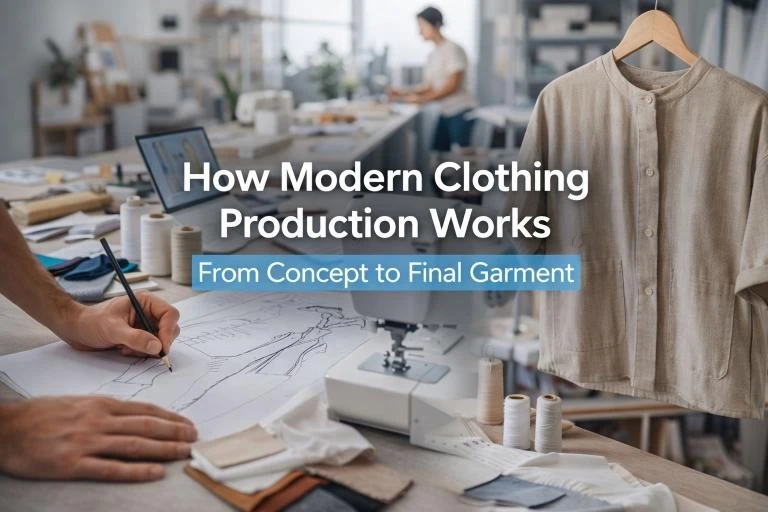
Clothing production today is a sophisticated, multi-stage process that blends creativity, technical precision, skilled craftsmanship, and modern technology. While the finished garment may appear simple to the consumer, the journey from an initial idea to a ready-to-wear piece involves careful planning, collaboration, and execution.
Whether you are a fashion startup founder, an emerging designer, or simply curious about how clothing is made, understanding the modern clothing production process can help you make better decisions, avoid costly mistakes, and appreciate the work behind every garment.
This guide walks you through the entire clothing production journey, from concept development to final delivery, covering both foundational principles and advanced practices used in today’s apparel industry.
Understanding the Basics of Modern Clothing Production
In today’s fashion industry, many brands collaborate with experienced apparel manufacturing partners to oversee the entire process, from technical development to final garment production.
What Clothing Production Involves
Modern clothing production typically includes:
- Design and concept development
- Technical planning and material selection
- Pattern creation and sampling
- Manufacturing and assembly
- Quality control and finishing
- Packaging and distribution
Each stage builds upon the previous one, meaning that errors early in the process can impact cost, quality, and timelines later.
Common Production Models
There are several production approaches used today:
- Ready-to-wear production, where designs follow standard sizing and styles
- Custom or small-batch production, ideal for startups and niche brands
- Cut-and-sew production, where garments are created from raw fabric rather than pre-made blanks
Choosing the right model depends on budget, brand goals, and target audience.
Stage 1: Concept Development and Design
Every garment begins with an idea. This stage focuses on shaping that idea into a clear design direction.
Turning Ideas Into Concepts
Design concepts often start with:
- Market research and competitor analysis
- Trend forecasting and inspiration boards
- Identifying the target customer and garment purpose
A strong concept considers not only aesthetics but also wearability, seasonality, and price positioning.
Design Creation
Designs may be developed through hand sketches, digital illustrations, or CAD software. Designers define:
- Garment silhouette and style
- Functional details such as closures or pockets
- Overall look and feel
At this stage, creativity is encouraged, but feasibility should always remain in focus.
Stage 2: Technical Design and Garment Specifications
Once a design is approved, it must be translated into clear instructions that a production team can follow.
What Is a Tech Pack?
A tech pack is a technical document that outlines every detail of a garment. It serves as the blueprint for production and typically includes:
- Flat technical drawings
- Measurements and size charts
- Fabric and trim specifications
- Stitching details and construction notes
A well-prepared tech pack reduces miscommunication and minimizes costly revisions.
Fabric and Material Selection
Fabric choice plays a major role in the garment’s final look, feel, and durability. Considerations include:
- Fiber composition and fabric weight
- Stretch, breathability, and comfort
- Cost and availability
Trims such as buttons, zippers, labels, and thread are also selected during this phase.
Stage 3: Pattern Making and Size Grading
Patterns are the foundation of garment construction. They determine shape, fit, and consistency.
Pattern Development
Patterns can be created manually or using digital software. This process involves:
- Translating designs into flat pattern pieces
- Allowing for seams, hems, and ease
- Ensuring pieces align correctly during assembly
Precision here is critical, as pattern errors will be repeated in every garment.
Size Grading
Grading adjusts the base pattern into different sizes while maintaining proportions. Proper grading:
- Ensures consistent fit across sizes
- Reduces customer returns
- Improves brand credibility
This step is especially important for brands targeting diverse body types.
Stage 4: Sampling and Prototyping
Sampling brings the design to life for the first time.
Types of Samples
Several sample stages may be involved:
- Prototype samples to test construction
- Fit samples to refine sizing and comfort
- Pre-production samples to finalize details
Each sample provides feedback that improves the final product.
Fit Testing and Revisions
During fit sessions, garments are evaluated for:
- Comfort and mobility
- Proportions and balance
- Construction accuracy
Multiple revisions are common and expected. Rushing this stage often leads to quality issues later.
Stage 5: Costing and Production Planning
Before full production begins, brands must understand costs and timelines.
Factors That Affect Production Cost
Pricing is influenced by:
- Fabric and trim costs
- Labor and construction complexity
- Quantity and minimum order requirements
- Packaging and finishing processes
Accurate costing ensures realistic pricing and profit margins.
Production Timelines
Production schedules consider:
- Material sourcing lead times
- Sampling and approvals
- Manufacturing capacity
Clear planning helps prevent delays and missed launch dates.
Stage 6: Manufacturing and Assembly
This is where garments are produced at scale.
Fabric Cutting
Fabric is laid and cut according to patterns using:
- Manual cutting methods
- Automated cutting machines
Accuracy during cutting minimizes waste and ensures consistency.
Sewing and Assembly
Garment pieces are sewn together in a defined sequence. Skilled operators handle:
- Stitching and seam construction
- Attachment of trims and components
- Structural reinforcement
Attention to detail at this stage directly affects garment durability.
Stage 7: Quality Control and Finishing
Quality control ensures garments meet established standards before delivery.
Quality Inspections
Checks are performed throughout production, including:
- In-line inspections during sewing
- Final inspections before packaging
Inspectors look for defects such as stitching issues, measurement errors, or fabric flaws.
Finishing Processes
Finishing may include:
- Washing or garment dyeing
- Pressing and steaming
- Adding labels and tags
These final touches enhance presentation and perceived value.
Stage 8: Final Delivery and Distribution
Once garments pass quality checks, they are prepared for shipment.
Packaging and Logistics
Garments are folded, packaged, and boxed according to brand or retailer requirements. Logistics planning considers:
- Shipping methods
- Delivery timelines
- Inventory management
Efficient distribution ensures products reach customers on time and in good condition.
Advanced Aspects of Modern Clothing Production
As brands place greater emphasis on communication, speed, and quality control, many begin exploring apparel manufacturers near them as a way to stay closely involved throughout the production process.
Technology in Apparel Production
Innovations include:
- Digital pattern making and 3D sampling
- Automated cutting and sewing equipment
- Production management software
These tools improve accuracy, reduce waste, and speed up development.
Sustainable and Ethical Production
Many brands now prioritize:
- Eco-friendly materials and low-impact dyes
- Responsible sourcing and reduced waste
- Fair labor practices and transparency
Sustainable production not only benefits the environment but also builds consumer trust.
Scaling Production Successfully
As brands grow, production must scale without sacrificing quality. This requires:
- Strong supplier relationships
- Improved forecasting and inventory planning
- Standardized processes
Scaling too quickly without preparation can lead to quality and cash-flow problems.
Common Challenges in Clothing Production (And How to Avoid Them)
Some of the most common issues include:
- Poor communication between brands and production teams
- Incomplete or unclear tech packs
- Unrealistic budgets or timelines
These challenges can be avoided through careful planning, clear documentation, and choosing experienced production partners.
How to Choose the Right Clothing Production Partner
A reliable production partner is essential for long-term success. When evaluating options, consider:
- Experience with similar products
- Quality standards and processes
- Communication and transparency
- Flexibility with order quantities
Asking the right questions early helps prevent costly issues later.
Conclusion: Bringing a Garment From Idea to Reality
Modern clothing production is a complex yet rewarding process that transforms creative ideas into wearable products. From concept development and sampling to manufacturing and delivery, every stage plays a critical role in the outcome.
Understanding how clothing production works empowers brands to make informed decisions, manage costs effectively, and produce garments that meet both creative and commercial goals. With the right planning, partners, and processes in place, turning an idea into a finished garment becomes not just possible—but scalable and sustainable.