



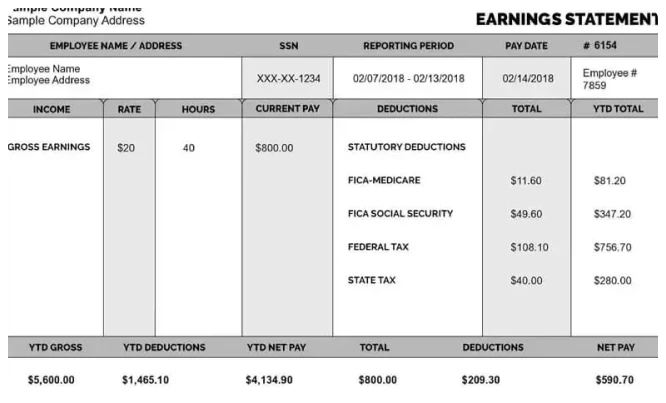
Paycheck stubs are an essential part of managing your personal finances. They provide a record of your earnings, tax withholdings, and deductions, which can be useful for a variety of reasons, including filing taxes, applying for loans, and verifying income.
But how long should you keep your paycheck stubs? Should you hold onto them indefinitely, or can you safely discard them after a certain period?
In this guide, we’ll break down why paycheck stubs are important, how long you should keep them, and the best way to store them securely.
Why Are Paycheck Stubs Important?
Paycheck stubs provide valuable financial information, including:
✔️ Proof of income – Required for loan applications, rental agreements, or financial aid.
✔️ Tax documentation – Helps verify income and tax withholdings when filing taxes.
✔️ Dispute resolution – Useful in case of payroll errors or payment discrepancies.
✔️ Budgeting and financial planning – Helps track earnings and deductions over time.
Since they serve multiple purposes, keeping them for the right amount of time is essential.
How Long Should You Keep Your Paycheck Stubs?
1. Keep Paycheck Stubs for at Least One Year
It’s a good rule of thumb to hold onto your paycheck stubs for at least 12 months. This allows you to:
✔️ Verify your W-2 form – At the end of the year, your W-2 (or 1099 for freelancers) will summarize your earnings and tax withholdings. You should compare it with your paycheck stubs to ensure accuracy before filing taxes.
✔️ Resolve pay discrepancies – If you notice a mistake in your wages, tax deductions, or benefits, your paycheck stubs serve as proof to correct errors with your employer.
Once you have filed your taxes and confirmed that your W-2 is correct, you can safely discard older paycheck stubs—unless you need them for another purpose.
2. Keep Paycheck Stubs for Three Years for Tax Purposes
The IRS recommends keeping tax-related documents for at least three years. While your W-2 or 1099 is your primary tax document, your paycheck stubs can help:
✔️ Provide backup documentation – If the IRS audits your tax return, paycheck stubs help confirm your reported earnings and deductions.
✔️ Verify Social Security contributions – If there’s an issue with your Social Security earnings record, paycheck stubs provide proof of contributions.
Best practice: After filing your taxes, store your paycheck stubs with your tax return for three years before disposing of them.
3. Keep Paycheck Stubs Longer for Specific Situations
In some cases, you may need to keep paycheck stubs longer than three years. Here’s when you should hold onto them:
✔️ Applying for a mortgage or loan? – Lenders often require two years of pay stubs to verify income stability.
✔️ Renting an apartment? – Landlords may ask for several months' worth of paycheck stubs as proof of steady income.
✔️ Workers’ compensation claims? – If you file a claim, paycheck stubs help verify your earnings before an injury.
✔️ Social Security benefits? – If you’re close to retirement, keeping paycheck stubs throughout your career can help verify your earnings record.
💡 Tip: If you’re unsure, it’s always safer to keep digital copies of paycheck stubs rather than discarding them too soon.
Best Ways to Store Paycheck Stubs
Whether you receive paper paycheck stubs or digital copies, keeping them secure and organized is important.
1. Store Paper Paycheck Stubs in a Safe Place
✔️ Use a file organizer or labeled folders.
✔️ Keep them in a fireproof safe if they contain sensitive information.
✔️ Dispose of old paycheck stubs by shredding to prevent identity theft.
2. Save Digital Copies for Long-Term Storage
✔️ Scan or download pay stubs and store them on a secure cloud service (Google Drive, Dropbox, OneDrive).
✔️ Use password-protected folders on your computer.
✔️ Label each file with the pay period and year for easy access.
💡 Tip: Many payroll providers (ADP, Paychex, Gusto) allow you to log in and access paycheck stubs online—so you may not need to store them manually.
When Can You Safely Dispose of Paycheck Stubs?
You can safely discard paycheck stubs when:
✔️ You’ve confirmed your W-2 or 1099 is accurate.
✔️ You’ve filed your taxes, and three years have passed.
✔️ You don’t need them for loan applications, rental agreements, or legal claims.
How to dispose of paper paycheck stubs:
✅ Shred them to prevent identity theft.
✅ Avoid throwing them in the trash without shredding.
Final Thoughts: Keep Paycheck Stubs for the Right Amount of Time
To sum it up, here’s how long you should keep paycheck stubs:
📌 At least 1 year – Until you verify your W-2 or 1099.
📌 At least 3 years – For tax purposes and potential audits.
📌 Longer (2–5 years or more) – If needed for loans, renting, workers’ compensation, or Social Security.
💡 Best Practice: Store paycheck stubs digitally for easy access and safe record-keeping.
By following these guidelines, you’ll ensure that you keep paycheck stubs for the right amount of time—without unnecessary clutter!