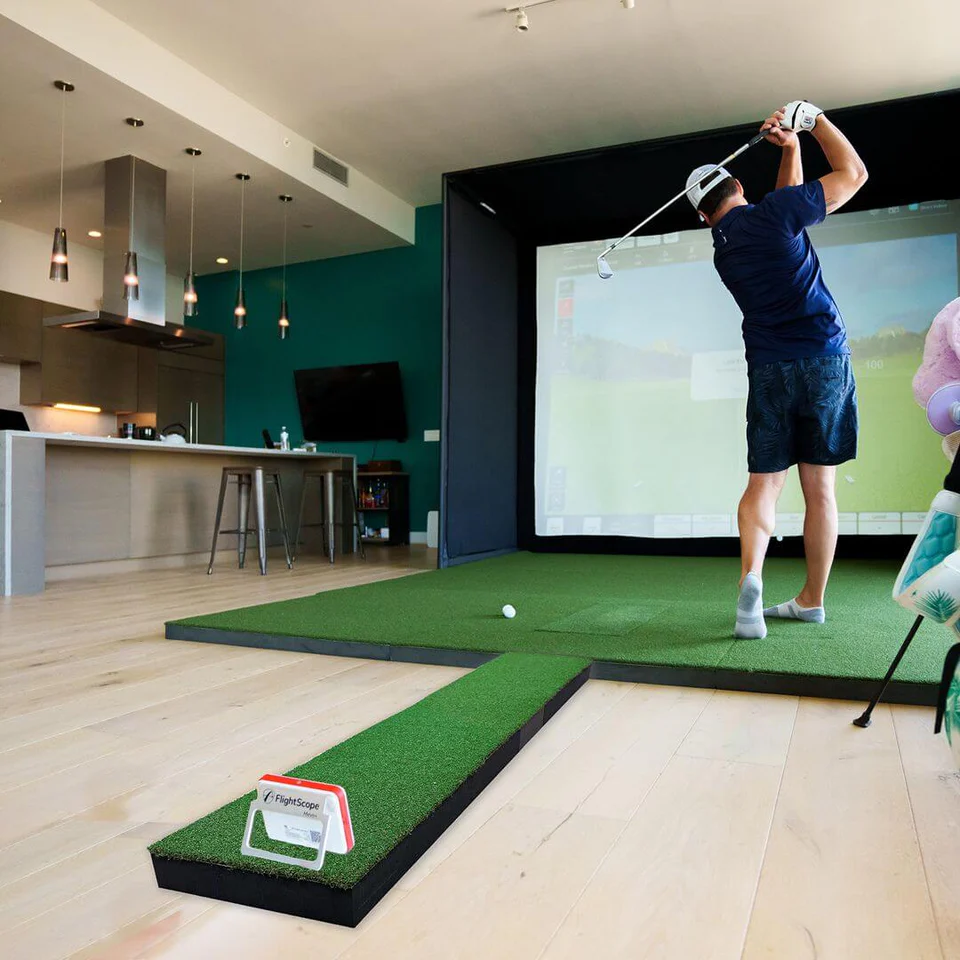
Precision in golf depends on repeatable motion, accurate feedback, and controlled practice conditions. Traditional outdoor sessions often dilute these factors due to weather shifts, surface variance, and inconsistent ball data. It is where indoor golf in Diamondhead, MS, changes how swing mechanics are trained and measured. Inside a simulated environment, every movement is captured, stored, and analyzed with measurable accuracy rather than guesswork.
You practice with the same mat resistance, identical ball response, and calibrated launch metrics every session. Gradually, this mechanism changes muscle memory and habits of making decisions. Indoor training changes every swing into performance data that can be used just like at a Driving Range Near Me, not a casual visit. The result is measurable improvement rooted in consistency rather than repetition alone.
Controlled Environment Builds Repeatable Swings
Removing external variables brings the quickest improvement to swing consistency. Indoor golf in Diamondhead, MS, guarantees the same impact conditions for each shot and, consequently, the absence of wind, temperature changes, and rough ground. You will be able to take a swing today, tomorrow, and next month with the same physical conditions, which will further strengthen the neural pathways associated with the correct mechanics.
This predictability accelerates motor learning. The body remembers efficient motion because no environmental noise interferes with feedback loops. Over time, swing variance tightens, contact improves, and dispersion patterns shrink. Compared to open practice spaces, consistency indoors becomes a trained habit rather than an occasional outcome.
High-Frequency Shot Feedback Improves Adjustments
Immediate shot feedback changes how errors are corrected. Indoor golf systems capture launch angle, ball speed, spin rate, and face alignment within milliseconds. You see outcomes instantly instead of estimating results by ball flight alone. This shortens the gap between mistake and correction.
Instead of guessing why a shot faded or dropped short, data clarifies cause and effect. Small grip or stance changes are validated immediately. This process is far more efficient than relying on visual cues at a Diamondhead golf course, where distance perception can mislead correction timing.
Data-Driven Practice Enhances Swing Stability
Consistency improves when practice goals are measurable. Indoor golf translates each swing into numerical benchmarks that can be tracked across sessions. You will know whether club path deviation is shrinking or if launch consistency is improving week over week.
This structured feedback discourages random practice habits. Each session builds upon previous data rather than starting from scratch. Over time, swing patterns stabilize because progress is monitored, reinforced, and adjusted with precision rather than assumption. Stability becomes statistical, not subjective.
Repetition Without Fatigue Improves Mechanics
Indoor sessions encourage efficient repetition. You practice more swings in less time because ball retrieval and walking distances are eliminated. This allows focus on mechanics rather than logistics. Controlled pacing also reduces physical fatigue that can distort swing form late in outdoor sessions.
You will train movement quality first, then increase volume without breakdown. As mechanics remain intact throughout practice, muscle memory forms correctly. This contrasts with outdoor routines, where fatigue often reinforces flawed patterns rather than correcting them.
Simulated Scenarios Improve Shot Decision Consistency
Indoor golf systems recreate course scenarios that demand consistent execution. You will practice approach shots, lies, and distances repeatedly until outcomes stabilize. This sharpens decision-making alongside swing mechanics.
Unlike casual practice at a driving range near me, simulations demand intentional shot planning. Over time, both swing execution and club selection become predictable. Consistency develops not only in motion but also in strategic thinking under controlled pressure.
Long-Term Tracking Reinforces Progressive Improvement
Swing consistency is not built in a single session. Indoor golf platforms store historical data that reveals long-term trends. You can compare present performance against past sessions to verify improvement objectively.
This longitudinal tracking reinforces discipline. You will adjust practice intensity, focus areas, and swing priorities based on evidence rather than memory. As data trends improve, confidence increases because progress is proven, not assumed.
The Closing Thoughts: Elevate your game in Diamondhead
Reliable improvement in golf depends on measurable repetition, controlled conditions, and accurate feedback loops. Indoor golf in Diamondhead, MS, offers a structured environment where swing mechanics stabilize and shot data becomes actionable intelligence rather than abstract observation. Every session reinforces precision, efficiency, and confidence through repeatable practice.
When practice shifts from estimation to quantification, improvement accelerates naturally. Over time, consistency will improve, decision-making will sharpen, and swing mechanics will remain dependable across scenarios. Indoor golf ultimately transforms practice into a system that rewards precision with lasting performance gains.