Introduction
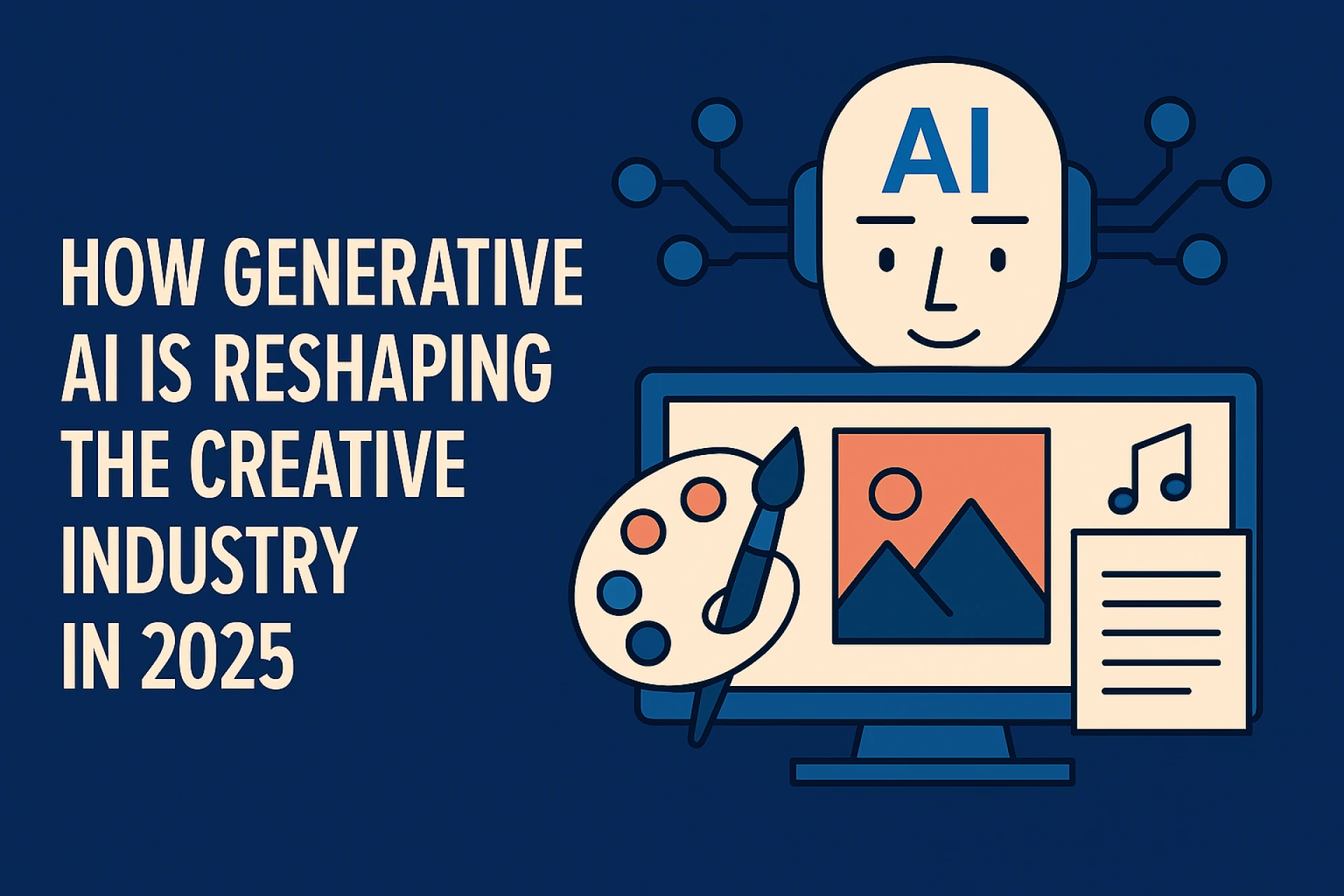
The creative industry stands at the cusp of a transformative era, driven by the rapid advancements in Generative AI. In 2025, technologies that once seemed futuristic are now integral to artistic expression, design, and content creation. This evolution is not just about automation; it's about augmenting human creativity, enabling artists and creators to explore uncharted territories.
The Evolution of Generative AI in Creative Domains
Generative AI refers to algorithms that can generate new content—be it images, music, text, or videos—by learning patterns from existing data. Over the past few years, we've witnessed significant strides in this domain:
- Text Generation: Tools like OpenAI's GPT series have revolutionized content creation, enabling writers to generate articles, scripts, and even poetry with AI assistance.
- Image and Art Creation: Platforms such as DALL·E and Midjourney allow artists to create intricate visuals from textual descriptions, pushing the boundaries of digital art.
- Music Composition: AI models can now compose music in various genres, offering composers a collaborative tool to experiment with melodies and harmonies.
- Video Production: Advanced Generative AI models are being used to create realistic video content, from deepfakes to entirely AI-generated short films.
These advancements have led to the emergence of specialized Generative AI Solutions tailored for the creative industry, offering tools that blend technical prowess with artistic intuition.
Impact on the Creative Industry
The integration of Generative AI into the creative sector has brought about profound changes:
1. Enhanced Creativity and Productivity
Artists and designers are leveraging AI to overcome creative blocks, generate multiple design iterations rapidly, and explore novel artistic styles. For instance, fashion designers use AI to predict trends and create designs that resonate with contemporary aesthetics.
2. Democratization of Content Creation
Generative AI has lowered the barriers to entry in creative fields. Individuals without formal training can now produce high-quality content, be it music, art, or writing, using intuitive AI tools. This democratization fosters a more inclusive creative community.
3. Customization and Personalization
Brands utilize Generative AI to create personalized marketing content, tailoring advertisements and promotions to individual consumer preferences, thereby enhancing engagement and conversion rates.
4. New Business Models
The fusion of AI and creativity has given rise to innovative business models. For example, AI-generated virtual influencers are now endorsing products, and AI-composed music is being licensed for commercials and films.
Technical Underpinnings: How Generative AI Works
At the core of Generative AI are complex models trained on vast datasets:
- Generative Adversarial Networks (GANs): Consist of two neural networks—the generator and the discriminator—that work in tandem to produce realistic data outputs.
- Transformer Models: Utilize attention mechanisms to process and generate sequences, making them ideal for tasks like text and music generation.
- Variational Autoencoders (VAEs): Encode input data into a latent space and then decode it back, allowing for the generation of new, similar data points.
Developing applications that harness these models requires expertise in machine learning, data preprocessing, and user interface design. Collaborating with a seasoned Generative AI App Development Company ensures that the solutions are both technically robust and user-friendly.
Ethical Considerations and Challenges
While the benefits are substantial, the integration of Generative AI in the creative industry raises several concerns:
- Intellectual Property Rights: Determining the ownership of AI-generated content is complex. If an AI model trained on existing artworks creates a new piece, who holds the copyright?
- Authenticity and Originality: The line between human-made and AI-generated content blurs, challenging traditional notions of originality and authenticity in art.
- Bias and Representation: AI models can inadvertently perpetuate biases present in their training data, leading to content that may be culturally insensitive or stereotypical.
Addressing these challenges requires a collaborative approach, involving technologists, artists, legal experts, and ethicists to establish guidelines and frameworks that ensure responsible use of Generative AI.
The Role of Generative AI App Development Companies
As the demand for AI-driven creative tools surges, Generative AI App Development Companies play a pivotal role in shaping the future of the industry. These companies specialize in:
- Custom Solution Development: Crafting tailored applications that cater to specific creative needs, whether it's for music composition, digital art, or content generation.
- Integration Services: Seamlessly embedding AI capabilities into existing creative workflows and platforms.
- Ongoing Support and Training: Providing resources and training to help users maximize the potential of Generative AI tools.
Partnering with such companies ensures that creative professionals have access to cutting-edge tools that enhance their work without compromising their artistic vision.
Future Outlook
The trajectory of Generative AI in the creative industry points towards a future where human creativity and machine intelligence coalesce harmoniously. We can anticipate:
- Real-time Collaborative Tools: Platforms where AI and humans co-create content in real-time, enhancing the creative process.
- Enhanced Virtual and Augmented Reality Experiences: AI-generated environments and narratives that offer immersive experiences in gaming, education, and entertainment.
- Personalized Creative Assistants: AI tools that understand individual creative styles and preferences, offering suggestions and enhancements tailored to each user.
Embracing these advancements will redefine the boundaries of creativity, offering unprecedented opportunities for innovation and expression.
Conclusion
Generative AI stands as a transformative force in the creative industry of 2025, offering tools that augment human creativity, streamline workflows, and open new avenues for artistic expression. While challenges persist, the collaborative efforts of technologists, artists, and policymakers can ensure that the integration of AI enriches the creative landscape. For businesses and creators alike, engaging with a proficient Generative AI App Development Company can be the key to unlocking the full potential of this technological revolution.