



Table of Contents
- Introduction to FTL Shipping Pricing
- Base Freight Charges and Distance Impact
- Weight, Volume, and Density Effects
- Additional Fees and Seasonal Factors
- How to Negotiate and Optimize FTL Pricing
- Conclusion: Key Takeaways on FTL Pricing
- Frequently Asked Questions (FAQs)
Introduction
Efficient logistics management is a cornerstone of successful businesses today. One of the most critical elements is understanding how FTL (Full Truck Load) shipping pricing works. FTL shipping involves reserving an entire truck exclusively for your cargo. Unlike LTL (Less Than Truck Load) shipments, where multiple customers share space, FTL means paying for the whole truck regardless of how much space your shipment occupies.
Businesses with large volumes or urgent delivery needs often prefer FTL. This method offers faster transit times, reduced cargo handling, and less risk of damage or delays. However, pricing is not straightforward; it is influenced by several interrelated factors.
By gaining a comprehensive understanding of these pricing elements, businesses can better budget, negotiate smarter, and optimize their freight spend for maximum efficiency.
Base Freight Charges and Distance Impact
At the heart of FTL pricing lies the base freight charge, which carriers primarily calculate based on the shipment distance and the type of truck used.
Distance and Cost
Longer distances typically lead to higher freight costs due to increased fuel consumption, driver hours, and vehicle wear and tear. However, carriers often apply volume discounts, reducing the per-kilometer rate as distance increases. For example, shipping 1000 km costs more overall than 100 km, but the per-km charge for 1000 km may be lower.
Route Complexity and Tolls: Toll roads and poor road conditions add to operational costs. Planning routes to avoid excessive tolls can help lower charges but may increase transit time.
Truck Type Influence
The truck type significantly affects pricing:
- Dry Vans: Most common and cost-effective for general cargo.
- Refrigerated Trucks (Reefers): Required for perishable goods; higher due to cooling system costs.
- Flatbeds and Specialized Trailers: Needed for oversized or irregular loads; typically more expensive.
Selecting the correct truck type avoids unnecessary cost inflation while ensuring cargo safety.
Case Study: Route Planning Saves Costs
A manufacturer shipping from Delhi to Mumbai saved 10% on freight by choosing a route that avoided high-toll roads, despite adding 50 km. The small mileage increase was offset by toll savings and smoother transit.
Weight, Volume, and Density Effects
Cargo weight, volume, and density heavily impact pricing through dimensional weight pricing, which balances physical weight and space utilization.
Understanding Dimensional Weight Pricing
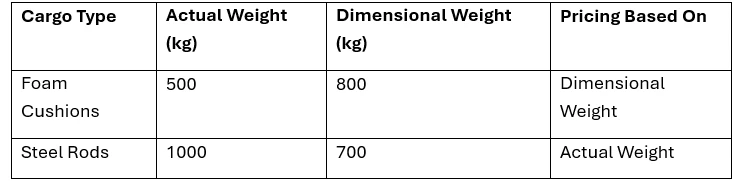
Carriers calculate shipping charges based on the higher of actual weight or dimensional weight, ensuring fair compensation for bulky but light cargo.
Dimensional Weight = Length×Width×Height/ Dimensional Factor
Typically, the dimensional factor is 5000 cm³/kg but varies by carrier.
Why This Matters
- Bulky, lightweight cargo (e.g., foam cushions) occupies significant space, resulting in higher charges despite low weight.
- Dense cargo (e.g., metal rods) weighs more but occupies less space.
Cargo Pricing Comparison
Packaging Optimization Tips
- Use compact packaging to minimize volume.
- Fill empty spaces to avoid wasted space charges.
- Palletize cargo efficiently.
- Understand carrier dimensional weight policies before shipping.
Proper packaging not only saves money but also protects cargo during transit.
Industry Insight
According to Inbound Logistics, improper packaging can increase freight costs by 10-30% due to dimensional weight pricing.
Additional Fees and Seasonal Factors
Additional fees and seasonal market forces add layers of cost to FTL shipping beyond base rates and cargo characteristics.
Typical Additional Fees
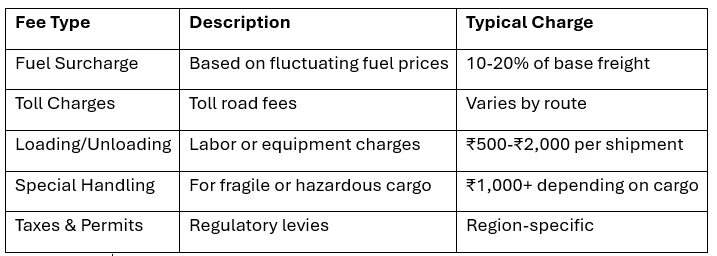
- Fuel Surcharge: Fluctuates with fuel prices; usually 10-20% of base freight.
- Toll Charges: Fees for toll road usage, which can be passed to shippers.
- Loading/Unloading Fees: Charges for manual or mechanical handling.
- Taxes and Permits: Government-imposed levies based on region and cargo.
- Special Handling Fees: For fragile, hazardous, or oversized goods requiring special care.
Seasonal and Market Influences
- Peak Shipping Seasons: Holidays, festivals, and harvests lead to demand surges and higher prices.
- Fuel Price Volatility: Sudden fuel cost hikes increase fuel surcharges unexpectedly.
- Capacity Constraints: Reduced truck availability during busy periods drives up rates.
Breakdown of Additional Fees
Market Data
The American Trucking Associations notes fuel surcharges can account for up to 30% of freight costs in volatile fuel price periods.
How to Negotiate and Optimize FTL Pricing
Understanding the cost drivers allows shippers to better negotiate and optimize shipping expenses.
Effective Cost-Reduction Strategies
- Compare multiple carrier quotes to identify competitive rates.
- Negotiate volume or long-term contracts for discounts and priority service.
- Consolidate shipments to increase truck utilization.
- Ship during off-peak periods to benefit from lower demand and better rates.
- Request detailed rate breakdowns to avoid hidden fees.
Real-World Tip
Regularly reviewing freight invoices and comparing against contracts helps identify billing errors and areas for renegotiation, as recommended by Logistics Management.
Key Takeaways on FTL Pricing
FTL shipping pricing comprises several key factors:
- Distance and truck type dictate base freight charges.
- Cargo weight, volume, and density impact costs through dimensional weight pricing.
- Additional fees like fuel surcharges, tolls, and handling raise total costs.
- Seasonal market conditions cause rate fluctuations.
Businesses that understand and monitor these factors can optimize their logistics budgets, secure better contracts, and improve delivery reliability.
For detailed insights and tailored solutions on FTL logistics, visit Tata Nexarc’s FTL Showcase.
FAQs
Q1: What is FTL shipping?
A1: FTL means reserving an entire truck exclusively for your shipment.
Q2: How is FTL shipping priced?
A2: Pricing depends on distance, truck type, cargo weight and volume, fuel surcharges, tolls, and special fees.
Q3: What is dimensional weight pricing?
A3: Charges based on the greater of actual weight or cargo volume to fairly price bulky shipments.
Q4: How do fuel surcharges affect FTL costs?
A4: Fuel surcharges fluctuate with fuel prices and can add 10-20% to freight charges.
Q5: When is FTL more cost-effective than LTL?
A5: FTL is best for large shipments close to full truckload size or requiring dedicated transport.
Q6: Are toll charges included in freight quotes?
A6: Toll charges may be included or billed separately depending on the carrier agreement.
Q7: Can I negotiate my FTL shipping rates?
A7: Yes, by requesting quotes, committing to volumes, and clarifying fees upfront.
Q8: What additional fees should I expect?
A8: Fuel surcharges, tolls, loading/unloading, special handling, taxes, and permits.
Q9: How does seasonality impact freight costs?
A9: Demand surges during holidays or harvests typically increase prices.
Q10: How can I reduce my FTL shipping costs?
A10: Optimize packaging, consolidate shipments, ship off-peak, and negotiate effectively.