



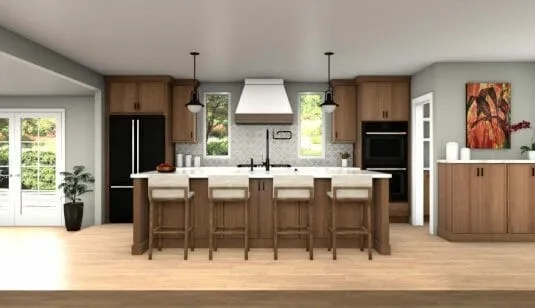
The work of a kitchen design consultant becomes necessary when homeowners need a kitchen that combines visual appeal with practical daily use because face frame cabinet designs affect both space design and cabinet performance throughout its life. The complete kitchen design process requires designers to select materials while they need to learn about how people move through the space and use storage and perform their daily activities in the kitchen. The design of a space needs guidance to help translate its abstract concepts into a physical environment which creates an intentional presence instead of a random one.
Why Does Planning Matter More Than Trends?
People use kitchen trends for short periods but they need planning to create long-lasting habit patterns. The kitchen becomes frustrating to use when its workflow system fails to establish proper organization. The planning process determines how people will use their kitchen space to prepare meals and clean up and spend time with others while the design team creates functional placement of appliances and counters and storage areas. The planning process needs to stay intelligent because it helps designers create spaces which balance their proportions and clearance distances and their matching elements to produce better user comfort and operational effectiveness.
How Does Layout Influence Everyday Comfort?
The kitchen layout functions as the fundamental base which determines all kitchen components. The space size determines how smoothly people complete their tasks based on the kitchen design which includes the sink and cooking space and refrigeration area. The kitchen layout design establishes a smooth cooking pattern which minimizes all cooking activities. The kitchen achieves a peaceful and safe environment which enables easy movement through space because its circulation paths remain unobstructed.
Can Small Kitchens Feel Spacious Through Design?
The size of a room determines its actual usability through its square footage limitation. The kitchen space can appear larger through strategic cabinet and appliance and lighting positions. Vertical storage and well-designed cabinetry and consistent surface materials create a system which eliminates all visual confusion. The compact kitchen space functions effectively as an open area because design decisions maintain proper scale and flow throughout the entire area.
What Role Do Materials Play Beyond Appearance?
Material selection happens because people want things to look nice but the performance capability of materials carries equal importance. The cabinet materials which people select for their kitchen determine how their kitchen space will endure through time. The kitchen space depends on cabinet construction methods and surface durability solutions and hardware components which establish its aging process. The process of material selection for products requires designers to define their useful lifespan which results in easier maintenance tasks and kitchen value preservation.
How Does Cabinet Construction Affect Longevity?
Kitchen cabinets achieve durability through their construction methods which determine how storage spaces withstand constant operational demands. The cabinet system achieves durability through its structural components which include joint strength and finishing materials and structural stability. Cabinet makers use detailed craftsmanship methods to achieve cabinet systems which maintain proper door alignment and drawer movement and surface protection against everyday damage. The reliability of a system increases user trust while decreasing the necessary timeline to complete maintenance tasks.
Why Is Lighting Considered a Design Tool?
The kitchen uses lighting to create both mood functions and practical usability. The kitchen needs task lighting to enable food preparation work while ambient lighting creates a peaceful kitchen space. Properly layered light systems create bright work areas which eliminate both harsh shadowing effects and direct surface glare. The kitchen space benefits from natural light because it creates an atmosphere of comfort which makes the room inviting from morning till evening.
How Does Design Support Changing Lifestyles?
A well-planned kitchen space needs to evolve in response to changing requirements. The design needs to accommodate flexible kitchen spaces which serve growing families and changing cooking patterns and technological advancements. The building system uses adjustable storage solutions and multipurpose surfaces and kitchen design foundations to create systems which enable simple maintenance and kitchen updates. The kitchen stays current because designers create their kitchen spaces based on future design trends.
What Makes a Kitchen Feel Thoughtfully Designed?
A well-designed kitchen space provides users with a seamless experience of its kitchen components. All elements of the design belong to their current position because users cannot identify their spatial relationship. The space maintains an easy movement pattern because of its planned design which respects proportional dimensions and understands how users interact with their environment. The kitchen space transforms into a companion environment which enhances daily activities through its design system of daily usage.