



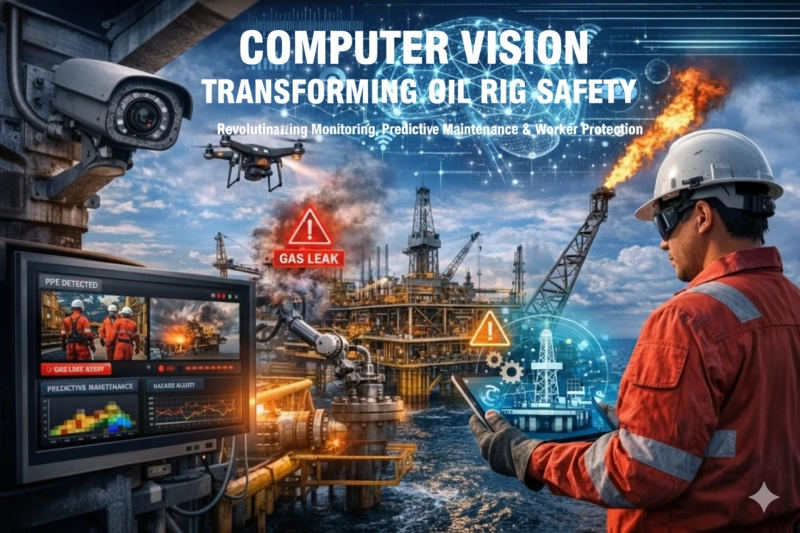
Offshore oil and gas operations are among the most complex and high-risk industrial environments in the world. Oil rigs operate under extreme conditions—unpredictable weather, corrosive marine environments, high-pressure systems, and heavy machinery running around the clock. These rigs rely heavily on skilled workers to manage specialized tools such as drilling apparatus, pumping systems, pipeline networks, and sophisticated control mechanisms. Despite strict safety protocols, the combination of human involvement and mechanical complexity makes offshore installations inherently hazardous.
Equipment malfunctions, drilling glitches, gas leaks, fires, and human error continue to pose serious threats to both workers and infrastructure. According to data from the U.S. Bureau of Labor Statistics, the fatality rate in oil and gas extraction remains significantly higher than the average across all industries. These statistics underline the urgent need for smarter, more proactive safety solutions that go beyond traditional monitoring methods.
This is where computer vision in the oil & gas industry is making a transformative impact. By combining artificial intelligence (AI), real-time video analytics, and advanced data processing, computer vision systems are redefining oil rig safety, shifting operations from reactive responses to proactive risk prevention.
How Do Oil Rigs Work?
Behind every offshore oil rig lies an intricate system of engineering designed to extract oil and gas from deep beneath the earth’s surface. At the core of operations is the drilling system, which penetrates rock formations using rotating drill bits powered by massive mechanical force. One of the most critical processes in drilling operations is mud circulation. Specially formulated drilling fluids are continuously circulated to cool the drill bit, stabilize the wellbore, and carry rock cuttings back to the surface.
Oil rigs also rely on extensive pipeline networks to regulate pressure, transport hydrocarbons, and maintain steady flow rates throughout the operation. These interconnected systems must function with extreme precision. Even a minor deviation, such as pressure imbalance or valve malfunction, can escalate into blowouts or environmental disasters.
To manage these complexities, oil rig workers strictly follow safety protocols while overseeing equipment performance. However, relying solely on manual inspections and human vigilance is no longer sufficient. Continuous, real-time monitoring using advanced technologies like computer vision and AI has become essential for ensuring operational continuity and workplace safety.
The Role of Computer Vision in Oil Rig Safety Monitoring
Computer vision uses AI-powered cameras and algorithms to interpret visual data from live video feeds. Unlike traditional surveillance systems, computer vision does not just record footage, it analyzes it intelligently to detect anomalies, hazards, and unsafe behaviors in real time.
By enabling continuous oil rig monitoring, computer vision systems act as an additional layer of intelligence, supporting workers and safety teams with accurate, data-driven insights.
Core Benefits of Computer Vision Systems in Oil Rig Monitoring
1. Predictive Maintenance and Data-Driven Insights
One of the most impactful applications of computer vision in offshore operations is predictive maintenance. AI-powered vision systems analyze live video feeds to detect early signs of equipment degradation such as corrosion, surface cracks, abnormal vibrations, leaks, and overheating components.
By leveraging advanced AI techniques, such as supervised learning, anomaly detection algorithms, and recurrent neural networks, computer vision systems can identify failure patterns long before they result in breakdowns. When combined with analytics dashboards, operators receive actionable insights that help schedule timely maintenance, reduce downtime, and extend asset lifespan.
This data-driven approach significantly lowers operational costs while preventing accidents caused by unexpected equipment failure.
2. Strengthening Worker Safety Through Continuous Monitoring
Oil rigs expose workers to hazardous materials, rotating machinery, elevated platforms, and confined spaces. Computer vision powered by AI actively monitors worker activity to enhance safety compliance across the rig.
These systems automatically detect:
- PPE violations (helmets, gloves, safety vests)
- Unauthorized access to restricted zones
- Unsafe postures or behaviors near heavy machinery
- Proximity risks between workers and moving equipment
By generating real-time alerts, computer vision enables immediate corrective actions, reinforcing safety protocols and minimizing the likelihood of workplace injuries. Instead of replacing workers, AI acts as a digital safety assistant, supporting human decision-making and improving safety awareness.
3. Integration with IoT Devices for Smarter Operations
When computer vision systems are integrated with IoT sensors, oil rig operations become even more intelligent. IoT devices collect environmental and mechanical data such as pressure levels, temperature, vibration, and gas concentration. When paired with visual data from AI-powered cameras, this creates a holistic view of operational health.
This integration supports condition-based maintenance, where repairs are performed only when necessary. Operators gain deeper visibility into system performance, enabling targeted interventions that reduce unnecessary inspections and maintenance costs.
4. Advanced Hazard Detection Systems
Computer vision dramatically improves hazard detection on oil rigs. AI-powered systems can instantly identify:
- Fire and smoke
- Gas leaks
- Oil spills
- Structural damage
- Unauthorized personnel presence
Additionally, drones equipped with vision AI cameras extend monitoring capabilities to hard-to-reach and high-risk areas. These drones can inspect elevated structures, flare stacks, pipelines, and even underwater installations, areas that are often dangerous or inaccessible for human inspectors.
By detecting hazards early, computer vision prevents small issues from escalating into catastrophic incidents.
5. Automated Maintenance Scheduling
Computer vision systems continuously analyze equipment performance and visual indicators of wear. When abnormalities are detected, the system automatically triggers maintenance alerts and schedules inspections.
This automation eliminates guesswork, prevents unnecessary repairs, and ensures that critical assets remain operational. Automated maintenance scheduling not only improves oil rig safety but also enhances operational efficiency and resource utilization.
Why Nextbrain Leads the Way in AI-Powered Oil Rig Safety
As a trusted AI development company, Nextbrain specializes in delivering advanced computer vision and AI video analytics solutions tailored for high-risk industries like oil & gas. With deep expertise in offshore safety challenges, Nextbrain builds intelligent systems that integrate seamlessly with existing oil rig infrastructure.
Nextbrain’s computer vision solutions offer:
- Real-time hazard and fire detection
- PPE compliance monitoring
- Predictive maintenance insights
- AI-powered video analytics dashboards
- Scalable integration with IoT and drone systems
By leveraging cutting-edge AI models and industry best practices, Nextbrain empowers oil and gas companies to transition from reactive safety measures to proactive risk prevention. Their solutions not only enhance worker safety but also reduce downtime, protect assets, and ensure regulatory compliance.
Final Thoughts
The fusion of AI technologies with computer vision has revolutionized safety and operational efficiency across offshore oil rigs. From real-time hazard detection and PPE compliance to predictive maintenance and continuous monitoring, computer vision is redefining how oil rigs are managed in high-risk environments. As offshore operations become increasingly complex, adopting intelligent safety systems is no longer optional—it is a strategic necessity.
By integrating computer vision with advanced analytics, oil and gas companies can significantly reduce workplace risks, improve asset performance, and ensure regulatory compliance. With proven expertise in AI-powered safety solutions, Nextbrain enables organizations to move from reactive safety measures to a proactive, data-driven safety culture. To build safer, smarter, and more resilient offshore operations, contact Nextbrain today and explore how computer vision can transform your oil rig safety strategy.
Frequently Asked Questions
1. What is computer vision in oil rig safety?
Computer vision in oil rig safety uses AI-powered cameras and video analytics to monitor offshore operations in real time. It helps identify hazards, detect unsafe worker behavior, ensure PPE compliance, and monitor equipment conditions to create a safer working environment.
2. How does computer vision help prevent accidents on oil rigs?
Computer vision systems analyze live video feeds to detect fires, gas leaks, equipment malfunctions, and safety violations instantly. By generating real-time alerts, the technology enables quick corrective actions before minor issues escalate into serious accidents.
3. Can computer vision support predictive maintenance on oil rigs?
Yes, computer vision plays a key role in predictive maintenance by identifying early signs of equipment wear, corrosion, vibration anomalies, and leaks. These insights help operators schedule maintenance proactively, reducing downtime and preventing unexpected failures.
4. How does computer vision improve regulatory compliance in offshore operations?
Automated monitoring ensures continuous adherence to safety protocols and regulatory standards such as OSHA. Computer vision systems maintain audit-ready visual records, making it easier to demonstrate compliance during inspections and safety audits.
5. Why should oil and gas companies choose Nextbrain for computer vision solutions?
Nextbrain is a trusted AI development company that delivers tailored computer vision solutions for the oil & gas industry. Its AI-powered video analytics systems enhance real-time safety monitoring, predictive maintenance, and operational efficiency while seamlessly integrating with existing infrastructure.