


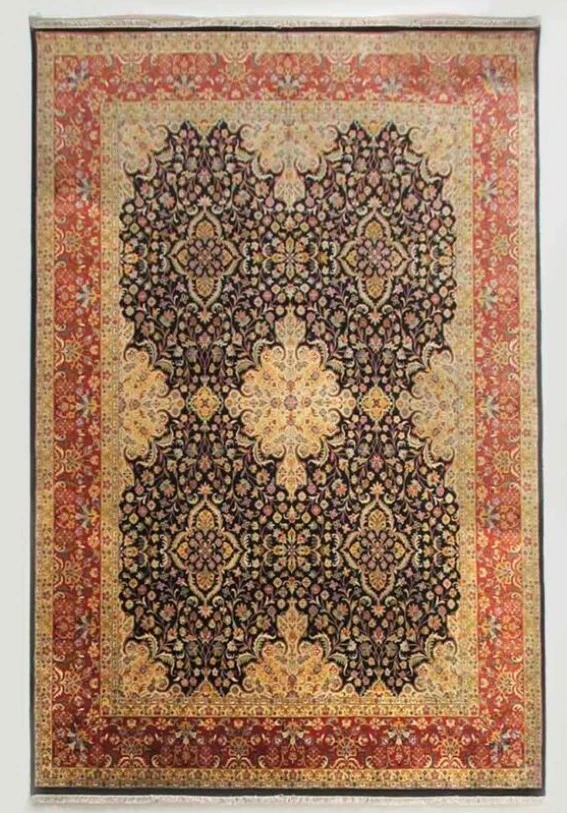
A high-quality rug stands out through a combination of materials, craftsmanship, and design. Here’s how you can tell if a rug is high-quality:
1. Material Quality
- Wool: High-end rugs are often made from 100% wool (especially New Zealand or Persian wool). It’s durable, soft, and naturally stain-resistant.
- Silk: Used in luxury rugs—gives a sheen and is very fine. Often found in Persian or Indian rugs.
- Cotton: Common in the foundation (warp and weft) of high-quality rugs.
- Synthetic materials (polypropylene, nylon): Usually a sign of lower-quality machine-made rugs.
2. Hand-Knotted vs Machine-Made
- Hand-Knotted Rugs are the gold standard. You can tell it’s hand-knotted if:
- The back of the rug mirrors the front design closely.
- You see individual knots on the back (not a mesh or glued backing).
- The fringe is part of the structure (not sewn or glued on).
- Machine-Made Rugs have uniform, perfect patterns and often a plastic or mesh backing.
3. Knot Density (KPI or KPSI – Knots Per Square Inch)
- Generally, the higher the knot density, the better the detail and quality.
- 120–300 KPSI = very good quality.
- 300+ KPSI = exceptional (often seen in silk rugs).
4. Design & Pattern
- Sharp, intricate patterns are a sign of skill and time investment.
- Symmetry and detail: Look at the borders and motifs—blurry or inconsistent designs can indicate lower craftsmanship.
5. Color and Dye
- Natural dyes (vegetable or plant-based) tend to be more desirable and age better.
- High-quality rugs have rich, varied color tones (called “abrash”), not flat or synthetic-looking colors.
- Rub a damp cloth on the rug—if color transfers, the dye may not be colorfast.
6. Weight and Feel
- High-quality wool rugs feel dense, substantial, and plush, but not too soft or spongy like cheaper synthetic rugs.
- Pick up a corner—does it feel heavy for its size? That’s often a good sign.
7. Age and Origin
- Antique or semi-antique rugs from places like Persia (Iran), Turkey, India, Afghanistan, and Morocco often hold high value—if handmade.
- Look for labels or certificates of origin if available (though beware of fakes).
8. Price
- If the price feels too good, it probably isn’t a genuine high-quality rug. Handmade wool or silk rugs are labor-intensive and priced accordingly.
Quick Tests You Can Do:
- Back inspection: Flip the rug—if the design is clearly visible on the back, it’s likely hand-knotted.
- Fringe check: If the fringe is sewn on, it’s likely machine-made.
- Burn test (if allowed): Wool smells like burning hair; synthetics smell like plastic.
Let me know if you want to evaluate a specific rug (you can share photos if needed).