



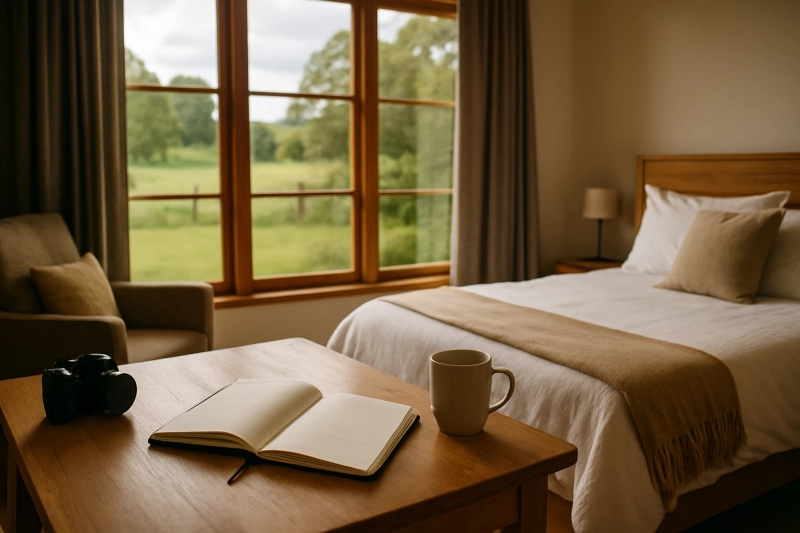
Remote work, creative projects and lifestyle-driven travel have become part of how many people design their year, with more individuals seeking inspiring places for short stays that encourage focus, deep thinking and meaningful rest. Rather than booking large hotels filled with screens, music playlists and queue-heavy dining, more travelers are turning to nature-focused stays where silence, scenery and fresh air form part of the daily rhythm. This trend has supported higher interest in boutique retreat accommodation and properties located in quieter regional areas, where a slower pace meets thoughtful comfort.
Taking time away from dense city environments may help recharge mental stamina, especially when someone is facing deadlines, ideation blocks or the early stages of a personal project. A temporary change of environment may improve clarity and motivation, even if the stay lasts only a weekend. When a retreat setup offers privacy, simple luxuries and natural scenery, it becomes easier to settle into a gentler routine without the distractions of traffic, advertising or constant multitasking.
Why quiet stays assist creative thinking
Writer’s block, slow planning sessions and scattered concentration often stem from overstimulation rather than a lack of ideas. Many creative or independent workers thrive when they have scope to think slowly, edit thoughtfully and take breaks without noise competition. Boutique retreat accommodation often offers a calm environment where people may balance screen time with nature, journaling or reading. This type of space may activate different thinking patterns simply because the surroundings feel less demanding.
Research from wellbeing commentary shows that quiet environments may support deeper focus and mental recovery. Articles such as this mindset-focused discussion highlight how rest may influence decision-making, memory retention and creative flow. When those insights are paired with nature-centred stays, the outcome may be a healthier relationship with work output.
Separation from digital noise
Digital tools are useful, yet they are also persistent and persuasive. A quiet retreat stay allows people to manage their technology use through boundaries rather than avoidance. It is easier to ignore screens when the immediate environment offers scenic value, warm textures, outdoor seating spaces or cozy indoor reading corners. Many guests report feeling mentally lighter when they begin their morning with fresh air rather than with a notification list.
City environments often include layers of noise that fade into the background, making it difficult to recognize how busy the senses truly are. When travelers stay somewhere rural or semi-rural, they often notice the absence of horns, sirens and echoing chatter by the first night. This absence may act as a natural reset, providing room for the mind to wander without competition.
Features that suit creative and remote work travelers
A strong creative escape is more than a pretty view. It relies on comfort, privacy, pacing and the freedom to personalize each day. Boutique retreat accommodation often includes homely furnishings, thoughtful layouts and warm lighting that feel closer to a private residence than a resort. This helps visitors feel settled, which is a key factor in productivity. When someone feels safe and supported by their environment, it becomes easier to get into a comfortable workflow.
Outdoor areas, gardens, verandas, walking paths or vineyard settings may also offer places to take breaks that feel restorative rather than distracting. Moving between indoor focus and outdoor breathing encourages a natural balance between effort and rest. Local produce, café visits, regionally crafted goods and friendly regional communities may also influence inspiration because they introduce different styles, conversations and perspectives.
Flexible pacing is another advantage. Without prescheduled events, guests may shape their daily flow around energy peaks rather than around hotel service windows. Some may write before sunrise, while others may brainstorm late into the evening. Retreat-style stays allow hours to unfold in ways that suit personal rhythm rather than market-driven timetables.
Example of a creative day in a quiet retreat setting
Imagine waking early, opening the curtains to gentle rural light and preparing coffee in a quiet kitchen space. Instead of checking emails immediately, the morning begins with slow breathing, short journaling notes or a reading session to warm up the mind. Next comes a few hours of deep creative work, such as outlining chapters, editing photographs, crafting business goals or writing marketing content. After lunch, energy may dip, so the afternoon might be spent walking near trees, exploring a local bakery or sketching near a riverbank. Evening brings a warm meal and quiet reflection, perhaps near a firepit or on a veranda with a clear sky overhead.
This type of day holds value because it supports flow rather than pressure. Breaks are proactive rather than reactive, and productivity feels self-directed rather than forced.
For those looking to experience a countryside stay in regional New South Wales, there are rural options designed for reflection and peaceful short breaks. Anyone curious may explore countryside-style stays through boutique retreat accommodation as an example of how private, nature-connected living may suit both creative and remote work intentions.
Benefits of choosing nature-aligned locations
Scenic properties allow visitors to remain connected to the outdoors even when they stay indoors. Natural textures, flowing breezes through windows, mountain or paddock views and occasional bird sounds may encourage a calmer nervous system. When the mind feels stable, ideas are easier to organize and complex thought becomes gentler.
Regional destinations also create access to community settings that feel slower and friendlier. Visitors may talk with café owners, local producers or artisans whose lives are shaped by land, weather and tradition rather than strict corporate timetables. These interactions may provide useful perspective, new story angles or new personal goals.
Another relevant reference point related to lifestyle, personal development and self-directed planning may be found in this reflective post, which aligns with values of slow improvement and conscious decision-making.
Planning suggestions for a productive escape
Packing lightly may support a calm mindset from the start. Instead of preparing for every possible scenario, it may feel better to focus on comfort, notebooks, reading material, quality food and layered clothing. Setting relaxed goals rather than strict outputs may prevent disappointment and allow creative success to appear naturally.
Time-blocking works effectively in calm spaces. For example, two hours of writing, one hour of reading, two hours outdoors, one hour of reflection and a gentle evening practice may create enough balance to feel satisfied with progress. Offline prompts, sketching, analog photography, audio notes and self-review sessions may also shape thoughts into something meaningful.
Visitors may also consider maintaining a “digital window” rather than constant access. This means checking messages once in the morning and once in the evening, allowing the remainder of the day to remain uninterrupted.
Final thoughts
The shift toward boutique retreat accommodation shows that many people no longer see travel purely as leisure. For freelancers, employees, business owners, students and creative hobbyists alike, quiet spaces serve a practical purpose. They offer breathing room to rethink future plans, reflect on personal direction and produce meaningful work that feels aligned rather than rushed. Spaces designed for privacy, nature connection and gentle pacing may offer an environment where modern work feels more natural and less draining.