
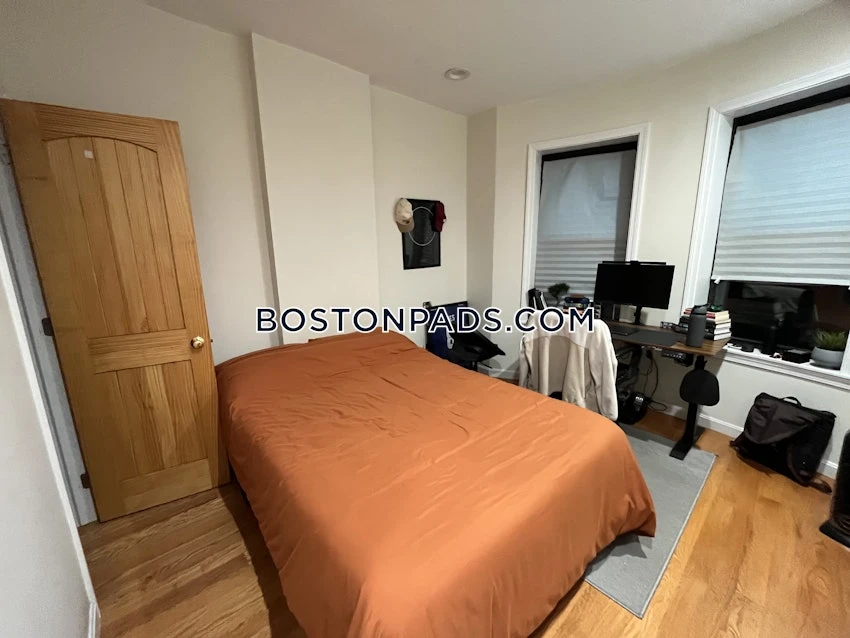
Boston apartments reflect the story of a city that keeps moving forward without erasing where it began. Cobblestone alleys still run behind modern towers, and the same brick structures that once held carriage houses now provide housing that shares sightlines with recent developments made of steel and glass. The mix of classic and modern makes for an interesting landscape to say the least.
Table of Contents
- From Brick Rowhouses to Steel and Glass
- Neighborhood Corridors Leading the Change
- Modern Engineering Hidden Behind Classic Facades
- Integrating Green Space Within Denser Neighborhoods
- Current Market Data and Included Utility & Amenities Figures
- To Wrap Things Up
From Brick Rowhouses to Steel and Glass
The South End, Back Bay, and Beacon Hill neighborhoods are a great example of the eclectic mix of classic architecture and new construction. There are a plethora of brick rowhouses with doorways that are just a few feet above the street. Each lintel is unique since the stone was hand carved. These nineteenth-century designs still frame much of central Boston. However, new mid and high-rise buildings built from glass, steel and polished stone have and are being constructed in the open pockets between them where old parking lots and former shops were once located.
Despite the height difference, the new structures echo their neighbors. Architects borrow color and scale from the older streets, blending ornate detail with crisp geometry. It’s that mix that keeps Boston apartments instantly recognizable no matter the decade they were built.
Neighborhood Corridors Leading the Change
Travel down Commonwealth Avenue or Boylston Street and the city’s evolution becomes completely obvious. The rhythm shifts block by block. There are corner stores beside modern façades, historic cornices casting shadows on new glass. Redevelopment here never really pauses; it just moves from one address to the next. In Allston, Western Avenue has become a case study in this type of transformation. Construction cranes are constantly working on mid-rise housing and mixed-use buildings where old garages and warehouses once stood.
The Seaport District, reclaimed from its shipping past, has grown into a neighborhood of shimmering towers. Mission Hill threads the old and the new more tightly. Triple-deckers are located beside contemporary brick buildings along Tremont and Huntington. Each of these corridors shows how Boston reuses its framework rather than replacing it.
Modern Engineering Hidden Behind Classic Facades
Much of Boston’s modernization may not be obvious at first glance. A large number of the classic structures have been refitted from the inside out with new framing, fire-safe materials and stronger foundations. It can be difficult to tell that a brownstone on Columbus Avenue now carries energy-efficient windows and digital temperature controls behind its century-old glass. Downtown, former office buildings have been turned into residential rentals, keeping their grand marble entries and limestone façades. Modern systems operate inside structures that look unchanged from the outside. This is proof that progress doesn’t always mean starting fresh.
Integrating Green Space Within Denser Neighborhoods
Developers of residential rentals are now including small pieces of nature wherever they can. Amenities such as rooftop terraces, interior courtyards and shaded setbacks between buildings have become far more common in new construction. Plantings soften the edges of brick and concrete along Commonwealth Avenue.
Fenway’s new construction favors trees and permeable sidewalks to handle runoff and heat. Even tiny corners of land now matter. A strip of benches, a raised bed of greenery, or a cluster of planters turns an ordinary block into something that lives and breathes. It’s these details that keep older districts feeling alive as new construction continues to rise around them.
Current Market Data and Included Utility & Amenities Figures
Boston Pads Real-Time Data confirms that studios are currently $2,294 a month, a gain of 0.61% year-over-year. One-bedrooms come in at $2,690 a month which is 0.56% higher when compared to last year. Two-bedrooms are $3,300 a month. That’s an increase of 1.07% over the past 12 months. Three-bedrooms are priced at $3,939 a month showing a YOY increase of 1.84%. Four-bedrooms now average $4,759 a month. This figure is 0.25% lower YOY. Five-bedrooms round out the current market data at $6,106 a month. This shows a 2.54% increase over the past twelve months.
A plethora of Boston apartments include at least a few utilities and amenities as part of the monthly rent. Please note that the following figures are significantly lower at this time of year due to the conclusion of the September 1st leasing cycle. The bottom line is that there are fewer units available for rent with included utilities and amenities at this time. However, 16% of units include heat and 17% hot water as part of the monthly rent. 42% of dwellings are pet friendly, 24% have dishwashers, and 14% in-unit laundry. Street parking is always difficult to come by in this city, but it is available with 17% of the residential rentals currently on the market.
To Wrap Things Up
Old designs meet new materials, and what results feels layered instead of replaced. The combination gives the city its texture: weathered brick beside polished glass, history meeting future. In the end, Boston apartments capture that story perfectly — structures that stand as proof that a city can move forward without ever letting go of what made it timeless in the first place.