



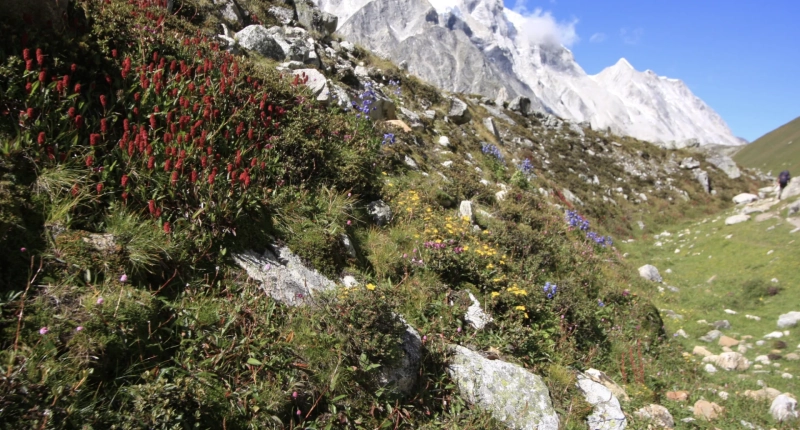
The Himalayan region of Nepal represents one of Earth's most extraordinary botanical treasures. Nepal occupies a unique geographic position with elevations ranging from 59 meters to 8,848 meters—the highest point on Earth—creating an unparalleled diversity of ecosystems within a remarkably compact area. For those passionate about plants and natural landscapes, Garden in the Himalayas offers an intimate window into this magnificent floral kingdom.
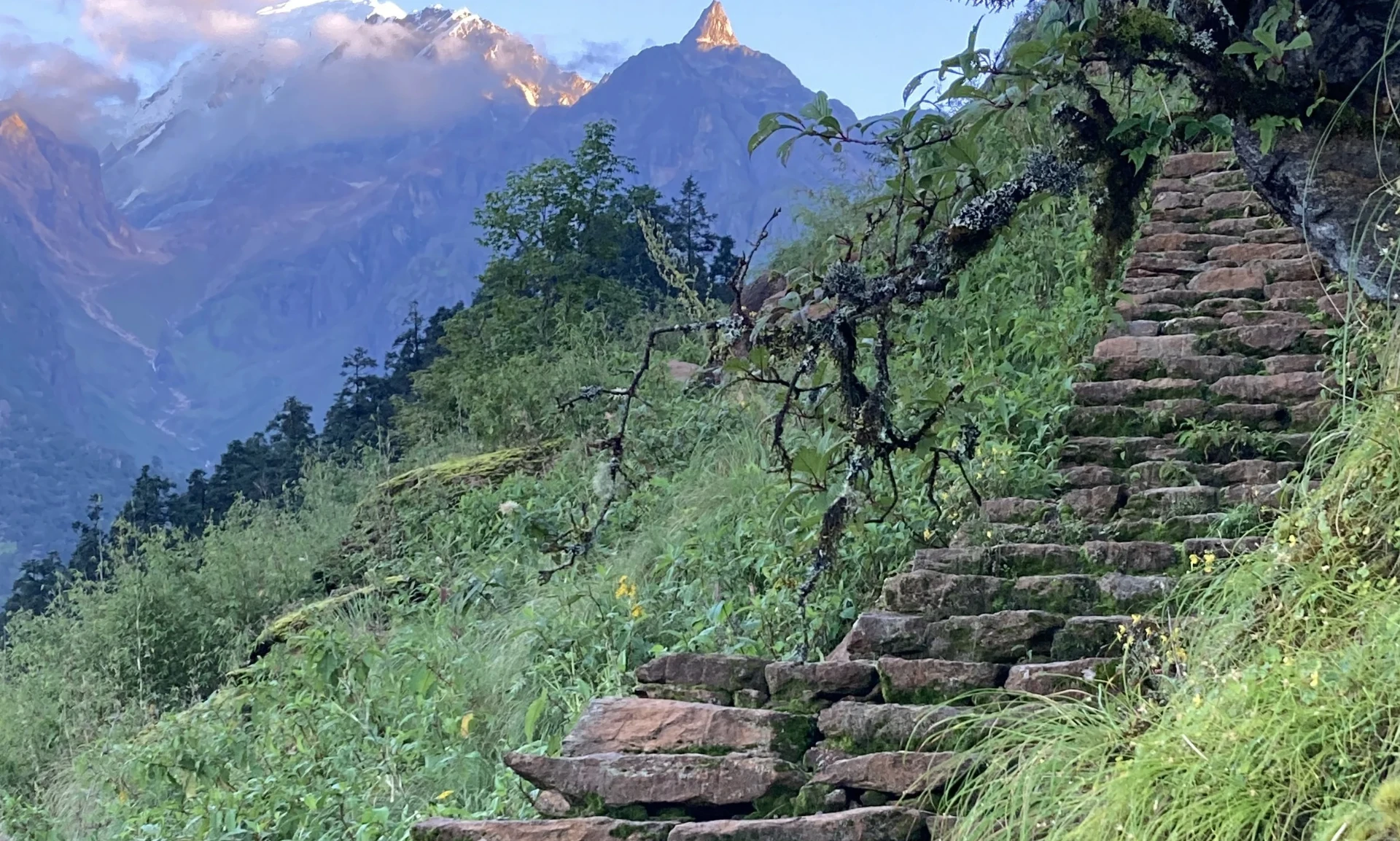
A Botanical Crossroads
Nepal's phytogeographical provinces comprise various vegetation types, including tropical lowland rainforest, temperate forests of oak and conifers in the mid-hills, to dwarf scrubs of rhododendron and alpine meadows in the higher regions. This remarkable diversity stems from Nepal's position as a botanical crossroads where multiple floristic elements converge—from Western and Central Asiatic species to humid Sino-Japanese varieties, Southeast Asian elements in the eastern foothills, and typical Indian flora in the southern plains.
Existing checklists for Nepal record approximately 6,000 species of flowering plants and about 530 ferns, though botanical experts estimate numbers may reach 7,000 when poorly known remote regions are fully explored. This incredible richness makes Nepal a paradise for plant enthusiasts, botanists, and nature lovers seeking authentic encounters with Himalayan flora.
The Vertical Garden
What makes Nepal's landscapes particularly fascinating is the dramatic change in vegetation across elevation zones. Within a distance of just 150 kilometers, one can journey from steamy subtropical jungles to alpine meadows where only the hardiest plants survive.
In the Tarai and Churia Range, tropical deciduous forests consist mainly of sal trees, khair with yellow flowers, and sissoo yielding durable timber. As you ascend into the mid-mountain regions between 5,000 and 10,000 feet, the landscape transforms into mixed forests of pines, oaks, rhododendrons, poplars, and walnuts. Higher still, between 10,000 and 12,000 feet, fir mingles with birch and rhododendron, creating forests of otherworldly beauty.
The Great Himalayan Range harbors valuable forests containing spruce, fir, cypress, juniper, and birch. Just below the snow line, between 14,000 and 15,000 feet, alpine vegetation provides grazing grounds where specialized plants have adapted to extreme conditions.
Rhododendron: The Mountain's Crown
Rhododendron arboreum is the national flower of Nepal, with most species native to eastern Asia and the Himalayan region. During spring, from March through May, Nepal's hillsides explode with rhododendron blooms in brilliant reds, pinks, and whites—a spectacle that draws botanists and trekkers from around the world.
Rhododendron arboreum, Nepal's national flower, paints forests with brilliant red blooms during spring, with these ancient trees living for hundreds of years. Garden in the Himalayas' expeditions time their treks to coincide with peak blooming seasons, allowing participants to witness entire mountainsides transformed into seas of color.
At higher elevations, dwarf rhododendrons carpet alpine slopes with delicate pink and white flowers. In Nepal, common species include Rhododendron arboreum growing approximately 20 meters tall with red flowers, Rhododendron campanulatum with purple, blue, and white flowers growing to 5 meters, and Rhododendron forrestii at higher altitudes with bright red flowers.
The Elusive Blue Poppy
The Blue Poppy, known as Meconopsis, is a rare and beautiful flower native to the Himalayas that grows at high altitudes between 3,000 and 4,500 meters. This ethereal flower symbolizes peace and serenity in Nepali culture and can be found in protected areas including the Annapurna Conservation Area and Langtang National Park.
Twenty-two species of Meconopsis have been reported from Nepal, with eleven being endemic and mostly local in distribution. These extraordinary poppies, with their delicate petals in shades of blue, yellow, and purple, represent some of the most sought-after discoveries for plant hunters exploring Nepal's remote valleys.
Primulas and Alpine Jewels
The Primrose, known as Primula, is a colorful and delicate flower native to the Himalayas. Garden in the Himalayas documents numerous primula species during their expeditions, from the drumstick-shaped Primula denticulata to the elegant Primula sikkimensis. These alpine gems dot meadows and rocky slopes, their vibrant colors providing stark contrast against the harsh mountain environment.
The flora extends beyond rhododendrons and poppies to include magnificent magnolias, delicate orchids, healing aconitums, architectural Saussurea species, and countless other botanical wonders. Each elevation zone reveals new treasures—from the tropical Begonia picta in lower regions to hardy alpine species clinging to life near the snow line.
Conservation Through Exploration
Garden in the Himalayas, founded by Purna Gurung, works to preserve these botanical treasures through documentation, seed collection, and community education. Their biannual expeditions venture into remote areas of the Dhaulagiri, Manaslu, and Annapurna regions, collecting seeds and cuttings for conservation while studying plants in their natural montane habitats.
Nepal is located in the central part of the greater Himalayan range, one of the youngest mountains in the world, which contributed to plant diversity and provided barriers and corridors through which plants migrated during ice ages. This geological history created the extraordinary diversity we see today—a diversity increasingly threatened by climate change, habitat loss, and overexploitation.
Nepal comprises 1,950 species of medicinal plants, including 1,614 native species, with nearly 600 species of food crops consumed in Nepal. Understanding and preserving this botanical wealth is essential not only for biodiversity conservation but also for the communities who depend on these plants for medicine, food, and livelihoods.
The Garden in the Himalayas Experience
Joining a Garden in the Himalayas expedition offers more than botanical tourism—it provides immersive education in Himalayan ecology, meaningful cultural exchange with mountain communities, and direct contribution to conservation efforts. Participants learn to identify species, understand ecological relationships, collect seeds responsibly, and appreciate the intricate connections between plants, people, and place.
The expeditions combine trekking through spectacular landscapes with botanical study, visiting villages to learn traditional plant uses, and camping among forests of rhododendron, magnolia, and pine. Whether you're a serious botanist, an amateur naturalist, or simply someone who appreciates natural beauty, these journeys offer profound encounters with some of Earth's most remarkable plant communities.
A Living Laboratory
The Himalayan landscapes of Nepal function as a living laboratory where scientists continue making new discoveries. The remoteness of many valleys means botanical exploration remains incomplete, with new species regularly documented. Garden in the Himalayas contributes to this ongoing discovery while ensuring that knowledge benefits both science and local communities.
From the first flowering magnolias of early spring to the last alpine asters of autumn, Nepal's mountains offer year-round botanical interest. The landscapes tell stories of adaptation, survival, and incredible diversity—stories best understood by walking among the plants themselves, learning their names, understanding their roles, and committing to their preservation.
For those ready to experience the Himalayan flora firsthand, Garden in the Himalayas provides expert guidance into this botanical paradise, where every turn in the trail reveals new wonders and every season brings different flowers into bloom. This is nature at its most spectacular, diverse, and worth protecting for generations to come.