For startup founders building companies in the United States, understanding the H-1B visa sponsorship process can feel complex and abstract. Many founders benefit from breaking the process into clear stages and visuals to better understand how sponsorship typically works, especially when balancing company growth, fundraising, and team building.
This visual-style guide explains the H-1B visa sponsorship process for founders in a simplified, step-by-step manner. It is intended for educational purposes only and should not be considered legal advice.
What Is H-1B Visa Sponsorship (In Simple Terms)?
The H-1B visa allows U.S. employers to temporarily employ foreign professionals in specialty occupations. For founders, sponsorship usually involves the startup acting as the employer while meeting regulatory requirements around role structure, wages, and oversight.
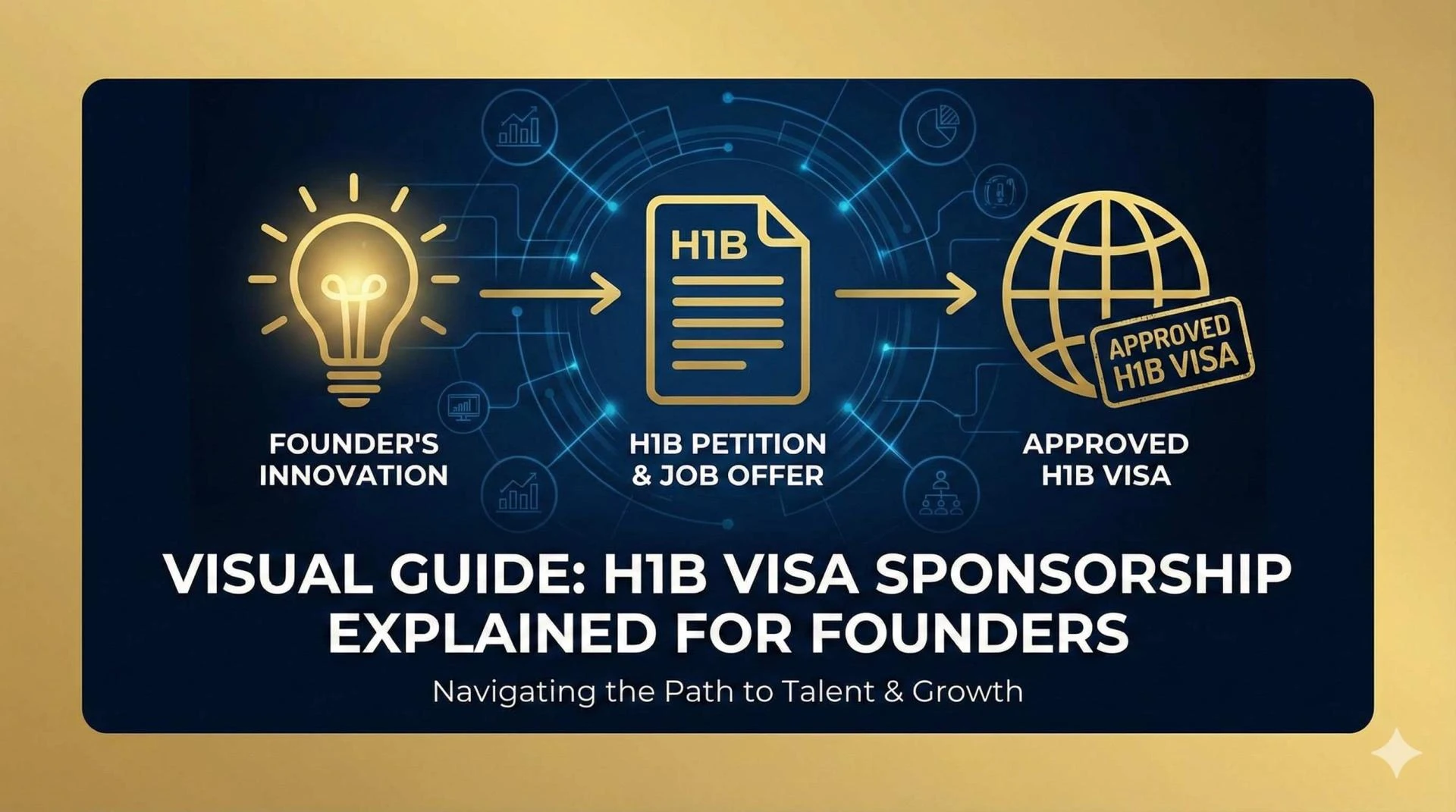
Visually, the H-1B sponsorship process can be understood as four connected stages:
Employer Eligibility → Job Role Structure → Application Process → Ongoing Compliance
Stage 1: Employer & Company Readiness
From a founder’s perspective, the process often starts with company readiness.
Common elements reviewed include:
- Is the startup legally formed and operating in the U.S.?
- Is there a valid employer-employee relationship?
- Is there independent oversight (such as a board or advisors)?
These factors help establish that the company can sponsor an H-1B employee, even if that employee is also a founder.
Stage 2: Defining the Sponsored Role
A clear job role is a core part of H-1B sponsorship.
Founders usually work to define:
- A specialty occupation role aligned with the business
- Job duties that require specialized knowledge
- A salary that meets or exceeds the prevailing wage for the role and location
This step is often visualized as aligning skills → role → business need.
Stage 3: The H-1B Application Flow
The H-1B process typically includes multiple filings and timelines:
- Labor Condition Application (LCA) submission
- H-1B registration during the annual cap season (if applicable)
- Petition filing with supporting documentation
Because H-1B visas are subject to an annual cap, selection is not guaranteed. Past selection rates do not predict future outcomes.
Stage 4: Post-Approval Responsibilities
Once approved, founders commonly focus on:
- Maintaining compliant payroll and job duties
- Tracking visa validity and extensions
- Updating filings if there are material role changes
Ongoing compliance is often as important as the initial application.
Why Founders Use Visual Tools and Platforms
Given the number of moving parts, many founders explore visual dashboards, checklists, and document trackers to stay organized throughout the H-1B process. These tools help teams understand timelines, responsibilities, and dependencies without replacing legal advice.
How GaleVisa Supports the Process
GaleVisa is not a law firm. It is a technology platform that helps founders and professionals organize H-1B visa documentation, track timelines, and coordinate with independent immigration attorneys.
GaleVisa does not provide legal advice or guarantee outcomes. All legal services are provided by independent attorneys under separate attorney-client agreements.
Founders can review GaleVisa pricing and book a free demo to understand how the platform supports H-1B visa preparation workflows for startups.
Final Takeaway
For startup founders, H-1B visa sponsorship is best understood as a structured, multi-step process rather than a single application. Visual explanations and organized preparation can make the process easier to follow, especially when paired with qualified legal support.
Disclaimer: This content is for informational purposes only and does not constitute legal advice. GaleVisa is not a law firm. Past outcomes do not guarantee future results.