



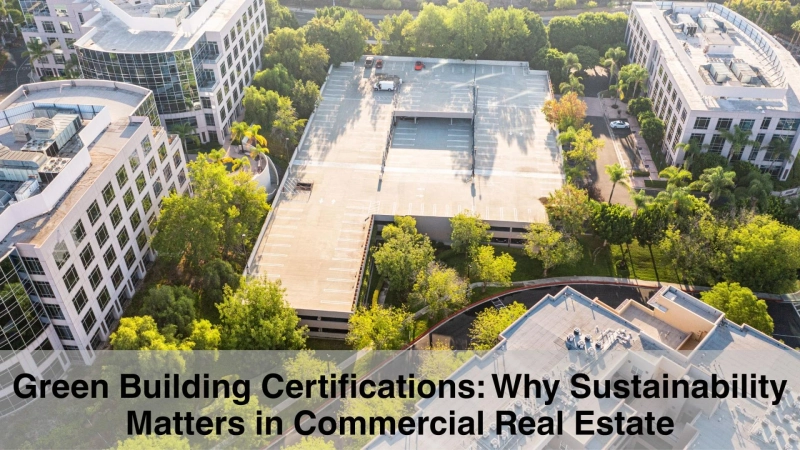
As buildings account for nearly 40% of global energy-related emissions, the push for sustainability in commercial real estate (CRE) has become both a regulatory and strategic priority. Today, green building certifications like LEED, BREEAM, and WELL are more than just environmental accolades—they serve as trusted benchmarks for energy efficiency, occupant well-being, and long-term asset performance.
Amid rising ESG expectations, shifting tenant demands, and climate-aligned regulations, certified buildings offer clear advantages: lower operating costs, stronger investor interest, and enhanced market value. For developers, owners, and tenants alike, aligning with green standards is no longer optional—it’s a competitive and operational necessity.
What Are Green Building Certifications?
Green building certifications are third-party assessments awarded to buildings that meet specific sustainability and performance standards. These certifications evaluate various factors such as energy efficiency, water conservation, indoor air quality, sustainable materials, and the building's overall environmental impact. Some also assess social and governance metrics.
The most widely recognized certifications include:
- LEED (Leadership in Energy and Environmental Design)
Administered by the U.S. Green Building Council, LEED is widely used in India for certifying environmentally responsible and resource-efficient buildings. It offers ratings like Certified, Silver, Gold, and Platinum based on performance.
- IGBC (Indian Green Building Council)
Developed by the Confederation of Indian Industry (CII), IGBC certification is tailored to local environmental conditions and building codes. It assesses parameters like energy efficiency, water usage, waste management, and sustainable materials.
- EDGE (Excellence in Design for Greater Efficiencies)
An innovation of the International Finance Corporation (IFC), EDGE is designed for emerging markets like India. It focuses on cost-effective green building practices that reduce energy, water, and material use by at least 20%.
- WELL Building Standard
Although global in scope, WELL is gaining traction in India’s premium commercial spaces. It focuses on enhancing human health and wellness through design elements such as air quality, lighting, and thermal comfort.
Key Criteria in Green Building Certifications
While each certification system has unique parameters, most focus on the following core aspects:
1. Energy Efficiency
Efficient HVAC systems, smart lighting, and renewable energy sources reduce operational costs and emissions. Green buildings can consume up to 25–50% less energy than traditional buildings.
2. Water Conservation
Certified buildings often incorporate low-flow fixtures, rainwater harvesting systems, and greywater recycling. These practices are especially important in water-scarce regions.
3. Material Selection
Using recycled, locally sourced, or low-VOC (volatile organic compounds) materials contributes to lower embodied carbon and healthier indoor air.
4. Indoor Environmental Quality
Ventilation, lighting, acoustics, and temperature control are evaluated for their impact on occupant health and productivity.
5. Waste Management
Green projects emphasize recycling, composting, and construction waste diversion from landfills.
6. Sustainable Site Development
This includes smart land use, biodiversity preservation, and alternative transportation options like bike storage and electric vehicle charging stations.
7. Innovation and Regional Priorities
Some certifications award extra points for innovative technologies and addressing local environmental challenges.
The Growing Demand for Sustainable CRE
Investor and Tenant Expectations
Environmental, Social, and Governance (ESG) factors are now integral to investment decisions. Institutional investors and REITs (Real Estate Investment Trusts) seek assets with green credentials for long-term resilience. Tenants, especially multinational corporations, also prefer certified buildings to align with their own ESG mandates.
Regulatory and Policy Pressures
Many governments offer tax benefits, fast-tracked approvals, or other incentives for green construction. Others impose strict sustainability codes. For instance, the EU’s taxonomy regulation and the UAE’s Net Zero by 2050 initiative are reshaping how buildings are planned and managed.
Financial Advantages
While green buildings may have higher upfront costs (typically 2–5% more), they provide returns through:
- Reduced utility bills
- Higher occupancy rates
- Increased tenant retention
- Better resale and rental value
- Lower operational risk and maintenance costs
Studies have shown that LEED-certified buildings command rental premiums of up to 10% and have up to 20% higher resale values than non-certified buildings.
How Certifications Benefit Stakeholders
Developers and Builders
- Gain a competitive edge in crowded urban markets
- Qualify for green financing or government subsidies
- Future-proof assets against tightening building codes
Owners and Investors
- Benefit from improved ROI through lower OPEX and higher asset values
- Enhance brand reputation and investor confidence
- Mitigate climate-related risks and regulatory fines
Tenants and Occupants
- Enjoy better air quality, lighting, and thermal comfort
- Experience lower utility costs
- Benefit from a healthier and more productive workspace
Challenges in Green Building Adoption
Despite the clear benefits, barriers to widespread certification still exist:
High Initial Costs: While the ROI is positive, the capital expenditure can be a deterrent for smaller players.
Knowledge Gaps: Lack of awareness among stakeholders can delay green building integration.
Complex Certification Process: Navigating documentation and audits can be resource-intensive.
Fragmented Standards: The proliferation of overlapping standards can create confusion in global investment portfolios.
However, these challenges are increasingly being addressed through education, streamlined certification tools, and supportive government policies.
The Future of Sustainability in CRE
Technology-Driven Smart Buildings
IoT-enabled systems that monitor energy, water, and air quality in real-time are transforming green building operations. Smart buildings can adapt their resource usage automatically, making sustainability both efficient and scalable.
Integration with ESG Reporting
Sustainability metrics are now integral to ESG disclosures. Certified buildings contribute positively to these reports, influencing investor decisions and corporate strategies.
Carbon Neutral and Net-Zero Goals
New buildings are being designed to meet net-zero energy or net-zero carbon targets. Retrofitting existing buildings to meet these standards will become a major industry trend in the coming decade.
Circular Economy in Construction
The focus is shifting from just “green” buildings to “circular” buildings—structures designed for deconstruction, material reuse, and minimal lifecycle environmental impact.
How to Get Started with Green Certification
For real estate professionals, pursuing certification begins with:
- Choosing the Right System: Evaluate which certification aligns with project goals, location, and tenant expectations.
- Engaging Experts Early: Involve sustainability consultants and green architects from the design stage.
- Benchmarking and Planning: Conduct energy and environmental audits to identify areas for improvement.
- Documentation and Submission: Work closely with certification authorities to ensure compliance and verification.
- Post-Certification Audits: Maintain performance standards through periodic assessments and updates.
Conclusion: Sustainability Is Now a Business Imperative
In a world facing intensifying environmental challenges, green building certifications are more than a badge of honor—they are a practical pathway to resilience, efficiency, and profitability in commercial real estate. For developers, investors, and tenants alike, sustainability represents not just a moral imperative but a strategic one.
As green standards evolve and ESG pressures mount, the CRE players who embrace sustainable building practices today will lead the market tomorrow.