



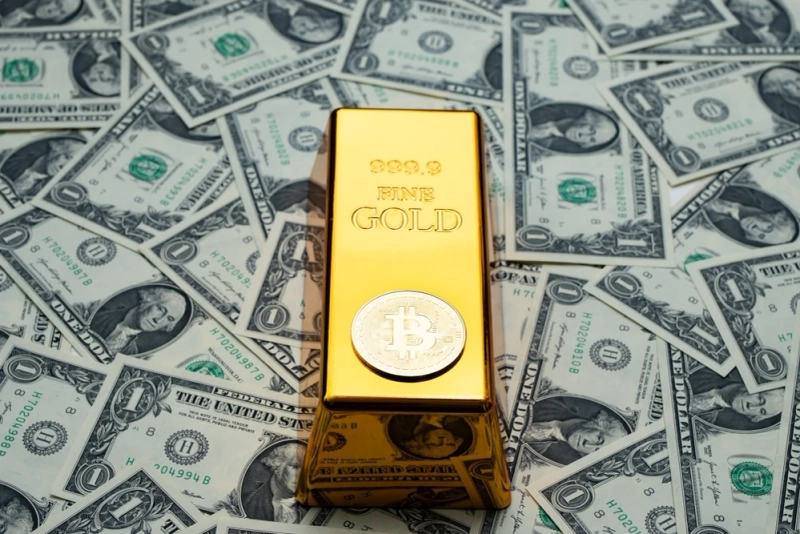
If there’s one question that’s sparking debates across financial circles in 2026, it’s this:
Is gold still the world’s most trusted safe haven, or has Bitcoin finally taken the crown?
For decades, gold has been the ultimate security blanket for investors—the shiny metal that holds its ground when everything else falls apart. But with the rise of digital finance, institutional crypto adoption, and a growing distrust in traditional banking systems, Bitcoin has been stepping into that same safe-haven spotlight.
And as traders explore modern investment tools like what is CFD stock trading, the landscape becomes even more dynamic. In 2026’s unpredictable economic climate—with inflation concerns, geopolitical tensions, and rapid technological change—where are investors actually putting their trust? Let’s break it down.
Understanding Safe-Haven Assets
Before we compare the two, let’s talk about what a safe-haven asset really is.
In simple terms, a safe-haven asset is something investors turn to when the markets are in turmoil. It’s an asset that tends to hold or even increase its value when stocks, currencies, or bonds are struggling.
Historically, gold has been the textbook example. It’s tangible, scarce, and has outlasted entire civilisations. But in the digital era, a new player has entered the field, Bitcoin. With its decentralised nature and limited supply, Bitcoin has been increasingly seen as a kind of “digital gold”, appealing especially to younger investors who trust code over central banks.
The definition of “safe haven” hasn’t changed. But the list of candidates sure has.
Gold: The Timeless Store of Value
The Historical Role of Gold
Gold’s safe-haven status didn’t happen overnight. For thousands of years, it’s been synonymous with wealth, power, and stability. During times of crisis, whether wars, recessions, or inflation surges, investors have consistently turned to gold.
When the 2008 financial crisis shook the global economy, gold prices soared as stock markets crashed. The same happened during the 2020 pandemic and again during the post-pandemic inflation wave. Time and again, gold has proven one thing: it doesn’t panic when the world does.
Gold’s Market Performance in 2025–2026
Fast-forward to today, and gold remains as resilient as ever. In 2025, central banks, especially in emerging economies, continued adding gold to their reserves, signalling enduring confidence in its value.
By 2026, gold prices will have seen steady upward momentum, supported by:
- Persistent inflation in key markets,
- Geopolitical risks in Europe and the Middle East, and
- Continued investor demand for tangible safety.
Even as global stock markets rebounded, gold quietly maintained its reputation as the “silent protector” in diversified portfolios.
Why Investors Still Love Gold
Gold offers several key advantages:
- Tangibility – It’s real, physical, and can’t be hacked.
- Liquidity – It’s traded globally, making it easy to buy or sell.
- Stability – Its price doesn’t swing wildly like tech stocks or cryptocurrencies.
- Inflation Hedge – When fiat currencies lose purchasing power, gold tends to hold value.
The Limitations of Gold
Of course, gold isn’t perfect.
- Storing and insuring it can be expensive.
- It doesn’t generate interest or dividends.
- And in fast-moving markets, it can sometimes feel “old-school”, especially to digital-native investors looking for innovation.
That’s where Bitcoin has entered the scene.
Bitcoin: The Digital Gold Revolution
Bitcoin’s Evolution as a Safe Haven
When Bitcoin first appeared in 2009, it was dismissed as a niche experiment. But, in 2026, it will be a mainstream financial asset. Backed by ETFs, accepted by global merchants, and increasingly held by institutions and even sovereign funds.
The key reason? Trust through decentralisation.
Bitcoin operates without a central authority, immune to government money-printing or political influence. Its limited supply of 21 million coins ensures scarcity, mirroring one of gold’s most powerful traits, but in digital form.
And as more investors explore what is crypto CFD trading, Bitcoin’s accessibility has expanded even further. Through CFDs (Contracts for Difference), traders can now speculate on Bitcoin’s price movements without actually owning the underlying asset. This allows both retail and professional investors to benefit from Bitcoin’s volatility. Whether the market is moving up or down, it is important to manage risk through regulated trading platforms.
Bitcoin’s Performance in 2025–2026
Bitcoin’s journey to safe-haven status hasn’t been smooth. The asset has seen its fair share of volatility, but 2025–2026 has marked a maturing phase.
- The introduction of more regulated Bitcoin ETFs has made institutional participation easier.
- The 2024 halving event tightened supply and reignited bullish momentum.
- Adoption in developing countries as both an investment and a remittance tool, continues to rise.
While price fluctuations still exist, Bitcoin’s correlation with traditional markets is decreasing, making it an increasingly attractive diversification tool.
Why Investors Are Turning to Bitcoin
Bitcoin offers something gold never could:
- Decentralization – No government or institution controls it.
- Accessibility – Anyone with an internet connection can own it.
- Borderless Liquidity – You can send it across the world in minutes.
- Finite Supply – Only 21 million coins will ever exist, making it inherently deflationary.
The Limitations of Bitcoin
However, Bitcoin’s volatility remains a concern. A 10% price swing in a day isn’t uncommon. Moreover, regulatory uncertainty across regions, from taxation to trading restrictions, adds complexity.
Then there are the security concerns: wallet management, hacking risks, and the need for technical understanding. For many traditional investors, that’s still intimidating. This is why some traders prefer to gain exposure to Bitcoin’s price movements through CFDs instead of directly owning the asset. Understanding what CFD stock trading is can help investors see how these instruments allow them to speculate on Bitcoin’s value. That too, without even holding it physically, offering flexibility, leverage, and the ability to trade both rising and falling markets.
Gold vs. Bitcoin: The Head-to-Head Comparison
Category
Gold
Bitcoin
Nature
Physical metal
Digital asset
Volatility
Low
High
Supply
Grows slowly
Fixed at 21 million
Accessibility
Requires storage
Digital, borderless
Liquidity
Highly liquid
Rapidly improving
Regulation
Long established
Evolving globally
Inflation Hedge
Proven over centuries
Emerging evidence
Correlation with Markets
Gold historically moves opposite to risky assets when stocks drop, gold rises.
Bitcoin’s correlation has been more unpredictable, but it’s improving as market maturity grows and speculative trading declines.
Investor Sentiment in 2026
- Traditional investors still favour gold for its reliability.
- Younger and tech-savvy investors lean toward Bitcoin for its potential and accessibility.
- Institutional portfolios are now blending both treating gold as a stabiliser and Bitcoin as a high-growth diversifier.
The Sustainability Conversation
Both assets have faced criticism for environmental impact, gold for mining emissions, and Bitcoin for energy-intensive mining.
But in 2026, the narrative is changing. Bitcoin mining’s transition toward renewable energy sources and carbon-neutral projects is reshaping its image, while gold miners are increasingly adopting greener extraction methods.
The 2026 Investment Landscape: What’s Driving Choices?
The modern investor’s world is complex. Inflation remains sticky, AI-driven economies are reshaping industries, and geopolitical tensions continue to cause market tremors.
Against this backdrop, investors are becoming smarter, building hybrid portfolios that combine the best of both worlds.
Key drivers in 2026 include:
- Inflation anxiety: pushing demand for both gold and Bitcoin.
- Institutional adoption: legitimising Bitcoin as a mainstream store of value.
- Digital payment ecosystems: increasing Bitcoin’s real-world utility.
- Diversification strategies: balancing risk and return across tangible and digital assets.
The result? Instead of an “either-or” debate, we’re seeing an “and” mindset.
Expert Forecasts: Gold or Bitcoin in 2026?
Analysts and economists agree on one thing that both assets have earned their place in modern portfolios, but for different reasons.
- If geopolitical instability continues, gold may outperform as investors flock to certainty.
- If digital innovation and adoption accelerate, Bitcoin’s growth potential could outshine traditional hedges.
In short:
- Gold remains the anchor of stability.
- Bitcoin represents the future of value.
Many financial strategists suggest holding both. One for preservation, one for potential.
Should Investors Choose One or Both?
The wisest investors aren’t choosing sides; they’re balancing them.
A portfolio that includes both gold and Bitcoin can benefit from stability plus upside potential. Gold offers consistency and historical reliability, while Bitcoin provides innovation and growth exposure.
Even a small allocation to Bitcoin, say 3–5%, can enhance long-term returns without compromising safety too much. (Of course, this isn’t investment advice. It is just a perspective on diversification.)
Together, gold and Bitcoin are forming what some call the “modern safe-haven duo.”
Conclusion
In 2026, the safe-haven debate isn’t about choosing between old gold and new gold. It’s about understanding how both fit into a changing world.
Gold continues to symbolise trust and endurance. Bitcoin, on the other hand, represents innovation and independence. They serve different purposes, but share the same mission: to help investors safeguard their wealth in uncertain times.
So, where are investors putting their safe-haven bets?
Increasingly, in both. Because in today’s unpredictable world, the smartest move isn’t choosing sides. It’s striking the right balance between tradition and technology.