



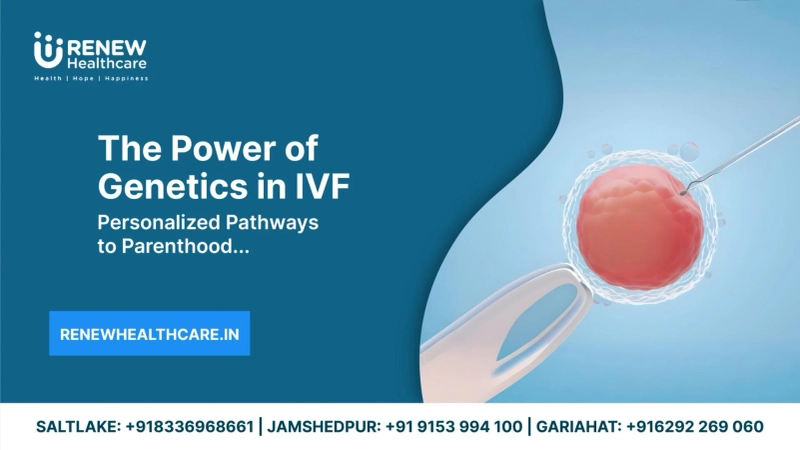
In the evolving world of fertility care, the role of genetics is no longer an adjunct—it’s becoming central. As highlighted in “The Power of Genetics in IVF: Personalized Pathways to Parenthood”, understanding the genetic makeup of the embryo, the parents, and the treatment protocol is transforming how we approach assisted reproduction. This article explores how genetic technologies integrate into IVF, why they matter, and how Renew Healthcare brings these innovations to you.
Why Genetics Matters in IVF
Infertility is complex: for many couples, standard IVF may succeed, but for others recurrent failures, miscarriages or unexplained loss demand deeper investigation. Genetic factors—chromosomal abnormalities, single-gene disorders, sperm/egg DNA quality—play a major part in these scenarios. Advanced genetic testing gives clinicians greater insight into what lies beneath such challenges. For example:
- Screening embryos via Preimplantation Genetic Testing (PGT) helps identify chromosomal issues and inherited disorders.
- Genetic profiling of parents can pinpoint carriers of mutations, enabling proactive counselling and tailored reproductive strategy.
- Pharmacogenomics: understanding how an individual’s genes affect hormonal responses or ovarian stimulation can refine protocols for better outcomes and fewer side-effects.
By aligning genetics with the IVF cycle, fertility experts can move from a “one-size-fits-all” approach to truly personalised fertility care.
Genetic Technologies Changing the Game
Modern fertility clinics—including Renew Healthcare—deploy a suite of genetic tools that integrate with IVF processes:
Carrier Screening & Parent Genetic Profiling
Before IVF begins, both partners may undergo screening to determine if they carry gene variants that could be passed to offspring (e.g., cystic fibrosis, sickle-cell anemia). Knowing this helps the clinical team plan accordingly
Preimplantation Genetic Testing (PGT-A, PGT-M, PGT-SR)
Embryos created in the lab can be biopsied on Day 5/6 and screened for:
Aneuploidy (PGT-A): abnormal number of chromosomes
Monogenic disorders (PGT-M): specific inherited gene mutations
Structural rearrangements (PGT-SR): chromosomal translocations or inversions
This selection process boosts the chance of transferring a genetically healthy embryo.
DNA Quality and Sperm/Egg Genetic Integrity
Genetic divergence isn’t only about obvious gene defects—sperm DNA fragmentation or egg chromosomal quality affect success rates, implantation, and early embryonic development. Advances in genetic assessment help detect such hidden risks.
Tailored Stimulation and Treatment Protocols
By leveraging pharmacogenomics, the fertility team can decide on stimulation drugs, dosages, timing, and monitoring tailored to your genetic profile—improving efficiency and reducing risk.
How Renew Healthcare Incorporates Genetic Care
At Renew Healthcare, you benefit from:
- A dedicated Genetic Clinic that works in tandem with our IVF Centre for a seamless, integrated approach.
- Genetic counselling services that explain results, risks, and options before the cycle begins.
- Transparent communication: from egg-retrieval numbers to embryo development and genetic testing outcomes, we keep you informed.
- Affordability: while advanced genetic tools may seem high-tech, we make them accessible and ethical for all couples.
If you would like to learn more about how genetics supports your IVF journey, you can Read More in our original blog on “The Power of Genetics in IVF: Personalized Pathways to Parenthood”.
The Benefits of Genetic-Enabled IVF
By integrating genetics into IVF, couples enjoy multiple advantages:
- Increased success rates: Selecting healthier embryos means higher implantation and live-birth chances.
- Reduced miscarriages: Many first-trimester losses relate to chromosomal abnormalities identified via PGT.
- Informed decision-making: Couples receive more clarity and fewer unknowns in their fertility journey.
- Personalised care: From start to finish, the treatment plan responds to your biology—not just generic protocols.
Final Thoughts
Genetics isn’t the future—it’s the now of modern fertility care. For couples facing infertility, recurrent miscarriages, or those seeking the highest chance of success, a clinic that integrates genetic insights into IVF can make a profound difference. At Renew Healthcare, we’re proud to offer advanced reproductive genetics as part of our comprehensive fertility suite.
If you’re ready to explore how genetics can unlock your path to parenthood, reach out to us today. Let’s build the foundation of a healthy future together.
Read More about our approach in our blog “The Power of Genetics in IVF: Personalized Pathways to Parenthood”.