



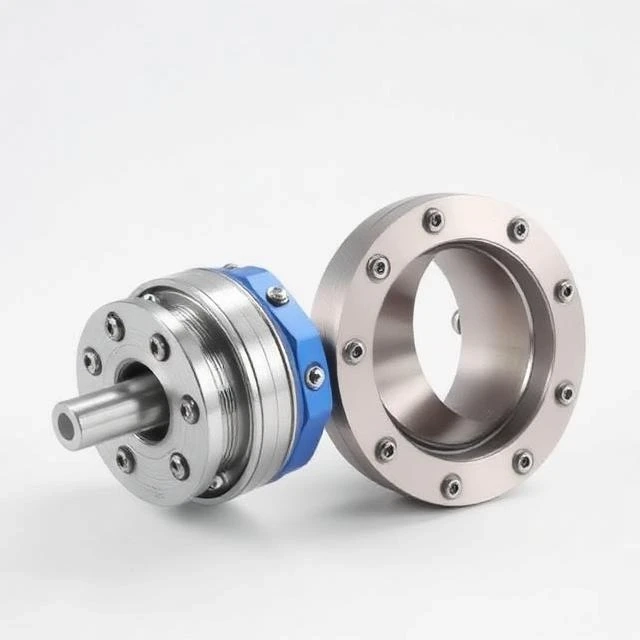
In industrial machinery, smooth and reliable power transmission is critical for efficiency, safety, and equipment longevity. Unexpected shaft misalignment, heavy loads, or sudden torque spikes can cause significant wear or downtime if not properly managed. This is where a gear coupling becomes an essential solution. Engineered for durability and precision, gear couplings connect rotating shafts while handling misalignment and transmitting high torque.
What Is a Gear Coupling?
A gear coupling is a mechanical device used to join two shafts for power transmission. Unlike flexible or elastomeric couplings, it relies on interlocking gear teeth to transfer torque. Typically, it consists of two hubs with external teeth and a sleeve with internal teeth. When assembled, the meshing gears provide a strong connection capable of handling heavy loads while accommodating slight angular or parallel misalignment between shafts.
This design allows gear couplings to maintain high efficiency and torque stability even in demanding industrial environments.
How Gear Couplings Work
Gear couplings operate by using meshing teeth to transmit torque from the driving shaft to the driven shaft. The sleeve allows limited movement between the teeth, enabling the system to adjust for minor misalignment or axial displacement. Precision engineering ensures minimal backlash, reducing vibration and mechanical stress on the connected equipment.
To improve durability and reduce wear, gear teeth are hardened and lubricated. This combination of toughness and flexibility makes gear couplings ideal for continuous operation under high torque and heavy load conditions.
Key Advantages of Gear Couplings
- High Torque Capacity – Gear couplings are designed to transmit heavy loads efficiently, making them suitable for large motors, compressors, and industrial gearboxes.
- Durability – Constructed from hardened steel and engineered for long life, gear couplings can withstand harsh industrial conditions.
- Flexibility – Despite their rigid appearance, gear couplings can handle angular, parallel, and axial misalignment, reducing stress on bearings and connected machinery.
- Versatility – They are available in various sizes and configurations to suit a wide range of industrial applications, from steel mills to marine propulsion systems.
Industrial Applications
Gear couplings are widely used in industries where high torque, heavy-duty operation, and reliability are required. Common applications include conveyors, pumps, compressors, turbines, rolling mills, and heavy machinery drives. Their robustness and adaptability make them a preferred choice for environments that demand continuous operation with minimal downtime.
Maintenance and Best Practices
Proper lubrication and regular inspection are essential to maximize the life of a gear coupling. Monitoring for wear, corrosion, and misalignment ensures optimal performance. Routine maintenance reduces unexpected failures and extends the service life of the connected equipment.
Conclusion
In summary, a gear coupling provides a reliable, high-performance solution for transmitting torque in industrial machinery while accommodating misalignment and protecting equipment. Its strength, durability, and versatility make it indispensable in high-demand applications. Selecting the right gear coupling and maintaining it properly ensures smooth operation, reduced downtime, and longer equipment life. For an in-depth guide on types and applications, explore this comprehensive resource on gear coupling.