



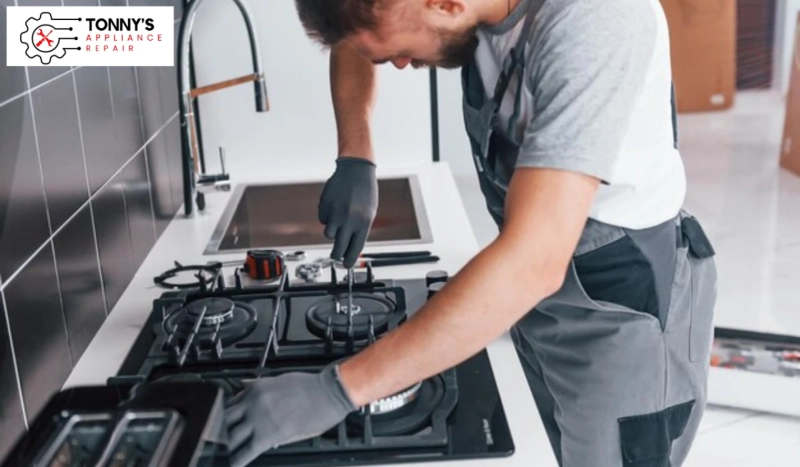
This article breaks down why a gas stove can stop igniting even though the knob still turns like it always has. It looks past the surface and into the working parts hidden behind the control panel, explains the warning signs most people miss, and clarifies when repair stops being optional and becomes necessary. The goal is simple understanding, grounded in how these appliances actually behave in real kitchens.
What You Will Get From This Guide:
You will come away knowing what usually fails first, what symptoms matter, and which problems are harmless annoyances versus real safety concerns. This guide helps you recognize patterns instead of guessing, avoid unnecessary part replacements, and understand when calling a technician is the sensible move rather than a last resort.
What’s Really Happening When the Stove Won’t Light
When a stove refuses to ignite, the knob is rarely the culprit. It is just the messenger. Behind it, gas flow, ignition, and electrical signals have to line up perfectly. When one link weakens, the whole system hesitates or stops. That hesitation is often subtle at first. A delayed flame. An extra click. A burner that works today but not tomorrow. Those small changes are the stove telling you something is wearing out.
Worn Igniters That No Longer Spark Strongly
Igniters do not fail all at once. They fade. Years of heat, grease, and moisture slowly reduce the strength of the spark. At first, you notice a delay. Then you hear clicking without ignition. Eventually, nothing happens at all. Many homeowners ignore this stage because the burner still lights sometimes. That is usually when a professional gas stove repair service saves both time and trouble by replacing the igniter before gas begins flowing without ignition.
Blocked Burner Ports Restricting Gas Flow
The burner ports are so much easier to disregard because they are small and they receive all the spills, splatters, and boils over. Those holes are solidified with oil and dust. There is an uneven distribution of the circulation of the gas, and the fire cannot easily ignite. You can have a half-ring fire or not. Light cleaning can be applied to mild cases, whereas tenacious blockages and corrosion need to be overcome accordingly, to avoid damage to the burner head.
Faulty Spark Modules Affecting Multiple Burners
When more than one burner stops igniting at the same time, the problem usually sits deeper. The spark module distributes current to every igniter. When it fails, burners may click endlessly or stay silent no matter how far you turn the knob. This part is often misdiagnosed, which leads to replacing igniters that were never the issue. Correct diagnosis matters here more than effort.
Gas Valves That No Longer Open Properly
Each knob controls a gas valve tucked behind the panel. Over time, these valves wear internally or begin to stick. The igniter sparks, but the gas does not arrive when it should. A faint gas smell without flame is a serious warning, not a quirk. That situation calls for immediate attention, not experimentation.
Electrical Switches and Wiring Failures
Small electrical switches sit behind the knobs and trigger the igniter. Heat, moisture, and age weaken them slowly. Wiring connections loosen. When they finally fail, it feels sudden, even though the problem has been building for years. Electrical work inside a gas appliance is not the place for improvisation.
Why Delaying Repairs Leads to Bigger Problems
A stove that struggles to ignite rarely fixes itself. Gas buildup, delayed ignition, and secondary damage often follow. The pattern mirrors what happens when laundry appliances are ignored until they demand full electric clothes dryer repair. Small problems grow expensive when they are left alone long enough.
When Professional Service Is the Smart Choice
If cleaning does not restore normal ignition, or if you notice gas odors, inconsistent flames, or repeated clicking, professional service is the right call. A qualified gas stove repair service focuses on accurate diagnosis and lasting repair, not temporary fixes. Providers like Tonny's Appliance Repair understand how ignition systems, valves, and electrical components interact, which prevents repeat failures.
Conclusion
When a gas stove that is not igniting is not likely to be obstinate without a reason. Igniters become weak, burners become blocked, valves become old, and electrical components break down without noise. Early detection of those failures makes repairing them containable and safe kitchens. When your stove is no longer illuminated like it is supposed to be, do not speculate and get it fixed. Book an expert to repair, get to the root of the issue, and restore confidence and consistency to your kitchen. Get a trusted repairman on board immediately to be sure of taking such a step, effectively and efficiently.