
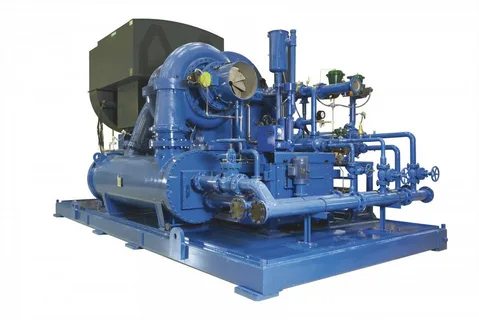
The Gas Jet Compressor Market is witnessing significant expansion due to rising demand from the downstream segment of the oil and gas industry. As global refining, petrochemical, and processing operations become more sophisticated, the role of high-efficiency compression technologies has become critical. Gas jet compressors are increasingly being adopted in downstream facilities due to their energy efficiency, compact footprint, and ability to handle a wide range of gases under various operating pressures. These systems are vital to process reliability, emissions control, and overall system performance — key priorities in the modern downstream value chain.
Role of Gas Jet Compressors in Downstream Operations
Downstream operations, including refining crude oil, processing natural gas, and producing petrochemicals, require robust compression technologies. Gas jet compressors, which use the energy of a motive gas to compress and transport process gases, are suited for these applications due to their simplicity and ability to handle corrosive or contaminated gas streams.
In refineries, they are used in vapor recovery, flare gas recovery, and hydrocarbon handling. In petrochemical plants, they assist in recovering valuable vapors and maintaining system pressure stability. Their non-mechanical nature means fewer moving parts, reducing maintenance demands and increasing system uptime.
With global refining capacity on the rise — particularly in Asia Pacific and the Middle East — demand for cost-effective and maintenance-free compressor technologies is increasing. The flexibility of gas jet compressors makes them an ideal fit for both legacy facilities undergoing upgrades and newly constructed plants designed for high efficiency.
Global Expansion of Refining and Petrochemical Infrastructure
The rise in global energy consumption is pushing oil-producing nations to invest in downstream infrastructure. Countries like India, China, and Saudi Arabia are leading large-scale projects to expand refining capacities, integrate petrochemical operations, and modernize existing processing units. These capital investments require reliable compressor systems, creating a fertile environment for gas jet compressor demand.
Additionally, the shift toward integrated refinery-petrochemical complexes is driving the need for flexible compression solutions. As the industry seeks to maximize value from crude oil, gas jet compressors are used to efficiently manage gas by-products and reduce losses through recovery systems.
In North America and Europe, aging infrastructure is undergoing modernization to meet new emissions standards and efficiency benchmarks. This refurbishment wave is creating demand for advanced, retrofit-compatible compressor systems like gas jet compressors, which can be installed with minimal system disruption.
Environmental Pressures and Emissions Reduction
Environmental concerns are a driving force in the downstream sector. Regulatory bodies across the globe are implementing stricter rules on flare gas emissions, methane leaks, and volatile organic compound (VOC) releases. Gas jet compressors are being adopted as part of emissions reduction strategies, especially in vapor recovery and gas recycling systems.
These compressors help capture gases that would otherwise be flared or vented, reducing greenhouse gas emissions and enabling facilities to remain compliant with environmental norms. Furthermore, their energy-efficient operation contributes to lowering the carbon footprint of the entire process, which is an increasingly important metric in sustainability reporting.
As downstream operators strive for cleaner and greener operations, gas jet compressors are emerging as a valuable component of environmental management systems. Their ability to run on recovered gas streams also makes them a practical solution for facilities aiming to reduce their reliance on external power sources.
Cost Efficiency and Operational Reliability
In downstream applications, operational reliability is paramount. Equipment failures can lead to shutdowns, safety risks, and financial losses. Gas jet compressors offer reliable, low-maintenance performance due to their simple design, absence of rotating parts, and resistance to wear and corrosion.
Their ability to operate continuously under challenging conditions makes them especially useful in areas with high temperature fluctuations, aggressive gases, or remote operations. The lack of lubrication and seals further reduces the risk of contamination in sensitive processes, improving product quality and system integrity.
Moreover, gas jet compressors provide long-term cost savings through reduced maintenance and downtime. This aligns with the downstream sector’s focus on operational excellence and cost control, making them an appealing choice for both greenfield and brownfield projects.
Integration with Digital Systems and Process Automation
Digital transformation is sweeping through the oil and gas sector, including downstream operations. Gas jet compressors are now being integrated into automated control systems that monitor pressure levels, flow rates, and operational status in real-time.
The incorporation of sensors, PLCs, and cloud-based monitoring tools allows operators to remotely manage compressor performance and schedule predictive maintenance. This improves efficiency, reduces manual intervention, and ensures continuous compliance with operating parameters.
As more refineries and processing plants adopt Industry 4.0 principles, the compatibility of gas jet compressors with automation and data analytics systems becomes a competitive advantage. Their adaptability to digital infrastructure enhances their utility in modern downstream facilities.
Future Outlook and Strategic Implications
Looking ahead, the gas jet compressor market is poised for robust growth in the downstream oil and gas sector. Rising energy demand, infrastructure investments, and sustainability mandates will continue to create new opportunities. Regional players are also expected to increase participation, especially as localized manufacturing and service capabilities grow.
OEMs and solution providers that focus on downstream-specific innovations, such as modular compressor designs and hybrid systems, are likely to gain a competitive edge. Partnerships with EPC contractors and integration with digital solutions will further unlock growth potential in high-value projects.
Investment in aftermarket services, training, and performance optimization will also become important differentiators as end-users seek long-term partnerships and reliable support for mission-critical equipment.
Conclusion: A Growing Role in Global Energy Transition
The downstream oil and gas sector represents a promising frontier for gas jet compressor deployment. With growing emphasis on emissions reduction, system efficiency, and operational reliability, these compressors are increasingly being seen as essential infrastructure. As refineries and processing plants expand and modernize globally, gas jet compressors will play a central role in shaping the energy-efficient, sustainable downstream facilities of the future.