



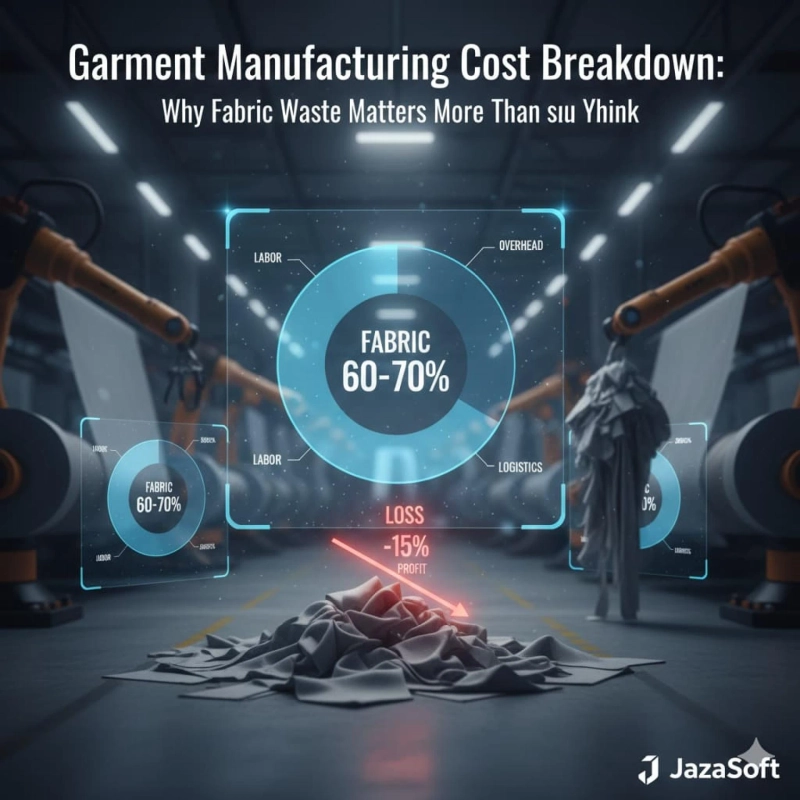
1. The Real Cost Behind Garment Manufacturing
The apparel industry is facing unprecedented cost pressure. Rising fabric prices, increasing labor costs, shorter production cycles, and demand for sustainable manufacturing are forcing garment factories to closely examine every element of their cost structure. While many manufacturers focus on labor efficiency or production speed, one of the most significant cost drivers often goes unnoticed—fabric waste.
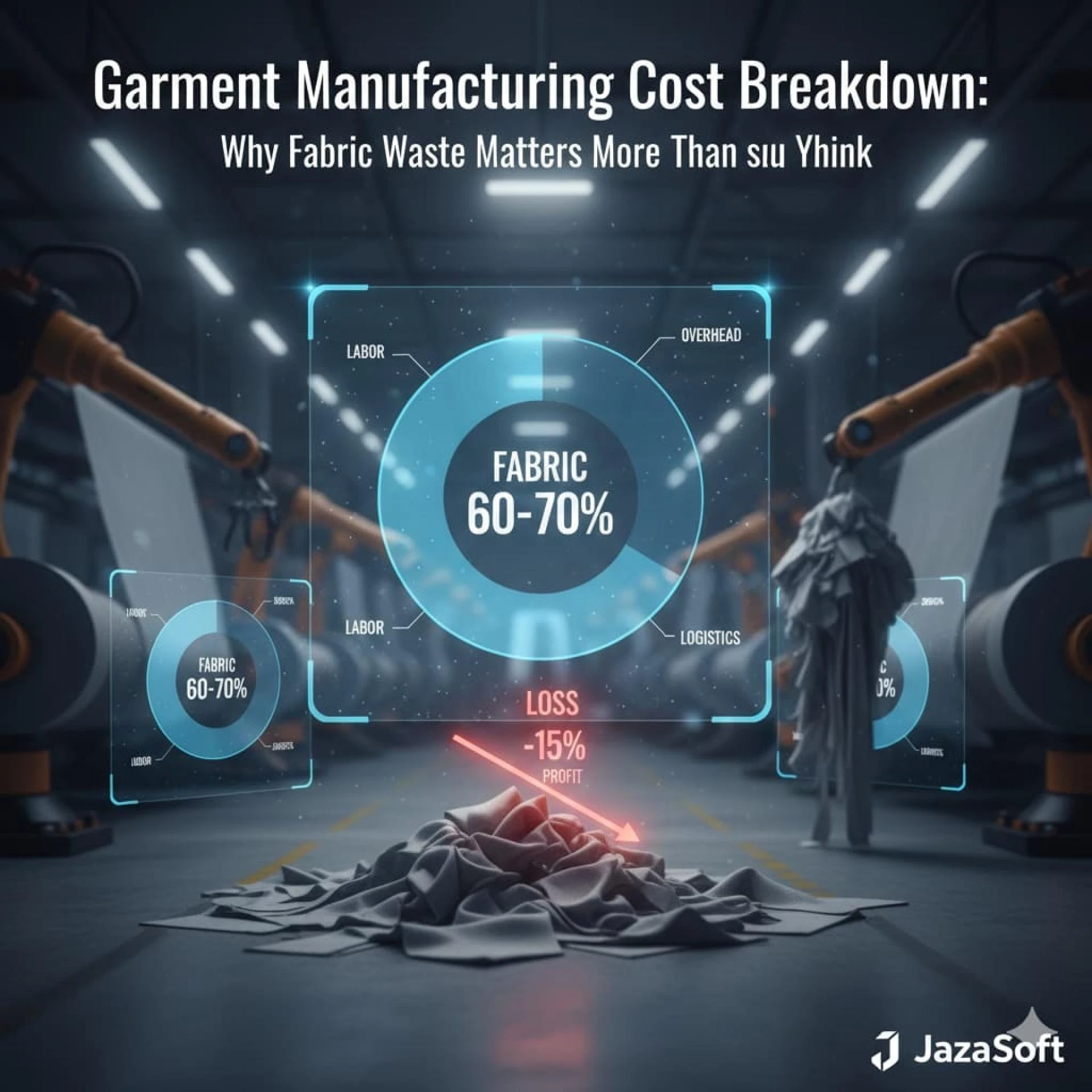
Fabric typically represents the largest portion of garment manufacturing expenses, yet inefficient planning, manual processes, and poor visibility across departments lead to avoidable losses. This is where modern Apparel Software and Garment Manufacturing Software play a critical role. By digitizing planning, cutting, and production processes, manufacturers can gain control over fabric usage and significantly reduce hidden costs.
2. Understanding Garment Manufacturing Cost Breakdown
To understand why fabric waste matters so much, it’s important to first look at the overall cost structure of garment manufacturing.
2.1 Key Cost Components in Apparel Production
Fabric Cost
Fabric usually accounts for 50–70% of the total garment cost, depending on the product category and material type. Even small inefficiencies in fabric utilization can lead to substantial financial losses at scale.
Cutting and Sewing Labor
Labor costs include cutting, stitching, finishing, and quality control. Poor coordination between departments increases idle time, overtime, and rework.
Production Planning and Inefficiencies
Inaccurate planning, last-minute order changes, and lack of real-time data often result in excess fabric consumption and production delays.
Shop Floor Operations
Unbalanced production lines, material shortages, and lack of visibility on the shop floor directly impact productivity and cost control.
Modern factories rely on an Apparel ERP System or Fashion ERP Software to connect these cost components, improve planning accuracy, and reduce operational waste.
3. Why Fabric Waste Has a Bigger Impact Than Expected
Fabric waste is not just leftover material—it is lost money.
Since fabric forms the majority of production cost, even a 1–2% increase in fabric waste can erase profit margins. Common causes of fabric waste include:
- Inefficient marker making
- Poor cut planning
- Incorrect fabric consumption estimates
- Manual cutting room processes
- Lack of real-time tracking
Without specialized tools like Garment Cutting Software and Cutting Room Software, factories often rely on spreadsheets or manual calculations. These outdated methods make it difficult to optimize fabric usage or identify waste patterns, leading to higher material consumption and lower profitability.
4. The Role of Cutting Efficiency in Cost Control
The cutting room is where fabric waste either gets controlled—or multiplied.
4.1 Cut Planning and Marker Optimization
Accurate cut planning ensures that fabric is used efficiently while meeting production requirements. Poorly designed cut plans result in excessive end bits, remnant fabric, and unnecessary consumption.
Advanced Cut Plan Software uses digital marker optimization to maximize fabric utilization while maintaining quality and size accuracy. When combined with Garment Cutting Software, manufacturers can significantly reduce fabric loss before production even begins.
4.2 Cutting Room Challenges in Apparel Factories
Many apparel factories still depend on manual or semi-digital cutting workflows. These processes often lead to:
- Human errors in measurements
- Incorrect ply heights
- Rework due to cutting mistakes
- Inconsistent fabric usage
By implementing Cutting Room Software integrated with Garment Manufacturing Software, factories can standardize workflows, minimize errors, and gain visibility into fabric consumption in real time.
5. How Apparel Software Reduces Fabric Waste
Digital transformation is no longer optional in garment manufacturing—it is essential for survival.
Modern Apparel Software enables manufacturers to plan, monitor, and optimize fabric usage across the entire production cycle. Key benefits include:
- Digital cut planning with accurate fabric estimation
- Real-time tracking of fabric utilization
- Automated alerts for deviations and excess consumption
- Data-driven decision-making using an integrated Apparel ERP System
With centralized data and analytics, Garment Manufacturing Software helps factories identify inefficiencies early and take corrective action before waste accumulates.
6. Connecting Cutting Room to the Shop Floor
Fabric efficiency does not stop at the cutting table—it must extend across the shop flooGarment Manufacturing Softwarer.
6.1 Shop Floor Visibility and Control
When cutting data is disconnected from production execution, delays and material shortages occur. Integrating cutting operations with a Shop Floor Management System allows factories to:
- Track work-in-progress in real time
- Balance production lines effectively
- Reduce idle time and material bottlenecks
This level of visibility improves overall performance and supports better decisions using Factory Efficiency Software.
6.2 Role of Manufacturing Execution Systems in Apparel
A Manufacturing Execution System Apparel bridges the gap between planning and execution. MES solutions provide real-time insights into:
- Production progress
- Fabric consumption by order or style
- Waste generation at each stage
By improving coordination between departments, MES reduces material loss and enhances accountability across the factory.
7. Improving Factory Efficiency Through Integrated Systems
The biggest gains in cost control come from integration. When cutting, planning, and production systems operate in silos, data inconsistencies and inefficiencies are inevitable.
An integrated ecosystem combining Factory Efficiency Software, Fashion ERP Software, and an Apparel ERP System creates a single source of truth for:
- Fabric inventory
- Cut plans and markers
- Production schedules
- Shop floor performance
This integration enables smarter planning, faster decision-making, and measurable reductions in fabric waste.
8. Business Benefits of Reducing Fabric Waste
Reducing fabric waste delivers both immediate and long-term business advantages:
- Lower material cost per garment, improving gross margins
- Higher profitability through better cost control and pricing flexibility
- Improved sustainability, reducing environmental impact
- Stronger customer trust, especially for brands focused on eco-friendly manufacturing
With the help of Garment Manufacturing Software and Apparel Software, factories can achieve operational excellence while meeting sustainability goals.
9. Conclusion: Fabric Waste Control Is No Longer Optional
Fabric waste matters far more than many garment manufacturers realize. With fabric representing the largest cost component in apparel production, even minor inefficiencies can have a major impact on profitability.
Digital transformation through Garment Cutting Software and a robust Apparel ERP System empowers manufacturers to control costs, improve efficiency, and remain competitive in a challenging market. For modern apparel factories, investing in integrated software solutions is no longer a luxury—it is a necessity.