



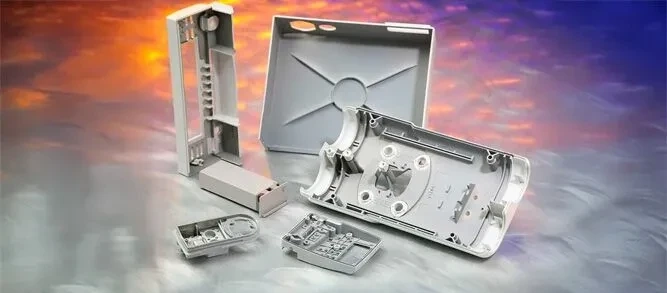
The field of vacuum metalizing services has evolved significantly over the past decades, moving from basic thin-film coatings to highly sophisticated processes that deliver precise EMI/RFI shielding, ESD protection, and decorative finishes. As industries demand more complex designs, faster production cycles, and higher-quality standards, emerging trends in automation, robotics, and smart coating technologies are shaping the future of vacuum metalizing. These advancements are transforming the way manufacturers approach high-performance coatings for electronics, aerospace, medical devices, and industrial applications.
Automation in Vacuum Metalizing Services
One of the most significant trends in vacuum metalizing is the integration of automation throughout the production process. Automated deposition systems allow precise control over coating thickness, uniformity, and repeatability. This is especially important for applications requiring ultra-thin aluminum layers in complex geometries. Automation reduces human error, accelerates production, and ensures consistent quality across high-volume batches. Modern automated systems also incorporate advanced sensors and real-time monitoring, enabling dynamic adjustments to deposition parameters for optimal performance. By leveraging automation, companies offering vacuum metalizing services can meet the growing demand for precision coatings while improving efficiency and reducing production costs.
Robotics for Precision Coating
Robotics is another driving force behind the next generation of vacuum metalizing services. Robotic arms can handle delicate or intricate parts with high repeatability, ensuring that coatings are applied evenly on surfaces with complex contours, vertical walls, or deep recesses. This capability is particularly valuable in aerospace, medical, and defense applications, where even minor inconsistencies in coating thickness can compromise EMI/RFI shielding or ESD protection. Robotic systems also enable selective masking and precise deposition in areas that must remain uncoated, enhancing both functionality and aesthetics. By combining robotics with vacuum metalizing services, manufacturers can achieve high-quality coatings on challenging parts while maintaining fast turnaround times and minimizing material waste.
Smart Coating Applications
The rise of smart coating applications represents another exciting trend in vacuum metalizing services. Smart coatings are engineered to respond to environmental changes, such as temperature, humidity, or electrical load, and can provide additional functionalities beyond traditional EMI/RFI shielding. For example, adaptive coatings may improve conductivity under varying operating conditions or offer enhanced wear resistance for long-lasting protection. These innovations are particularly relevant in high-tech industries, including aerospace electronics, medical diagnostic equipment, and industrial automation. By incorporating smart coating technologies into their vacuum metalizing services, providers can offer clients advanced solutions that meet evolving performance requirements and regulatory standards.
Integration with Industry 4.0
The future of vacuum metalizing services is also closely tied to Industry 4.0 principles, which emphasize data-driven manufacturing, connectivity, and predictive maintenance. Modern vacuum metalizing systems can be integrated with factory networks, enabling real-time data collection, performance analytics, and predictive quality control. This connectivity allows for proactive adjustments during production, minimizing defects and ensuring consistent coating quality. For manufacturers seeking high-precision coatings, adopting Industry 4.0 practices enhances both efficiency and reliability while positioning them for long-term growth in a competitive market.
Conclusion
As technology continues to advance, vacuum metalizing services are evolving to meet the demands of increasingly complex applications. Automation, robotics, and smart coating technologies are at the forefront of this transformation, enabling manufacturers to deliver precise, durable, and functional coatings on even the most intricate parts. By adopting these innovations, providers can improve production efficiency, enhance quality control, and offer cutting-edge solutions for industries ranging from aerospace and defense to medical devices and industrial electronics. The future of vacuum metalizing is not only about protecting electronics but also about integrating intelligent, adaptive, and highly efficient processes that redefine the standards of performance and reliability.