



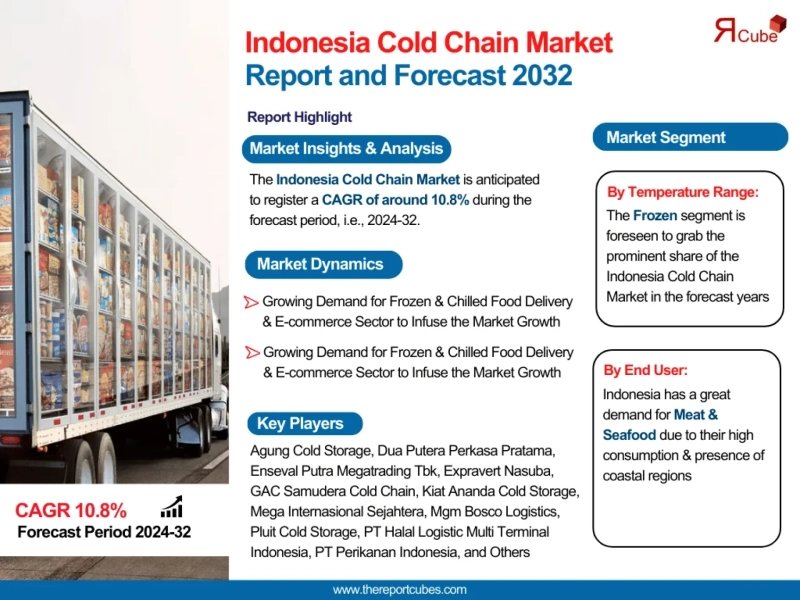
The Future of Cold Chain Market in Indonesia is emerging as one of the most dynamic sectors in the logistics and supply chain ecosystem. With rising consumer demand for fresh and frozen products, the rapid growth of e-commerce, and increasing healthcare requirements, cold chain logistics has become a cornerstone for sustainable economic development in Indonesia. This blog provides a detailed analysis of the market’s current landscape, growth drivers, challenges, and opportunities, along with a long-term forecast through 2032.
According to the latest report by The Report Cube, the Indonesia Cold Chain Market is expected to grow at a significant pace over the forecast period. The study highlights that urbanization, rising middle-class consumption, and rapid advancements in logistics technology will play key roles in accelerating growth. The announcement also emphasizes investment opportunities for logistics providers, food suppliers, and healthcare companies to strengthen Indonesia’s cold chain infrastructure by 2032.
Market Overview
The cold chain market in Indonesia is on an upward trajectory due to increasing demand for processed and frozen foods, temperature-sensitive pharmaceuticals, and the government’s push for modern logistics infrastructure. The sector is evolving from a fragmented system to a more integrated, technology-driven industry, creating immense opportunities for businesses across the value chain.
Key Market Drivers
- Food & Beverage Consumption: With growing urban populations, demand for frozen seafood, dairy, and meat products is increasing.
- E-commerce Boom: Online grocery and food delivery platforms are fueling the need for reliable cold storage and transportation.
- Pharmaceutical Growth: The distribution of vaccines, clinical drugs, and biopharmaceuticals requires strict temperature control.
- Government Support: Initiatives to modernize logistics and infrastructure are encouraging private sector investment.
Market Challenges
Despite the positive outlook, the Indonesia cold chain industry faces several challenges:
- High operational and energy costs.
- Lack of skilled labor in logistics management.
- Limited infrastructure in remote and rural regions.
- The need to comply with international quality standards for exports.
The importance of the Indonesia cold chain market is evident across multiple sectors:
- Retail & Food Chains: Supermarkets rely on cold chain logistics to deliver safe and fresh food.
- Seafood Industry: Indonesia, being one of the largest seafood exporters, depends heavily on cold storage to maintain export quality.
- Pharma & Healthcare: Vaccine distribution during the COVID-19 pandemic highlighted the critical role of cold chain infrastructure.
- Agriculture: Cold storage helps farmers reduce food wastage and extend the shelf life of fresh produce.
Growth Opportunities
The coming years bring immense potential for businesses to tap into the Indonesia cold chain market:
- Expansion into Tier 2 and Tier 3 cities where infrastructure is still developing.
- Integration of IoT, AI, and blockchain for real-time tracking and transparency.
- Strategic alliances between local logistics firms and global cold chain players.
- Adoption of renewable energy solutions to cut costs and enhance sustainability.
Looking Ahead: Forecast to 2032
The Indonesia cold chain market is projected to expand significantly by 2032, driven by digital transformation, sustainable investments, and rising demand across industries. The sector is not only vital for food security but also for healthcare and export competitiveness. Companies that adopt eco-friendly, tech-enabled, and customer-centric solutions will be best positioned to lead this fast-growing market.
Conclusion
The Future of Cold Chain Market in Indonesia looks highly promising. As urban lifestyles evolve and industries demand higher efficiency, cold chain logistics will become indispensable for both local consumption and international trade. With government backing, rising investments, and technological advancements, Indonesia is set to build one of the most robust cold chain ecosystems in Southeast Asia. Businesses that align early with this growth will shape the future of logistics in the country.
Source- https://www.thereportcubes.com/press-release/indonesia-cold-chain-market