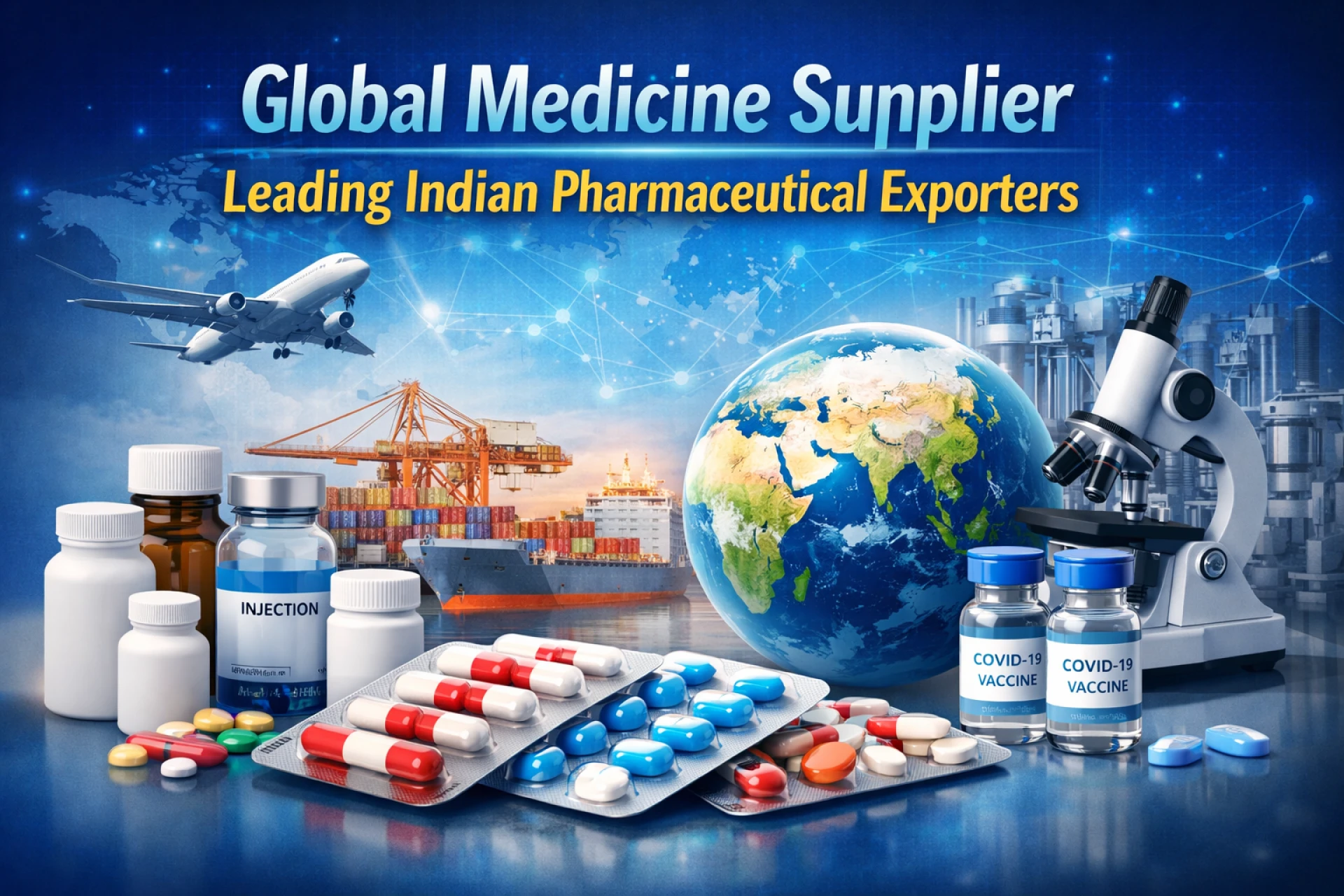
India has quietly become one of the most important suppliers of medicines to the world. From life-saving drugs to everyday treatments, Indian pharmaceutical companies play a major role in global healthcare. Today, the export of pharmaceutical products from India supports hospitals, governments, NGOs, and pharmacies across more than 200 countries.
This article explains how pharma exports from India work, why global buyers trust India, and what makes Indian exporters competitive, all in very simple words.
Why India Is a Global Pharmaceutical Hub
India is often called the “pharmacy of the world,” and this is not marketing hype. It is a result of decades of investment in manufacturing, science, and regulatory systems.
Here’s why India leads in pharma exports:
- Large-scale medicine manufacturing capacity
- Affordable production without compromising quality
- Strong base of scientists, pharmacists, and researchers
- Compliance with international standards like WHO-GMP, USFDA, and EU-GMP
Because of this, India supplies around 20 percent of global generic medicines. Many countries depend on India for essential and affordable healthcare products.
What Pharmaceutical Products Does India Export?
The export of pharmaceutical products from India includes a wide range of medicines and healthcare solutions.
Common export categories include:
- Generic medicines (tablets, capsules, syrups, injections)
- Antibiotics and antivirals
- Cardiovascular and diabetes medicines
- Oncology and critical care drugs
- Vaccines
- APIs (Active Pharmaceutical Ingredients)
- Nutraceuticals and dietary supplements
Indian pharma exporters can supply both branded and unbranded (generic) medicines depending on market requirements.
Who Buys Medicines from India?
Indian pharma exporters serve many different global markets.
Major importing regions:
- Africa
- Southeast Asia
- Middle East
- Latin America
- CIS countries
- Parts of Europe and North America
Governments, distributors, hospitals, and international health organizations prefer India because medicines are reliable, affordable, and available in large volumes.
Role of a Pharmaceutical Exporter from India
A pharmaceutical exporter from India does much more than just sell medicines.
Their responsibilities include:
- Ensuring regulatory compliance for the destination country
- Managing product registration and documentation
- Maintaining batch traceability and quality control
- Export-grade packaging and labeling
- Cold-chain logistics where required
Good exporters act as long-term partners, not just suppliers.
Quality and Regulatory Standards
One common question is: Are Indian medicines safe?
The short answer is yes, when sourced from the right exporter.
Indian pharma manufacturers follow strict quality systems such as:
- WHO-GMP
- ISO certifications
- USFDA inspections
- EU-GMP audits (for regulated markets)
Top pharma exporters conduct regular testing, stability studies, and audits to ensure medicines meet international safety and efficacy standards.
Why Global Buyers Choose Top Pharma Exporters in India
There are thousands of pharma companies in India, but buyers usually work with top pharma exporters in India for consistency and reliability.
What sets top exporters apart:
- Proven export experience
- Strong regulatory support team
- Transparent documentation
- Ability to scale production
- On-time delivery
They also support private labeling and customized formulations based on market demand.
Cost Advantage Without Cutting Corners
One of India’s biggest strengths is affordability.
Medicines exported from India often cost 30–60 percent less than those manufactured in many Western countries.
This is due to:
- Efficient manufacturing processes
- Local sourcing of APIs
- Skilled workforce
- Large-scale production
Lower cost does not mean lower quality. It means better efficiency.
Export Process Explained Simply
Here’s a basic view of how pharma exports from India work:
- Buyer shares product requirements
- Exporter confirms formulation, pricing, and compliance
- Product registration (if required)
- Manufacturing and quality testing
- Export packaging and labeling
- Documentation and shipping
Professional pharma exporters handle most of this smoothly, reducing workload for the buyer.
Challenges and How India Handles Them
Like any global industry, pharma exports face challenges:
- Regulatory changes
- Shipping delays
- Price pressure
- Compliance complexity
Indian exporters adapt by upgrading systems, investing in compliance teams, and improving supply chain reliability.
The Future of Pharma Exports from India
The future looks strong. Demand for affordable healthcare is rising globally, and India is well-positioned to meet it.
Key growth areas include:
- Biosimilars
- Specialty medicines
- Nutraceuticals
- Contract manufacturing
As healthcare access expands worldwide, the role of Indian pharma exporters will only grow.
Final Thoughts
The export of pharmaceutical products from India is not just a business. It is a global responsibility. Indian companies supply safe, effective, and affordable medicines to millions of people every day.
By working with reliable pharmaceutical exporters from India, global buyers gain access to quality products, strong compliance, and long-term supply stability. That is why India continues to lead as one of the most trusted pharmaceutical exporting nations in the world.