



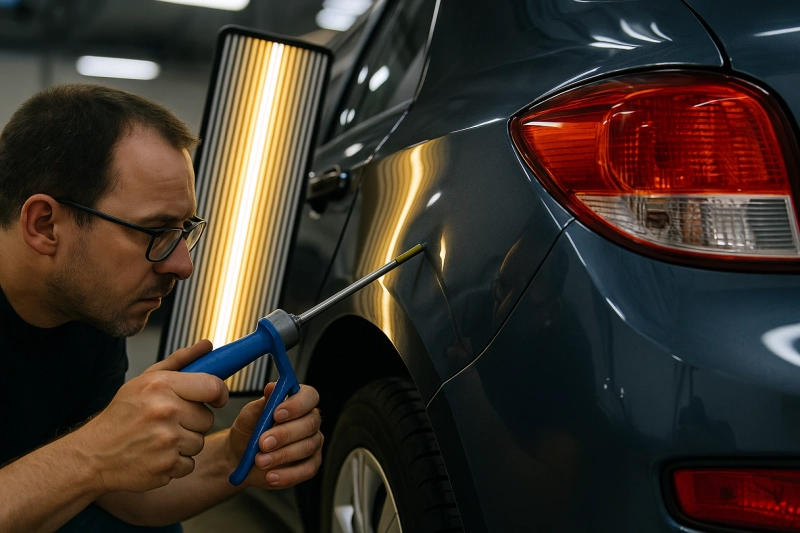
It only takes one supermarket trip or a stray hailstone to leave a dent that catches your eye every time you walk past your car. These small imperfections might not affect how your car drives, but they can quietly lower its value and spoil the pride you feel behind the wheel. Fortunately, there’s a fast, affordable, and environmentally friendly solution that’s transforming how Australians manage minor vehicle damage — paintless dent removal.
Understanding Paintless Dent Removal
Paintless dent removal, often called PDR, is a specialist technique used to remove dents and dings from car panels without the need for sanding, fillers, or repainting. Instead of covering damage, technicians use precise metal tools to gently massage the dented area from behind the panel. The metal is reshaped back to its original contour, leaving the factory paint intact.
Unlike conventional methods that involve body filler and respraying, paintless dent removal preserves the original finish, meaning there’s no risk of mismatched paint or over-sanding. The process is quick, clean, and suitable for most minor dents — from small parking knocks to larger hail damage.
For readers interested in practical automotive care, The Omnibuzz offers articles such as “Simple Maintenance Habits That Save You Money on Your Car” which complement the insights shared here.
Why More Australians Are Choosing Paintless Dent Removal
Australia’s climate can be rough on vehicles. Sudden hailstorms, debris on rural roads, and tight urban parking spaces all contribute to the nation’s rising demand for efficient dent repair services. Paintless dent removal appeals to many car owners because it’s faster, less expensive, and better for the environment than traditional panel beating.
In regions prone to hail, such as Sydney, Brisbane, and Adelaide, many drivers are turning to specialists in minor dent repairs to restore their vehicles without the long wait times associated with body shops. By preserving the car’s factory paintwork, PDR also helps maintain the vehicle’s resale value — a key factor for anyone considering trade-ins or private sales.
When Paintless Dent Removal Makes the Most Sense
Not every dent needs a full repaint job. Paintless dent removal is ideal for:
- Hail damage: After a summer storm, small dents scattered across the bonnet or roof can be removed quickly without affecting paint quality.
- Car park dings: Doors bumped by careless drivers or shopping trolleys can usually be corrected within hours.
- Minor panel impressions: Low-speed impacts that don’t break the paint surface can often be restored through PDR.
These scenarios show how adaptable the technique is. Rather than sending a car to the shop for days, many repairs are completed in a single session, allowing vehicle owners to get back on the road sooner.
If you’re interested in more practical lifestyle tips like this, The Omnibuzz’s “How to Protect Your Vehicle from Harsh Weather” provides additional advice relevant to everyday car care.
The Environmental and Financial Edge
One of the most appealing benefits of paintless dent removal is its sustainability. Because it doesn’t rely on paint, primer, or filler, it avoids the chemical waste and energy use that come with traditional repairs. This approach aligns with Australia’s growing interest in eco-conscious living and supports the push towards greener vehicle maintenance.
Financially, it’s also a win. PDR costs significantly less than conventional methods — often a fraction of the price — because there are fewer materials and less labor involved. It’s a practical choice for car owners who value both their budget and the environment.
How to Tell If Your Car Is Suitable for PDR
While paintless dent removal works for most vehicles, it’s not a universal solution. The best candidates are dents where:
- The paint is not cracked or chipped.
- The dent is shallow, without sharp creases.
- The damage hasn’t stretched the metal beyond its flexibility.
If you’re uncertain, an inspection from an experienced technician in minor dent repairs may help determine if your car qualifies. In many cases, what looks like a serious dent can be restored in under an hour with the right tools and skill.
Preserving Value Through Smart Car Care
Beyond aesthetics, PDR plays a role in long-term car preservation. Small dents might seem harmless, but they can weaken a panel’s integrity and make it more vulnerable to rust if paint breaks over time. Regular upkeep — including addressing dents promptly — helps preserve both the car’s look and value.
This mindset reflects a broader shift among Australian car owners: moving from reactive maintenance to proactive care. It’s not just about fixing damage but about protecting investments and reducing waste along the way.
The Future of Vehicle Repairs
Advancements in technology continue to refine how paintless dent removal works. Modern tools provide greater accuracy, while mobile repair services make it even more convenient for busy drivers. As environmental awareness grows, and consumers demand quicker, cleaner fixes, the technique may become the default option for non-structural bodywork across the country.
Technicians are also combining traditional craftsmanship with digital diagnostics — using light reflection patterns to detect the smallest imperfections invisible to the naked eye. This precision ensures results that meet both cosmetic and structural expectations.
Conclusion: Small Dents, Big Difference
Whether it’s hail damage or a shopping trolley mishap, dents no longer have to be an eyesore or an expensive problem. Paintless dent removal has made vehicle restoration accessible, affordable, and sustainable — proving that taking care of your car doesn’t have to mean wasting time or money. By addressing damage early through efficient techniques like PDR, Australians may keep their cars looking newer for longer, while reducing their environmental footprint.