
Introduction
In an era where technology defines convenience, even fueling your car is no longer just about filling the tank. Across Pakistan, fuel retailers are embracing digital transformation — turning traditional fuel stations into smart mobility hubs that combine convenience, security, and innovation.
Leading this revolution is Pakistan State Oil (PSO), the country’s largest oil marketing company. From mobile payments to loyalty programs and digital fuel management, PSO is reshaping how motorists experience fueling — blending technology, trust, and transformation.
Let’s explore how Pakistan’s fuel retail industry is evolving, what’s driving this innovation, and how these changes are redefining customer experience.
The Evolution of Pakistan’s Fuel Retail
A decade ago, a visit to a fuel station meant long queues, manual billing, and cash-only transactions. But as mobile penetration, fintech adoption, and smart automation increased, consumer expectations shifted toward speed and digital convenience.
Fuel retailers began to respond by:
- Digitizing transactions (via apps and smart cards).
- Integrating loyalty and fleet management systems.
- Enhancing service station experience with automation and value-added services.
- Using data analytics to understand consumer behavior and improve efficiency.
The modern fuel station is no longer a simple refueling point — it’s a multi-service ecosystem offering payment flexibility, real-time monitoring, and brand engagement.
PSO’s Role in Digital Transformation
As Pakistan’s energy leader, PSO is at the forefront of this digital shift. Its initiatives go beyond fuel — they’re about building smarter mobility experiences.
1. PSO DigiCash: The Digital Fuel Wallet
DigiCash is PSO’s digital wallet solution that enables cashless payments at PSO service stations. Drivers can refuel their vehicles by scanning a QR code, eliminating the need for physical cash or cards.
Key benefits:
- Instant, secure transactions.
- Easy top-ups via bank accounts or digital payment gateways.
- Reduced cash-handling errors at stations.
- Contactless convenience — especially important post-pandemic.
This innovation mirrors a global trend where fuel retail and fintech intersect to simplify mobility payments.
2. Fuelink Fleet Management Solution
For corporate clients and transport companies, Fuelink offers digital fleet fuel management — tracking consumption, driver usage, and costs through an online portal.
Benefits for fleet owners:
- Real-time monitoring of fuel purchases.
- Prevention of misuse or pilferage.
- Detailed consumption analytics for each vehicle.
- Automated billing and digital reports.
Fuelink combines IoT-driven efficiency with PSO’s extensive network, making it a powerful tool for logistics and fleet operations in Pakistan.
3. PSO Cards and Loyalty Programs
PSO’s prepaid, postpaid, and co-branded cards (like PSO Corporate Card, PSO Fuel Card, and PSO Loyalty Card) are transforming how consumers and businesses manage refueling expenses.
- Corporate Card: Ideal for fleet operators managing multiple vehicles.
- Prepaid Fuel Card: Lets individuals set spending limits and track usage.
- Loyalty Rewards: Customers earn points redeemable for fuel or partner discounts — turning every litre into long-term value.
This integration of digital payment + customer loyalty builds a seamless ecosystem, encouraging brand loyalty and better budgeting.
Smart Stations: The Future of Fueling
The next stage in Pakistan’s retail fuel evolution lies in smart service stations — equipped with automation, real-time analytics, and connected systems.
Emerging innovations include:
- Automated fuel dispensers linked to mobile payment apps.
- License plate recognition for registered customers.
- AI-based queue management systems.
- Digital displays for promotions and personalized offers.
These changes are designed not just to make fueling faster, but also smarter and more engaging for tech-savvy consumers.
The Rise of the Digital Customer
Pakistan’s digital economy is booming. With more than 190 million mobile subscribers and widespread smartphone access, consumers increasingly expect cashless, seamless experiences — whether shopping, banking, or refueling.
For millennials and Gen Z drivers, convenience and control matter more than brand alone.
They want to:
- Pay digitally.
- Track spending through apps.
- Access loyalty rewards automatically.
- Receive personalized offers at the pump.
Fuel retailers who understand this behavior — as PSO does through its mobile services — gain a competitive advantage in an increasingly digital marketplace.
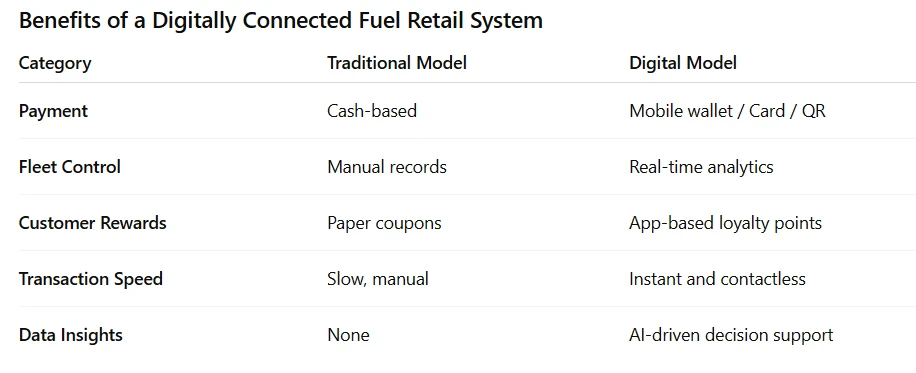
By moving toward digital systems, retailers unlock efficiency, transparency, and customer satisfaction — while consumers enjoy ease, safety, and better value.
Challenges in the Digital Fuel Journey
Despite progress, Pakistan’s digital fuel ecosystem still faces hurdles:
- Connectivity gaps in rural areas limit digital payment adoption.
- Consumer trust in app-based payments needs to grow.
- Integration issues between banks, mobile wallets, and station software.
- Training needs for station staff to handle digital tools efficiently.
However, as fintech partnerships expand and regulatory frameworks strengthen, these challenges are being addressed through innovation and awareness.
The Road Ahead
The future of Pakistan’s fuel retail is connected, data-driven, and customer-centric. Expect to see:
- Integration with EV charging stations and renewable energy.
- AI-driven predictive analytics for fuel demand.
- Mobile-first loyalty ecosystems linking fuel, shopping, and dining rewards.
- Blockchain-based fuel transaction tracking for transparency.
Companies like PSO, with their vast network and national reach, are perfectly positioned to lead this next chapter of the digital fuel revolution.
Conclusion
The journey from manual fuel stations to digital mobility hubs reflects Pakistan’s larger shift toward a cashless, connected economy.
Innovations like PSO DigiCash, Fuelink, and smart card systems demonstrate how technology can make fueling not only faster and safer but also more rewarding.
For consumers, it means less hassle and more control.
For businesses, it means efficiency and insight.
For Pakistan, it marks a major step toward smarter, cleaner, and more sustainable mobility.
The next time you pull up at a PSO station, remember—you’re not just refueling your car. You’re fueling into the future of digital Pakistan.