



For many business leaders across Canada, AI has become both exciting and intimidating. Every headline promises transformation — but behind the buzz, there’s real uncertainty.
Executives and founders often ask:
Where do we start?
How do we use AI safely?
What if we make the wrong move?
These are valid questions. But the truth is, AI Readiness isn’t about perfection — it’s about progress. It’s about moving from fear to focus, building clarity, and turning AI from a confusing concept into a practical business advantage.
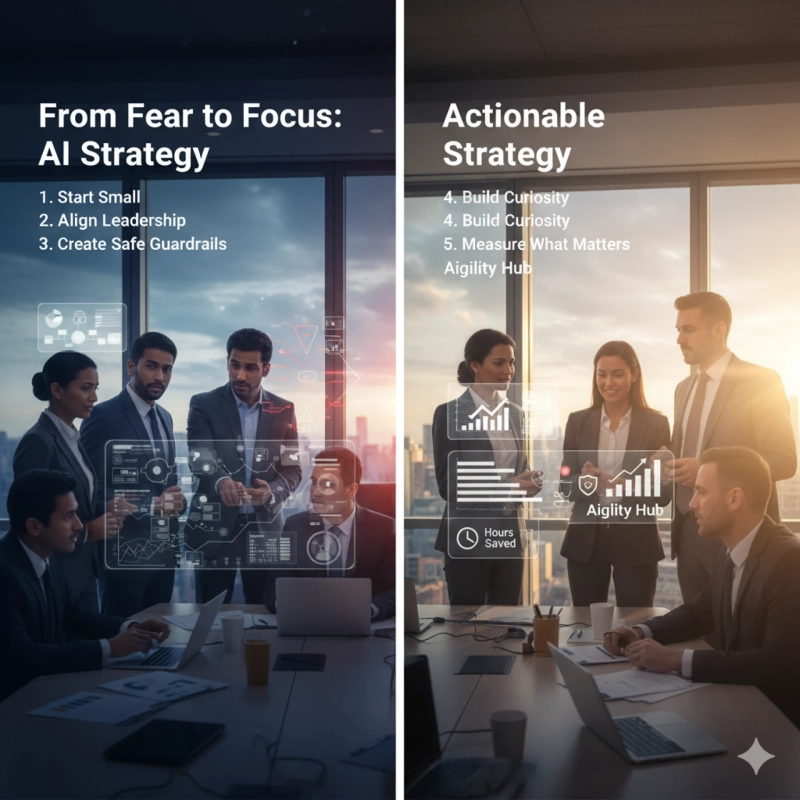
1. Start Small, Think Strategic
When AI feels overwhelming, the best approach is to start small. Identify one process where AI could save time or simplify work — like automating reports, generating summaries, or improving scheduling.
Small, low-risk projects build confidence and create early wins that fuel momentum across the organization.
The key to AI Readiness is measurable progress, not massive investment.
2. Align Your Leadership Team
In many organizations, confusion around AI comes from misalignment at the top. Some leaders are eager, others are skeptical — and the result is paralysis.
Hold an honest leadership discussion about AI’s role in your business. Define shared goals, clarify boundaries, and agree on what “responsible adoption” means for your team.
Clarity at the top creates confidence across the organization.
3. Create Safe Guardrails
AI Readiness isn’t just about tools — it’s about trust. Establish guardrails that make your team feel secure using AI:
- Clear guidelines on what data can be used.
- Transparent communication about privacy and compliance.
- Approved tools that align with company policy.
These small steps turn fear of AI misuse into trust-driven adoption.
4. Build a Culture of Curiosity
Leaders who embrace AI successfully treat it as a learning journey, not a one-time project. Encourage your teams to explore, test, and share discoveries.
Host short internal sessions to discuss how AI can help — not replace — your people.
Curiosity builds confidence. Confidence builds competence. Competence drives results.
5. Measure What Matters
AI Readiness should deliver tangible outcomes — like saving time, reducing costs, or improving communication.
Start tracking simple metrics such as:
- Hours saved per week
- Reduced manual tasks
- Employee engagement with AI tools
When leaders can measure progress, AI becomes less of a mystery and more of a trusted strategy.
Final Thoughts
AI isn’t something to fear — it’s a tool to help you focus.
By starting small, setting guardrails, and aligning your leadership team, you can move from hesitation to confident, AI-ready action.
At Aigility Hub, we help Canadian leaders adopt AI safely, simply, and sustainably — so they can lead their teams with clarity, confidence, and measurable results.