



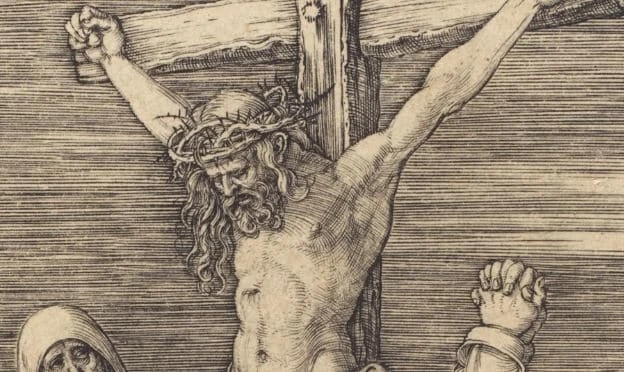
In the realm of historical fiction, few periods in history are as captivating and enigmatic as the time surrounding the crucifixion of Jesus Christ. It\'s a moment that has captured the imagination of countless authors, scholars, and theologians. Among the works that explore this pivotal event, Thomas H. Lutzow\'s play, "Habeas Corpus," stands out as a gripping tale that takes readers on a journey through the tumultuous world of 33 AD, where faith, power, and intrigue collide.
The play begins with a premise that sends shockwaves through the heart of Jerusalem and the Roman Empire. Pontius Pilate, the Prefect of Judea, wakes up one morning to the alarming news that the body of Jesus Christ, whom he had ordered crucified just days earlier, has vanished from the tomb guarded by his soldiers. This revelation sets in motion a relentless quest for answers, a search for truth that will challenge the boundaries of faith and authority.
What immediately distinguishes "Habeas Corpus" is its meticulous attention to historical detail. Lutzow\'s commitment to authenticity shines through in his vivid portrayal of ancient Judea. From the bustling streets of Jerusalem to the hallowed halls of the Jewish Temple, every setting feels richly textured and alive. This dedication to historical accuracy not only enhances the narrative but also transports readers to a time and place where Roman rule and religious traditions clashed in a volatile mix.
At the center of this historical thriller are the characters, each meticulously crafted and multifaceted. Pontius Pilate, often portrayed as a stern and unyielding figure in history, is brought to life as a complex and conflicted protagonist. Lutzow delves into Pilate\'s inner struggles as he grapples with the weight of his decisions, torn between his loyalty to the Roman Empire and the deeply ingrained religious beliefs of the Jewish people. Pilate\'s character arc is a testament to Lutzow\'s storytelling prowess, guiding readers through the Prefect\'s moral dilemmas and the consequences of his actions.
Chief Priest Caiaphas, another pivotal character, offers a contrasting perspective. As the religious leader of the Jewish people, Caiaphas is determined to maintain the status quo and preserve the authority of the Temple. His interactions with Pilate reveal the intricate dance of politics and religion that defines the era. These exchanges not only add depth to the narrative but also provide a thought-provoking exploration of power dynamics and the collision of faiths.
The title of the play, "Habeas Corpus," carries a symbolic weight that reverberates throughout the story. In its legal context, it represents the right to demand the production of a detained person before a court, preventing unlawful detention. In the account, it becomes a symbolic demand for evidence to uncover the truth behind the disappearance of Jesus\' body. This clever wordplay underscores the central mystery of the narrative and sets the tone for the unfolding drama.
As the plot unfolds, "Habeas Corpus" delves into profound themes of faith, doubt, and the supernatural. Reports of Jesus\' post-crucifixion appearances challenge the characters in the story to confront questions of belief and the boundaries of the natural world. Lutzow skillfully navigates these philosophical inquiries, inviting readers to ponder the interplay between faith, reason, and the unexplained.
The narrative maintains a relentless pace, filled with tension and suspense, as Pilate races against time to unravel the mystery of the missing body. Lutzow\'s storytelling prowess keeps readers on the edge of their seats, eager to uncover the truth alongside the Prefect. The intricate plot weaves together historical facts, religious narratives, and fictional elements, creating a tapestry of intrigue and uncertainty.
"Habeas Corpus" is a testament to Lutzow\'s ability to offer a fresh perspective on a well-known historical event. Through meticulous research, vivid storytelling, and rich character development, he transports readers to an ancient world fraught with political turmoil and spiritual awakening. The score challenges preconceived notions about familiar historical figures and invites us to reexamine the complexities of faith, power, and the pursuit of truth.
In conclusion, "Habeas Corpus" is a masterful work of historical fiction that seamlessly blends fact and imagination. Whether you are a history enthusiast, a lover of thought-provoking narratives, or simply seeking an enthralling read, this rendering promises an immersive and intellectually stimulating experience. Thomas H. Lutzow\'s exploration of Pontius Pilate\'s quest to solve the mystery of the missing body of Jesus Christ is a testament to the enduring allure of historical mysteries and the timeless questions they raise. "Habeas Corpus" is more than a historical thriller; it is a profound exploration of faith, power, and the enduring quest for truth in a world filled with uncertainty.