



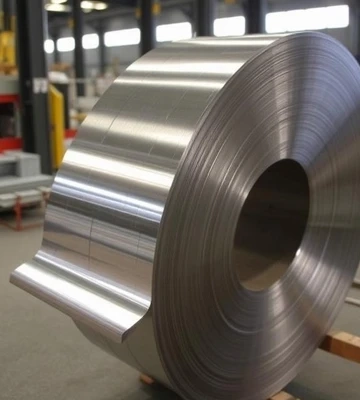
In the quiet revolution powering our modern world, nickel strips play a surprisingly central role. Once confined to niche industrial uses, these thin, flexible metal conductors are now indispensable across a wide range of high-tech applications—from the lithium-ion batteries in electric vehicles to the precision components in aerospace engineering. As industries push the boundaries of performance, efficiency, and sustainability, nickel strips are stepping into the spotlight.
Powering the Battery Boom
The most visible surge in demand for nickel strips comes from the battery sector. With the global shift toward electrification, lithium-ion batteries have become the backbone of everything from smartphones to electric vehicles (EVs). Nickel strips serve as the critical connectors between battery cells, ensuring efficient current flow and thermal stability.
Their high conductivity, corrosion resistance, and mechanical strength make them ideal for spot welding in battery packs. As EV manufacturers race to improve energy density and charging speeds, the quality and configuration of nickel strips have become a key differentiator in battery design.
Taking Flight in Aerospace
Beyond the roads, nickel strips are also soaring—literally. In aerospace applications, where weight, durability, and performance are paramount, nickel alloys are prized for their resistance to extreme temperatures and oxidation. Nickel strips are used in sensors, control systems, and even structural components of aircraft and spacecraft.
The aerospace industry’s growing reliance on electric propulsion and advanced avionics has further elevated the importance of nickel-based materials. As aircraft systems become more electrified, the demand for lightweight, high-performance conductors like nickel strips is expected to rise sharply.
Industrial Versatility
Nickel strips are also making waves in other sectors. In electronics, they’re used in circuit boards and connectors due to their excellent solderability and resistance to wear. In the medical field, their biocompatibility makes them suitable for surgical instruments and implants. Even in renewable energy systems, nickel strips are being integrated into energy storage and grid infrastructure.
Sustainability and Supply Chain Dynamics
As the world becomes more environmentally conscious, the sustainability of nickel sourcing and processing is under scrutiny. Manufacturers are exploring recycled nickel and more energy-efficient production methods to reduce the environmental footprint of nickel strip production.
At the same time, geopolitical factors and fluctuating nickel prices are prompting companies to diversify supply chains and invest in domestic refining capabilities. These shifts are reshaping the global nickel strip market, which is projected to grow significantly over the next decade.
The Road Ahead
The expanding role of nickel strips is a testament to how small components can have an outsized impact. As industries evolve and intersect—battery tech with aerospace, sustainability with manufacturing—nickel strips are quietly enabling the next generation of innovation.
Whether it’s helping an EV go farther on a single charge or ensuring a satellite survives the vacuum of space, nickel strips are proving that sometimes, the most essential technologies are the ones you barely notice.