



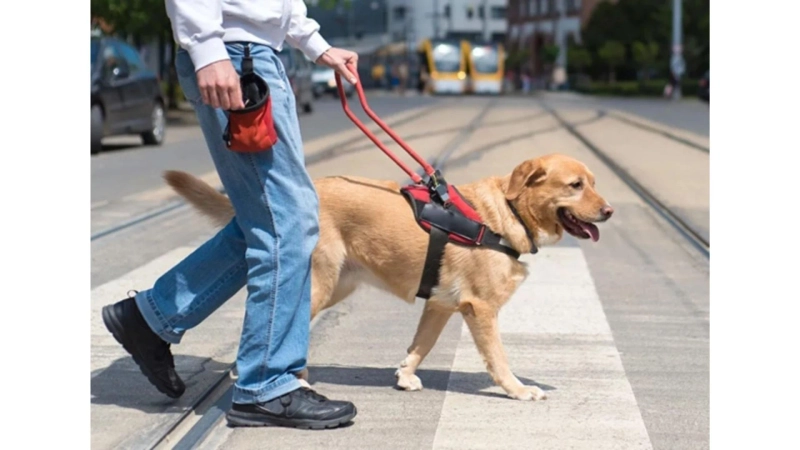
Ever wonder how a dog goes from a playful pup to a life-saving service companion?
It’s not just about sitting, staying, or following commands. The journey of service dog training in Bend, Oregon, is a deep, structured process that shapes dogs into calm, responsive, and dependable partners. It requires patience, repetition, real-life practice, and professional guidance. Whether it’s helping someone navigate daily life or providing support in high-stress environments, service dogs are trained far beyond basic obedience.
One of the first foundations for this training is dog good citizen training in Oregon. This program sets the tone for a dog’s future role as a reliable helper. It’s not only about passing a test but also about mastering the social and behavioral skills needed to thrive in public and private settings.
The Foundation: Obedience and Good Citizenship
Every service dog starts out just like any other puppy. But their training path soon branches out into something more intensive. Before any dog can perform service-specific tasks, it must first master basic obedience.
This is where dog good citizen training steps in. These classes focus on key social behaviors like ignoring distractions, walking without pulling, and behaving appropriately around other people and animals. The Canine Good Citizen (CGC) test, often a benchmark in this process, proves a dog can be trusted in real-world scenarios.
This kind of training doesn’t just help dogs become well-behaved companions. It acts as a crucial stepping stone for those on the path to becoming service animals.
Canine Good Citizen: More Than Just a Certification
The Dog Good Citizen training is not a casual course. It’s a structured evaluation that tests a dog’s manners and behavior in everyday situations. Dogs learn how to politely greet strangers, stay calm during grooming or vet visits, and follow basic commands even with distractions.
This training sets the tone for what’s expected in public. It also reassures the handler and the community that the dog can behave appropriately in public spaces. For any dog destined to become a service dog, this level of composure and discipline is essential.
Task Training: Custom Skills for Each Handler
What truly defines service dog training is task-specific instruction. Depending on the handler’s needs, a dog might learn to retrieve dropped items, alert to medical changes, offer physical support, or interrupt harmful behavior patterns.
This level of training requires a lot of patience and one-on-one time. A professional dog trainer in Bend, OR, carefully assesses both the dog’s temperament and the handler’s needs. Then, the trainer designs a program that matches the pair perfectly
Public Access Skills: The Real Test
Once a dog learns both manners and specific tasks, the next phase is public access training. This teaches dogs how to behave in places like airports, restaurants, and public transportation. Even trained pets can struggle in these environments, but service dog training includes rigorous practice in these real-world settings.
Trainers help dogs learn to ignore distractions, stay focused under pressure, and respond calmly to unexpected situations. This ensures that the dog can support its handler in any environment—quiet or chaotic.
Ongoing Support and Fine-Tuning
Even after the initial training ends, there’s often a need for refreshers and continued practice. Behaviors can fade over time, especially if the dog isn’t consistently working. A professional dog trainer often provides follow-up sessions to keep skills sharp and correct any emerging issues.
Service dogs, like people, grow and evolve. So do their routines and challenges. That’s why many training programs include long-term support, ensuring the dog continues to meet the needs of the handler.
Matching the Right Dog with the Right Person
Not every dog is cut out to be a service animal. Trainers assess temperament, intelligence, focus, and energy levels. They also evaluate how well a dog bonds with people and handles stress.
Similarly, the needs of each handler vary widely. Some need physical assistance, others emotional support. The most successful outcomes come when a professional dog trainer is involved in matching and tailoring the training process accordingly.
Conclusion: Training That Changes Lives
Behind every well-mannered, task-performing service dog is a long road of dedication, structure, and heart. Service dog training is more than just teaching tricks—it’s building a reliable partnership. It begins with a strong foundation like dog good citizen training grows through personalized task work, and continues with lifelong learning and adjustment.
With the right guidance from a professional dog trainer in Bend, OR, both dogs and handlers thrive. The result? Independence, confidence, and an unbreakable bond that’s built to last.