



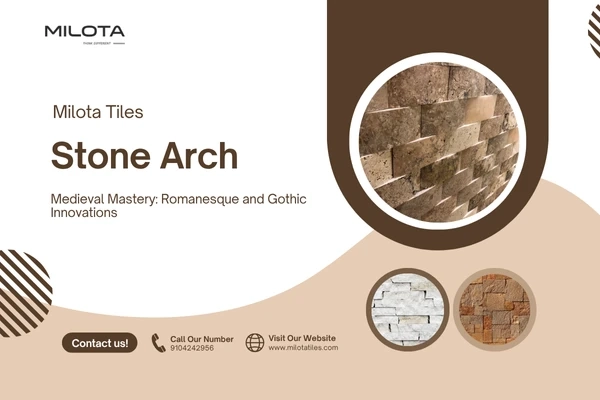
Architecture has long been a reflection of human ingenuity, skill, and creativity. Among the many structural innovations that have defined civilizations, the Stone Arch remains one of the most enduring and fascinating. This timeless architectural form—born in the ancient world—continues to influence design and construction even today. From ancient bridges and temples to modern homes and public spaces, the Stone Arch stands as a symbol of strength, balance, and elegance.
In recent years, this architectural marvel has found a renewed purpose through the use of natural stone, natural stone tiles, and innovative design interpretations that blend traditional artistry with modern engineering. Whether it’s a grand archway at a city entrance or natural stone tiles for wall and natural stone tiles for floor installations inspired by arch motifs, the legacy of the Stone Arch continues to evolve beautifully.
This article explores the fascinating journey of the Stone Arch—from its ancient origins to its modern adaptations—highlighting how it has shaped architecture, art, and interior design through the ages.
1. The Origins of the Stone Arch: A Testament to Ancient Genius
The story of the Stone Arch begins thousands of years ago in Mesopotamia, Egypt, and Greece—where primitive versions of arches were constructed using stone and mudbrick. However, it was the Romans who perfected the design, transforming the arch into a cornerstone of architectural engineering.
The Roman Breakthrough
Roman architects discovered that by arranging wedge-shaped stones (known as voussoirs) in a semicircular formation, they could distribute weight evenly across an opening. This innovation allowed them to build large, stable structures such as aqueducts, amphitheaters, and bridges. The Stone Arch enabled the creation of monumental public works that still stand today, including the Colosseum and the Pont du Gard.
The Symbolism of the Arch
Beyond its structural role, the arch carried profound symbolic meaning. It represented triumph, passage, and transition. Triumphal arches like the Arch of Constantine in Rome were erected to celebrate victories, marking the arch as both an architectural and cultural icon.
2. Medieval Mastery: The Gothic and Romanesque Arches
As architectural styles evolved, so did the design of the Stone Arch. During the medieval period, architects experimented with pointed arches and ribbed vaults, paving the way for the Gothic style that dominated Europe’s cathedrals and churches.
Romanesque Round Arches
Romanesque architecture (circa 9th–12th centuries) relied heavily on the semi-circular arch, reminiscent of Roman engineering. These arches were massive, weighty, and functional, supporting thick walls and small windows. The use of natural stone was essential—granite, limestone, and sandstone provided both beauty and durability.
The Grace of the Gothic Pointed Arch
By contrast, Gothic architects introduced the pointed arch, which distributed weight more efficiently and allowed for taller, lighter structures. This innovation made possible the breathtaking stained-glass windows and intricate façades of cathedrals such as Notre-Dame and Chartres. The Stone Arch was no longer just a structural necessity—it became an artistic statement.
3. Renaissance and Revival: A Return to Classical Principles
The Renaissance brought a renewed appreciation for classical forms, symmetry, and proportion. Architects like Brunelleschi and Palladio revived the Roman Stone Arch but integrated it into more refined, mathematically precise compositions.
Stone Arches in Renaissance Architecture
The arches of this period often served as decorative framing for doors, windows, and courtyards. They symbolized balance and harmony, drawing directly from ancient Roman aesthetics. Natural stone—particularly marble and limestone—was prized for its elegance and strength.
Baroque and Neoclassical Interpretations
In later centuries, Baroque and Neoclassical architects pushed the decorative potential of the Stone Arch even further. Grand entrances, domes, and porticoes adorned with elaborate carvings and natural stone tiles showcased a blend of artistry and precision.
4. The Stone Arch in Modern Architecture
With the advent of steel, glass, and reinforced concrete, one might assume the Stone Arch would fade into history. Yet, the opposite has occurred. Modern architects and designers continue to draw inspiration from the arch’s timeless beauty—reinterpreting it for contemporary contexts.
Modern Structural Arches
Architects today use arches in bridges, museums, and public buildings not just for support but for aesthetic appeal. The arch’s form evokes a sense of tradition and continuity even in futuristic designs. Many modern projects incorporate natural stone finishes to give contemporary structures an organic, tactile quality that connects them to their historical roots.
Stone Arches in Interior and Landscape Design
In home design, Stone Arches have evolved beyond structural function—they now serve as stunning focal points. Whether framing a doorway, dividing open spaces, or enhancing garden pathways, arches crafted with natural stone tiles create a timeless atmosphere of grace and permanence.
5. The Rise of Natural Stone in Modern Construction
The enduring popularity of the Stone Arch has gone hand-in-hand with the resurgence of natural stone as a preferred building material. Unlike synthetic alternatives, natural stone offers unique color variations, textures, and patterns that bring authenticity and depth to design.
Why Natural Stone Endures
- Durability: Natural stone can last centuries, resisting weathering and wear.
- Sustainability: Stone is eco-friendly, requiring minimal processing.
- Aesthetic Variety: Every stone is unique, offering endless creative possibilities.
- Timeless Appeal: From ancient monuments to modern homes, stone never goes out of style.
Modern Uses of Natural Stone
Today, natural stone tiles for wall and natural stone tiles for floor applications are widely used to bring the elegance of the Stone Arch indoors. From entryways inspired by Roman architecture to minimalist interiors featuring arched wall niches, these materials transform ordinary spaces into timeless works of art.
6. Natural Stone Tiles: Reviving the Spirit of the Stone Arch
Stone Arches and Wall Design
Natural stone tiles for wall applications can replicate the texture and charm of traditional arches. When arranged in curved or semi-circular patterns, they echo the strength and grace of ancient structures. Designers use stones like travertine, marble, and slate to achieve warm, authentic tones reminiscent of historic masonry.
Stone arch-inspired wall designs work beautifully in:
- Living room accent walls
- Restaurant and café interiors
- Heritage-style villas and courtyards
- Hotel lobbies and entrances
Stone Arches and Floor Design
Similarly, natural stone tiles for floor installations can carry the essence of the Stone Arch. When arranged in radial or concentric patterns, they create a sense of movement and depth underfoot. Materials such as sandstone, limestone, and granite provide not only visual beauty but also exceptional durability for high-traffic areas.
Applications include:
- Courtyard and patio flooring
- Entry hallways and foyers
- Outdoor walkways and garden paths
- Commercial atriums and galleries
7. Contemporary Trends Inspired by the Stone Arch
The influence of the Stone Arch extends far beyond traditional architecture. Modern design trends reinterpret its essence in creative ways.
Minimalist Arches with Natural Stone Finishes
Modern designers combine smooth curves and clean lines with natural stone tiles to create minimalist yet powerful visual statements. The combination of contemporary geometry with organic material brings harmony between old and new.
Rustic and Industrial Styles
In rustic and industrial spaces, exposed natural stone walls paired with arched openings create a bold contrast—evoking both history and raw authenticity. The tactile texture of natural stone tiles for wall adds character, while the arch introduces an elegant architectural rhythm.
Outdoor Arches and Garden Architecture
The charm of the Stone Arch extends to landscaping, where stone-clad arches serve as gateways, pergolas, or focal points. These elements not only enhance the visual appeal of outdoor spaces but also echo the ancient symbolism of passage and transition.
8. The Technical Brilliance Behind the Stone Arch
Structural Engineering Principles
The key to the Stone Arch’s strength lies in its geometry. Each stone, precisely shaped and placed, transfers load down to the supports (abutments) through compression. This means the structure can span large openings without collapsing—even without mortar in some cases.
Modern Construction Techniques
While ancient masons relied on manual craftsmanship, today’s builders use computer modeling and precision cutting technologies to replicate and enhance the efficiency of arch designs. Natural stone tiles are now machine-cut for uniformity and ease of installation, allowing the aesthetic of the Stone Arch to be achieved in modern projects with greater speed and precision.
9. Iconic Stone Arches Around the World
Throughout history, countless stone arches have stood as landmarks of human achievement. Some of the most iconic examples include:
- The Arch of Constantine (Rome, Italy): A triumphal arch celebrating Emperor Constantine’s victory, showcasing intricate carvings and massive stone construction.
- Pont du Gard (France): A Roman aqueduct with multiple tiers of stone arches that still stands over 2,000 years later.
- Arc de Triomphe (Paris, France): A monumental arch symbolizing French patriotism and engineering mastery.
- Gateway Arch (St. Louis, USA): Though made of steel, it pays homage to the timeless shape of the stone arch, representing the spirit of progress.
These monuments demonstrate that the form of the Stone Arch transcends material and time—remaining an enduring symbol of architectural excellence.
10. The Stone Arch in Contemporary Interior Design
Arches as Design Accents
In contemporary homes, arches are making a major comeback. From arched windows and mirrors to doorway transitions and kitchen niches, this form softens modern interiors and adds a touch of heritage. When combined with natural stone tiles for wall, the look becomes both elegant and grounded.
Natural Stone Floors with Arch Motifs
Designers increasingly incorporate natural stone tiles for floor with subtle arch-inspired patterns, mosaics, or inlays. These designs not only add aesthetic depth but also tie modern interiors to historical architectural roots.
Harmonizing Tradition and Technology
Digital fabrication and stone-texturing technologies now allow designers to bring intricate arch patterns into homes and commercial spaces with precision. Whether used in flooring, wall cladding, or furniture design, the combination of natural stone and the Stone Arch form bridges the gap between past craftsmanship and modern innovation.
11. Why the Stone Arch Still Matters
The continued fascination with the Stone Arch lies in its perfect balance of art and engineering. It embodies stability, endurance, and beauty—qualities that resonate with both architects and homeowners alike. As sustainability becomes a guiding principle in design, natural materials like stone once again take center stage.
The arch’s enduring relevance also lies in its adaptability—it can be minimalist or ornate, structural or decorative, ancient or futuristic. Whether recreated with natural stone tiles or reimagined in steel and concrete, the essence of the Stone Arch continues to inspire.
12. The Milota Tiles Connection: Crafting Modern Elegance with Natural Stone
At Milota Tiles, the timeless appeal of the Stone Arch is celebrated through expertly crafted natural stone tiles that combine heritage with modern design sensibility. Milota’s collection showcases the depth, texture, and natural beauty of stone—allowing architects, designers, and homeowners to bring the spirit of the Stone Arch into contemporary spaces.
Whether you’re designing natural stone tiles for wall to echo the grandeur of ancient architecture, or natural stone tiles for floor to anchor your interiors with earthy strength, Milota’s craftsmanship ensures every piece tells a story of durability and elegance. Each tile reflects the artistry that once shaped history’s greatest arches—now tailored for modern living.