



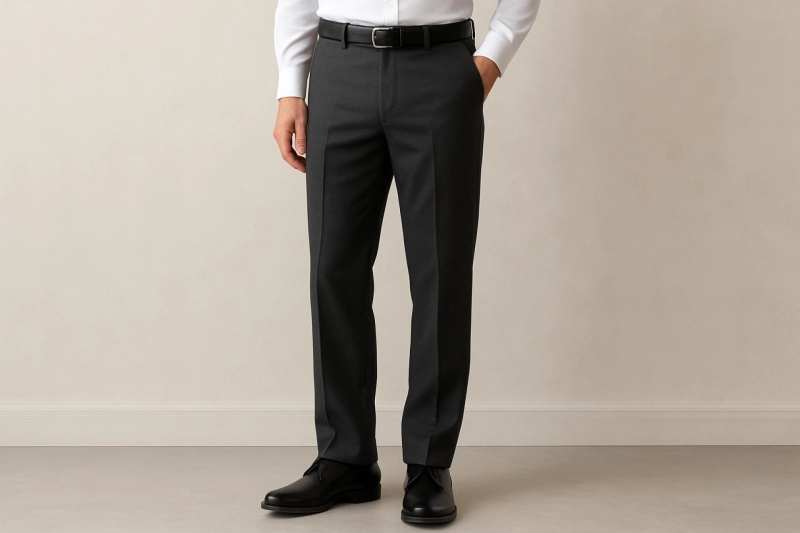
Understanding the difference between formal and semi-formal outfits is essential for modern men. Dress codes have become more fluid, especially as workplaces and social settings continue to evolve. What was once clearly defined now often overlaps, making it important to know when to dress sharply formal and when a relaxed yet polished look works better.
Choosing the right outfit is not just about rules. It is about context, comfort, and confidence. Knowing how to distinguish between formal and semi-formal attire helps men dress appropriately without feeling overdressed or underprepared.
What Defines Formal Outfits for Men
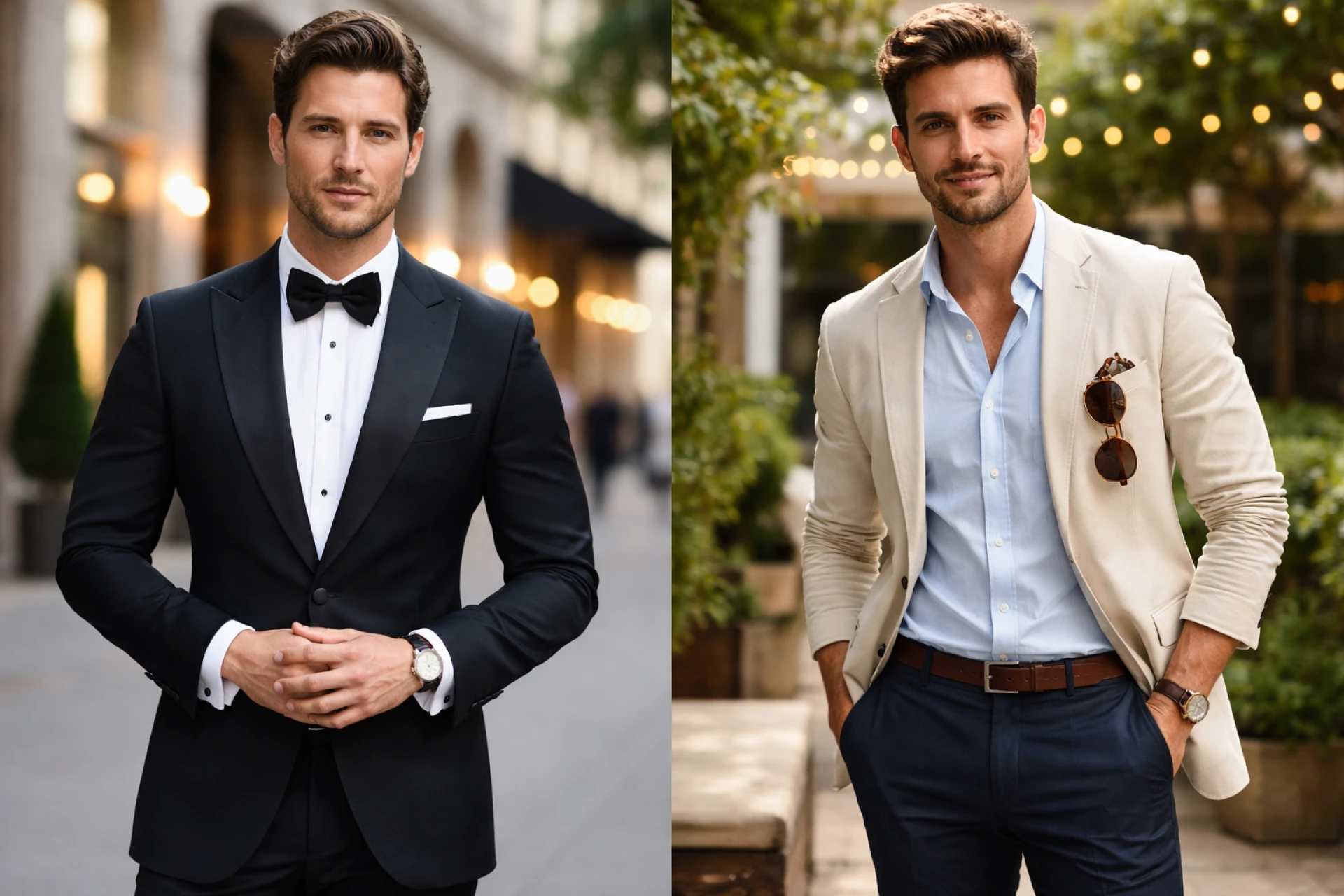
Formal wear represents the highest level of sophistication in menswear. It is typically reserved for important business meetings, formal events, weddings, or occasions where professionalism and tradition are expected.
A fitted suit in traditional hues like charcoal, navy, or black is typically part of a formal ensemble. The suit is paired with a crisp dress shirt, often white or light-colored, and a tie that complements the overall look. Polished leather dress shoes, such as oxfords or brogues, complete the outfit.
Fabric choice in formalwear leans toward structured materials that maintain shape and create a sharp silhouette. These garments are designed to look refined and authoritative, even if they feel slightly restrictive compared to casual clothing.
What Semi-Formal Outfits Look Like
Semi-formal attire offers more flexibility while still maintaining a clean and professional appearance. It bridges the gap between strict formalwear and casual clothing, making it ideal for modern offices, business-casual events, dinners, and social gatherings.
A semi-formal look may include tailored trousers or chinos paired with a button-down shirt or a fine-knit polo. Blazers are often optional and unstructured, allowing for easier movement. Ties are usually not required, and footwear can range from loafers to smart leather sneakers.
This category allows men to express personal style while remaining appropriate for professional or social settings. Comfort and adaptability are key features of semi-formal dressing.
Key Differences Between Formal and Semi-Formal Wear
The most noticeable difference lies in structure and rigidity. Formal outfits rely heavily on precise tailoring and traditional elements, while semi-formal outfits allow relaxed fits and softer silhouettes.
Color palettes also differ. Formalwear sticks to neutral and muted tones, while semi-formal attire welcomes lighter shades, patterns, and seasonal colors. Accessories in formal outfits are minimal and classic, whereas semi-formal looks allow more freedom with watches, belts, and footwear choices.
Another major distinction is comfort. Semi-formal outfits often incorporate flexible workwear fabrics that stretch and breathe, making them suitable for longer hours and varied activities.
Fabric Choice and Comfort
Fabric selection strongly influences how confident an outfit feels over time. When clothing allows ease of movement and maintains its structure, it naturally contributes to confidence-boosting outfits for men. Breathable, flexible fabrics reduce discomfort during long hours and help men stay composed in both formal and semi-formal settings. An outfit that feels comfortable throughout the day supports better posture, calm body language, and a more assured presence, making fabric choice an essential part of confident dressing.
Choosing the right fabric ensures that an outfit not only looks appropriate but also feels practical throughout the day.
When to Choose Formal Over Semi-Formal
Understanding when to dress formally highlights the value of men’s smart wardrobe essentials. Classic suits, well-tailored shirts, and polished shoes form the core of outfits suited for occasions that demand professionalism and authority. These essentials create consistency in appearance and help men meet expectations in conservative or high-importance environments. Having reliable formal pieces ready ensures confidence in decision-making and eliminates uncertainty when dressing for serious or traditional settings.
When Semi-Formal Is the Better Option
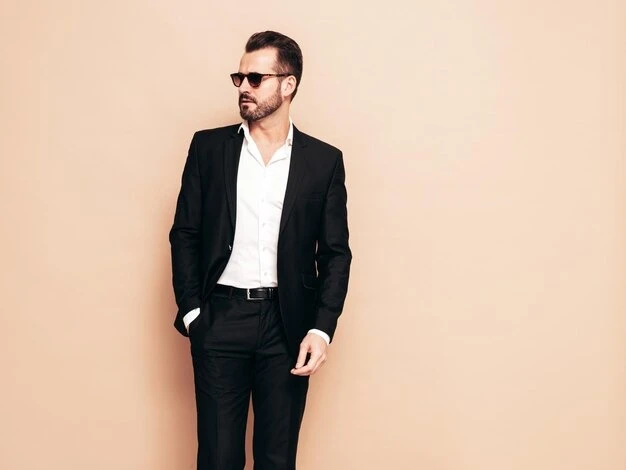
Semi-formal attire works well in modern workplaces, networking events, dinners, and social occasions where approachability matters as much as professionalism. It allows men to appear put-together without looking overly rigid.
This style is particularly suitable for dynamic schedules that involve movement, travel, or extended hours. Semi-formal outfits adapt easily to different settings while maintaining a refined appearance.
Conclusion
The difference between formal and semi-formal outfits lies in structure, comfort, and flexibility. Formalwear emphasizes tradition, sharp tailoring, and authority, while semi-formal attire focuses on adaptability, ease, and modern style.
Understanding when to wear each allows men to dress confidently for any occasion. By considering setting, expectations, and comfort, it becomes easier to strike the right balance between looking professional and feeling at ease.