


Choosing the right packaging is a critical decision for brands across food, FMCG, pet food, pharmaceuticals, and consumer goods industries. One of the most common debates today is flexible vs rigid packaging materials. Both packaging types serve important purposes, but their performance, cost, environmental impact, and usability vary significantly.
This article provides a clear packaging material comparison to help brands understand the differences, advantages, and limitations of flexible and rigid packaging materials, making it easier to select the right option based on product and sustainability needs.
Understanding Flexible and Rigid Packaging Materials
Before comparing them, it’s important to understand what each packaging type includes.
What Are Flexible Packaging Materials?
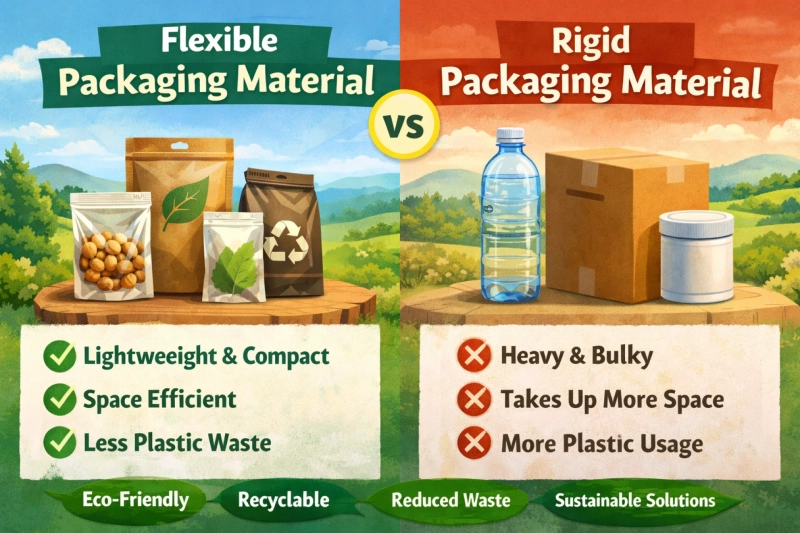
Flexible packaging materials are made from materials that can bend, fold, or change shape without breaking. These include plastic films, paper, aluminum foil, and laminated structures.
Common examples:
- Stand-up pouches
- Flat bottom pouches
- Sachets
- Wraps and bags
Flexible formats are widely used because of their adaptability and efficiency.
What Are Rigid Packaging Materials?
Rigid packaging materials maintain a fixed shape and structure. These packages are typically made from glass, metal, thick plastic, or cardboard.
Common examples:
- Glass jars
- Plastic bottles
- Metal tins
- Rigid containers
Rigid packaging is often chosen for durability and premium presentation.
Flexible vs Rigid Packaging Materials: Key Differences
1. Material Usage and Weight
One of the biggest differences in flexible vs rigid packaging materials is the amount of material used.
Flexible packaging:
- Uses significantly less raw material
- Lightweight and compact
- Requires fewer resources during production
Rigid packaging:
- Uses heavier and thicker materials
- Consumes more raw resources
- Adds weight during storage and transport
This makes flexible packaging a more resource-efficient option in most applications.
Packaging Material Comparison: Transportation and Storage
2. Transportation Efficiency
Transportation plays a major role in overall packaging costs and environmental impact.
Flexible packaging advantages:
- Lightweight reduces fuel consumption
- Takes up less space
- More units per shipment
Rigid packaging challenges:
- Heavier loads increase fuel usage
- Occupies more storage space
- Higher logistics costs
In the flexible vs rigid packaging materials comparison, flexible formats clearly offer better logistics efficiency.
Environmental Impact: A Critical Comparison
3. Sustainability and Waste Generation
Environmental responsibility has become a key factor in packaging decisions.
Flexible packaging:
- Generates less packaging waste
- Lower carbon footprint during transportation
- Requires less energy to manufacture
Rigid packaging:
- Higher waste volume
- More energy-intensive production
- Bulky disposal in landfills
Brands focused on sustainability often explore the Benefits of Flexible Packaging to understand how flexible materials help reduce environmental impact through lower material use and emissions.
Product Protection and Shelf Life
4. Barrier Properties
Both packaging types protect products, but they do so differently.
Flexible packaging materials offer:
- Strong moisture barriers
- Oxygen and light protection
- Improved freshness retention
Rigid packaging materials provide:
- Physical protection against crushing
- Structural stability
- Resistance to impact
In many food and FMCG applications, flexible vs rigid packaging materials shows that flexible packaging delivers superior barrier protection with less material.
Cost Comparison Between Flexible and Rigid Packaging
5. Manufacturing and Operational Costs
Cost efficiency is another major factor in packaging material comparison.
Flexible packaging:
- Lower material costs
- Faster production cycles
- Reduced storage and transportation expenses
Rigid packaging:
- Higher raw material costs
- Energy-intensive manufacturing
- Increased logistics expenses
These flexible packaging advantages make it a preferred choice for cost-sensitive and high-volume brands.
Design, Branding, and Shelf Appeal
6. Visual Impact and Customization
Flexible packaging allows high-quality printing, vibrant colors, and innovative designs using minimal material.
Benefits include:
- 360-degree branding space
- Matte, gloss, and specialty finishes
- Modern shelf appearance
Rigid packaging offers:
- Premium feel for certain products
- Traditional brand perception
- Limited design flexibility
In the flexible vs rigid packaging materials debate, flexible packaging often wins in design versatility.
Convenience and Consumer Experience
7. Ease of Use and Storage
Modern consumers prefer packaging that is easy to use and store.
Flexible packaging advantages:
- Resealable features
- Lightweight and portable
- Space-saving storage
Rigid packaging limitations:
- Bulky shape
- Heavier to handle
- Less flexible storage options
Consumer convenience is a major reason brands shift toward flexible formats.
Industry Trends and Market Adoption
8. Growing Demand for Flexible Packaging
Across India and global markets, industries are increasingly choosing flexible packaging due to efficiency and sustainability.
Manufacturers, including companies like White Lotus Industries, operate in an environment where brands demand packaging solutions that balance performance, cost, and environmental responsibility.
This shift highlights how flexible vs rigid packaging materials is no longer just a technical comparison, but a strategic business decision.
When Rigid Packaging Still Makes Sense
Despite many flexible packaging advantages, rigid packaging remains relevant in some cases.
Rigid packaging is suitable for:
- Fragile products requiring strong protection
- Premium or luxury items
- Reusable or refill-based packaging systems
Understanding product needs is essential when comparing flexible vs rigid packaging materials.
Conclusion
The comparison of flexible vs rigid packaging materials highlights clear differences in material usage, cost, sustainability, and performance. Flexible packaging offers strong barrier protection, lower environmental impact, cost efficiency, and consumer convenience, making it an ideal choice for many modern brands.
While rigid packaging still serves specific use cases, the growing demand for sustainability and efficiency continues to push industries toward flexible solutions. Companies like White Lotus Industries are part of this evolving packaging landscape, adapting to market needs without compromising quality or performance.