



Introduction
In the journey of seeking a healthcare provider, one might encounter terms such as family doctor or primary care doctor. Even though the two roles are very similar, there are fundamental differences between them. Knowing these differences could prove helpful in selecting the appropriate doctor to attend to your health requirements.
This article will detail the functions and responsibilities of a family doctor versus a primary care doctor, while also providing differences that will aide you in selecting the best option for you and your family.
What is a Primary Care Doctor
A primary care doctor is a type of general physician PCP who is usually the first contact for patients of all ages.internal medicine el monte Ca Mainly, he/she deals with illness prevention, diagnosis, the common treatment of diseases, chronic illness management, and providing referrals to other medical practitioners if needed.
Roles and Responsibilities of a Primary Care Doctor
Conduct regular physical examination of patients
Diagnosis and treatment of common illnesses, for example: allergy, flu, and infections.
Provision of preventive medical care (Immunization and other screening tests)
Assisting in chronic illness management (hypertension, diabetes)
Provision of medical advice concerning general health and weight loss programs
Referral to specialist physician in due course
Updating and maintaining the patient medical record files
Types of Primary Care Doctors
Family Doctors: provide healthcare for patients of any age, including newborns and older adults.
Internal Medicine Doctors (Internists): Specialize in treating adults
Pediatricians: Focus on healthcare for children
Geriatricians: Specialize in elderly care
Who is a Family Doctor?
A family doctor is a type of primary care physician who renders healthcare services to members of an entire family without age discrimination. Their medical education includes pediatrics, internal medicine, geriatrics, and preventive medicine among others providing them with holistic knowledge on how to manage health care for people of different age groups.
Duties and Responsibilities of a Family Doctor
Continuously cater to healthcare needs of individuals and families.
Actively assist in sicknesses that require immediate medical assistance and attention such as flu, infection, and trauma.
Closely monitor and assist in managing chronic ailments which include asthma, hypertension, and diabetes.
Carry out periodic health checks, immunizations, and checkups.
Conduct prenatal and postnatal care.
Advise on mental health issues, nutrition, and lifestyle changes.
Perform minor surgical operations such as suturing and excision of skin lesions.
Attend to patients over a prolonged period of time.
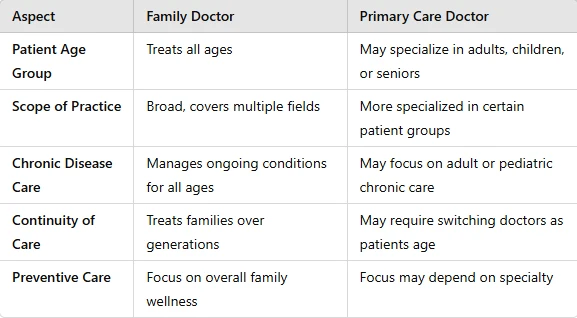
Key Differences Between a Family Doctor and a Primary Care Doctor
Choosing Between a Family Doctor and a Primary Care Doctor
Deciding between a family doctor and another type of primary care doctor depends on your health needs and personal preferences.
When to Choose a Family Doctor:
You want one doctor for the whole family
You prefer lifelong care from infancy to old age
You want a provider who understands family health history
You need a broad range of medical services in one place
When to Choose Another Primary Care Doctor:
You need an internist for adult-focused care
You prefer a pediatrician for child-specific care
You require a geriatrician for elderly health concerns
You have a complex condition that needs specialized care
Conclusion
Both family doctors and primary care doctors play a crucial role in preventive care, chronic disease management, and general wellness. The choice depends on your individual or family needs. If you’re looking for a long-term doctor for all life stages, a family doctor is an excellent choice. If you need age-specific or specialized care, another type of primary care doctor might be better suited.
Regardless of your choice, ensuring regular check-ups and a trusted healthcare provider is key to maintaining a healthy life.