There’s nothing quite as disappointing as looking out over your backyard oasis only to find that the water has turned a murky green. Whether you’re a first‑time pool owner or a seasoned pro, dealing with a green pool is one of those issues that sits at the intersection of science + maintenance + time. In this post, you'll discover how to understand, treat, and prevent green pool water — with advice that works whether you're just learning the ropes or you’ve got years of experience in pool care.
Why Does a Pool Go Green?
At its core, green pool water is usually a sign of one or more of the following:
- A bloom of algae.
- Chemical imbalance (low sanitizer, high pH, etc.).
- Poor circulation or filtration giving algae and nutrients a chance to flourish.
To give a few details:
- Algae are microscopic plants that can grow rapidly when they have the right environment (sunlight, warm water, nutrients).
- If the free chlorine level drops or the pH shoots too high, sanitizer loses its punch and algae can get ahead.
- Filters and pumps must keep working to avoid “stagnant” zones where algae can get established.
"So whether you’re starting out or have maintained pools for years, the key insight is: a green pool isn’t a mystery—it’s a symptom of something missing or off in your maintenance chain. If you're in Melbourne and dealing with a green pool, professional green pool cleaning Melbourne services can help you identify the root cause and get your pool back to its sparkling best."
Key Steps to Clean a Green Pool
Here is a sequence of steps that works for both beginners and seasoned technicians. Think of it as your “green‑pool cleaning protocol”.
1. Test & Balance Your Water
Before you do anything else, test your water for: free chlorine, pH, alkalinity, stabiliser (cyanuric acid), and metals if possible.
- Ideal pH is around 7.2–7.6 for most pools.
- Free chlorine needs to be at effective levels; if it’s low, you’re inviting algae.
- If stabiliser (cyanuric acid) is too high, chlorine cannot work properly.
Even professionals will tell you: no amount of brushing or shocking will permanently fix green water unless the chemistry is correct.
2. Shock, Brush, Vacuum & Filter
Once chemistry is in check, work through the physical cleaning:
- Brush walls, floor, stairs thoroughly with the appropriate brush for your surface (vinyl, concrete, fiberglass).
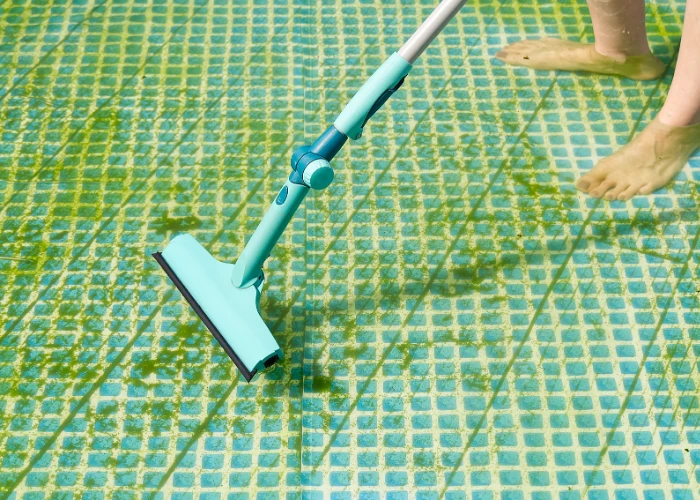
- Vacuum the pool to remove algae and debris loosened by brushing.
- Shock (super‑chlorinate) the pool to kill algae. Many guides suggest double or even triple the normal shock dosage in severe cases.
- Run the filter continuously. The filter has to pull out dead algae, debris and restore
For experienced pool technicians, they’ll often monitor the “turnover rate” (how many times the pool water is passed through the filter in a day) and keep a detailed log. For beginners, just ensure that the pump/filter system runs long enough each day (for example 8–12 hours depending on size) until clarity returns.
3. Check for Additional Contributors
Sometimes the issue isn’t just “oops I ran out of chlorine” but other contributing factors:
- Nutrient load: phosphates and nitrates act as food for algae.
- Metals: copper or iron in water (or from algaecides) can react with chlorine and make water look greenish.
- Poor circulation or equipment issues: if some area isn’t getting flow, algae can sneak in.
Experts will often check for all these when a green pool doesn’t clear up after the “basic” steps. Beginners can ask a pool store to test for phosphates/metals if standard cleaning isn’t working.
4. Preventive Maintenance (so you don’t end up green again)
Cleaning is one thing; prevention is another. Here are ongoing strategies:
- Test and balance your water at least once a week. Many professionals keep logs.
- Maintain proper sanitizer levels and stabiliser levels (CYA) to ensure your chlorine works.
- Run your filtration system daily for the appropriate period. Make sure filters are clean/backwashed.
- Brush the walls and vacuum as part of your regular routine—even if your water is clear, this prevents hidden algae from forming.
- Use an algaecide or phosphate remover as a preventive measure if your pool is prone to frequent algae blooms.
- After heavy rain, a pool party or when a lot of debris has entered the pool, give it extra attention. Conditions like these increase the chance of a green pool.
What Beginners Should Know vs. What Pros Focus On
For Beginners:
- Don’t panic. A green pool is fixable with a systematic approach.
- Follow the steps: test → balance → shock → clean → monitor.
- Use reliable testing kits (or take a water sample to a pool store) so you’re not guessing.
- Understand that maintaining a pool means regular checks—not just “when it turns green”.
For Professionals:
- Pay attention to how chemical levels evolve over time (log data).
- Understand the interplay between CYA, chlorine demand, filter turnover and nutrient load. For example: if CYA is too high then even “normal” chlorine levels may not suffice.
- Be proactive in equipment maintenance (filter media age, pump efficiency, circulation zones).
- Use advanced testing (phosphates, metals, nitrates) to identify root causes when recurrent algae occurs.
- Educate pool owners about habits: e.g., closing the pool cover, reducing leaves and debris, keeping the area clean.
Common Mistakes & How to Avoid Them
- Mistake: Shocked the pool but didn’t brush/vacuum. Result: dead algae stays suspended and filter can’t remove it efficiently.
- Avoid: Always include brushing & vacuuming.
- Mistake: Ignoring high stabiliser (CYA) levels because “chlorine is above 1 ppm so we’re fine”.
- Avoid: Test CYA and understand its effect on chlorine efficacy.
- Mistake: Running filter for a short period only and expecting fast clarification.
- Avoid: Keep filtration running until water clarity is restored (often 24 hours or more if serious bloom).
- Mistake: Assuming metal/copper contamination isn’t involved.
- Avoid: If you’ve tried the usual steps and still green, test for metals.
Conclusion & Actionable Takeaways
Green pool cleaning isn’t just about dumping chemicals into the water—it’s about understanding why your pool went green, following a structured cleaning sequence, and keeping up with preventive maintenance.
Actionable takeaways:
- Test your water this week: check free chlorine, pH, CYA, alkalinity.
- If you see any imbalance (e.g., pH > 7.8 or free chlorine very low), correct it before you do major cleaning.
- For green‑water situations: brush walls/floor, vacuum thoroughly, shock, run filter continuously until clarity returns.
- Log your weekly readings and maintenance tasks so you can spot trends (e.g., filter performance dropping, stabilizer creeping up).
- When you’re done, set a maintenance schedule: once a week check‑up, monthly filter inspection/backwash, and after heavy usage or storms, give an extra check.