



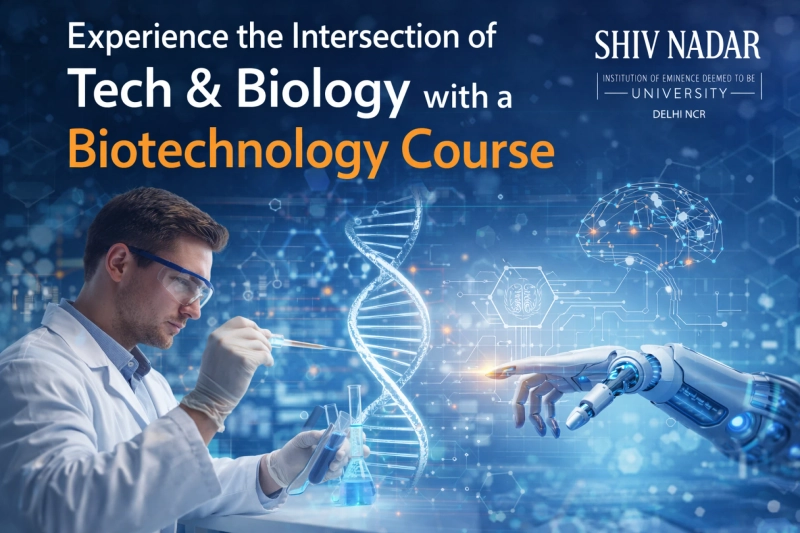
Scientific innovations are increasingly shaping how industries respond to healthcare needs, food security, and environmental challenges. As research-led solutions gain priority across sectors, students are paying closer attention to academic programs that blend science with practical application. Career planning is now more than a mere degree selection and it is more about those disciplines that are flexible and relevant in the long term.
The Biotechnology course, which links biological science and technological progress, is one of the most preferred choices in today’s rapidly changing academic environment. Designed for students interested in research, experimentation, and applied science, the course offers structured learning that aligns with both industry requirements and academic progression. It provides the learner with analytical skills, lab, and subject proficiency that promote varied scientific professions.
What Is a Biotechnology Course?
Before exploring duration and outcomes, it is important to understand the academic foundation of biotechnology. This is the art of applying biological systems, organisms or processes in the development of products and technologies that benefit human welfare and sustainability.
A Biotechnology course is a combination of biology, chemistry and technology. It places strong emphasis on laboratory training, data interpretation, and research methodology. Students are taught the application of scientific concepts into the real life scenarios, which equips them to work in the research and production as well as quality-based settings.
Biotechnology Course Duration
Planning an academic pathway requires clarity on program length and structure. The Biotechnology course duration varies depending on the level of study and institutional framework. Undergraduate degrees normally take three to four years, during which students get an opportunity to upgrade the basic sciences to higher applications. The postgraduate courses are usually undertaken in a period of two years, more towards specialisation and research.
The duration also accommodates laboratory work, project-based learning, and internships. Such an organized timeline allows students to develop subject competency at a slow pace as they learn to be exposed to practical and research-based learning conditions.
Biotechnology Syllabus Overview
The syllabus is the academic basis of education in biotechnology and defines the results of skill development. The majority of programs start off with core subjects that are followed up with applied and specialised subjects.
Typical topics discussed are -
- Cell biology and molecular biology
- Biochemistry and genetics
- Immunology and microbiology
- Recombinant technology and genetic engineering
- Bioinformatics and computational biology
Alongside theory, students engage in laboratory sessions, mini-projects, and research assignments. This combination ensures conceptual clarity while strengthening technical and analytical skills relevant to scientific careers.
Career Opportunities After a Biotechnology Course
Job opportunities are very important in influencing the choices of students. Graduates of biotechnology may consider the career opportunities in the research, industry, and academic fields. Such a wide range of applications makes the field appropriate to those students who have different interests in the field of science.
Common career paths include -
- Laboratory analyst or research associate
- Clinical research coordinator
- Quality control/quality assurance executive
- Bioprocess/production associate
- Assistant or teaching support position in academics
Many graduates also choose higher education or specialised training to move into advanced research, regulatory roles, or interdisciplinary scientific domains. The course provides a flexible foundation for both immediate employment and long-term academic growth.
Scope and Future Outlook
Understanding future relevance is essential when selecting a science-based program. Biotechnology continues to expand as industries invest in innovation-led solutions and research-driven growth.
Key areas contributing to future scope include:
- Healthcare research and pharmaceutical development
- Agricultural biotechnology and food technology
- Environmental sustainability and waste management
- Vaccine development and molecular diagnostics
- Bioinformatics and data-driven life sciences
As technology and biology become increasingly interconnected, biotechnology professionals are expected to play a central role in addressing complex scientific and societal challenges. The course supports adaptability, making it relevant across evolving industry landscapes.
Final Perspective
A Biotechnology course offers structured scientific education for students seeking meaningful careers rooted in research and application. By understanding course duration, syllabus design, and long-term scope, learners can evaluate how this program aligns with their academic interests and career goals. Exploring curriculum details, assessing future pathways, and seeking academic guidance can help students take a well-informed next step toward a science-focused professional journey.